Jerusalem artichoke, whose underground tubers are dug up from the soil between October and April and eaten as a winter vegetable, belongs to the Asteraceae family. This perennial hardy herbaceous plant, native to the American continent and particularly Canada, was brought to Europe in the 17th century and spread from there to the world.
The Jerusalem artichoke plant, which can grow up to 1.5-2 meters tall, resembles a sunflower; but its leaves and flowers are smaller. Its yellow flowers that bloom in summer resemble large daisies.
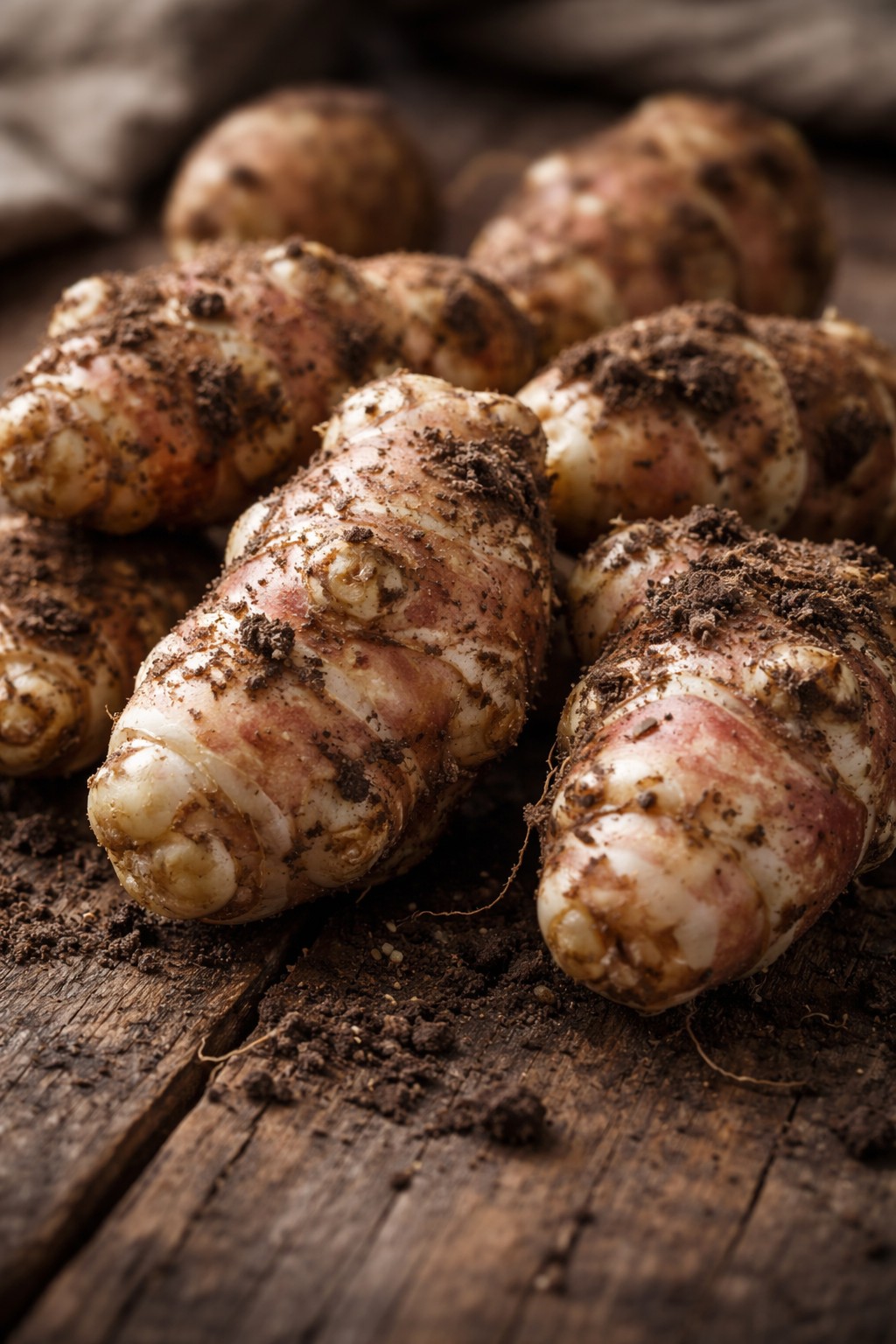
The above-ground parts of the plant are fed to animals. What is important for us are the tuberous rhizomes, which have a slight earthy smell but taste somewhat like artichoke. These tubers, which are beige, brown, or sometimes pink-orange in color, resemble potatoes in appearance but are not as regularly shaped as potatoes.
Alcohol can be obtained from Jerusalem artichoke tubers through fermentation. In Turkish cuisine, the most esteemed way to cook Jerusalem artichoke is with olive oil, and it is also added to winter stews.
Nutritional Values
Jerusalem artichoke tubers largely contain a substance called inulin (not to be confused with the insulin hormone) and fruit sugar (glucose). Therefore, it has a sweet flavor and is very nutritious.
Since it does not contain starch, its calorie content is quite low.
| 100 gr Jerusalem Artichoke | Value |
|---|---|
| Calcium | 14 mg |
| Potassium | 4 mg |
| Vitamin A | 2 mg |
| Protein | 2.4 |
| Fat | 0.7 |
| Carbohydrate | 17.4 |
| Fiber | % 1.6 |
Benefits for Our Health
- Frequently used in diets.
- Increases breast milk.
- It is a diuretic.
- Speeds up kidney function.
- Relieves swelling.
- Affects the gallbladder, increasing the flow of bile.
- Helps lower cholesterol.
- Jerusalem artichoke is one of the natural foods containing inulin.
- Gives radiance to the skin and beautifies it.
- It is claimed to have an effect on increasing sexual potency.
- It is a food recommended for diabetics because it increases the body's resistance without raising blood sugar.