Is ActiveX antibacterial soap, found in almost every bathroom in Turkey, truly more effective than ordinary soap? An independent toxicological assessment provides surprising answers to this question. In this article, we summarize in Turkish the scientific paper analyzing the ingredients of ActiveX soap.
You can download the original paper from here (PDF)
What is ActiveX?
ActiveX is an antibacterial personal care brand launched in 2009 by Istanbul-based Evyap Sabun Yağ Gliserin Sanayi ve Ticaret A.Ş. It has a wide range of products including bar soap, liquid hand soap, shower gel, wet wipes, and hand sanitizer. The brand is widely sold in Turkey, the Middle East, the Philippines, and parts of Europe.
Primary Active Ingredient: Benzalkonium Chloride (BAC)
The main antibacterial agent in ActiveX liquid hand soap is a quaternary ammonium compound called benzalkonium chloride (BAC) at a concentration of 0.13%. BAC works by disrupting bacterial cell membranes. However, there are serious concerns regarding this substance:
- Disruption of the skin barrier: A 2016 study by Xian et al. showed that even at low concentrations like 0.1%, BAC increased transepidermal water loss and decreased skin moisture after 14 days of repeated use. This is particularly concerning given that ActiveX is marketed for multiple hand washes per day.
- Antibiotic resistance: The most alarming finding is that low-dose BAC exposure can induce cross-resistance to clinical antibiotics. Bore et al. (2007) showed that E. coli strains adapted to BAC became resistant to antibiotics such as ciprofloxacin, chloramphenicol, and trimethoprim. Kampf's 2018 meta-analysis confirmed that QAC-tolerant bacteria often also show resistance to last-resort antibiotics, including carbapenems.
- Reproductive toxicity: In a 2014 study by Melin et al., mice exposed to materials containing BAC showed a significant decline in reproductive efficiency across generations, with effects persisting even after exposure ceased.
- Regulatory uncertainty: The U.S. Food and Drug Administration (FDA) deferred its decision on BAC in its 2016 final rule, stating that "additional scientific data are needed to determine safety and efficacy for daily consumer use." As of March 2026, this data has still not been definitively provided, leaving BAC in a state of regulatory uncertainty.
Sodium Laureth Sulfate (SLES)
SLES, found as the primary anionic surfactant in the sensitive skin variant of ActiveX liquid soap, is produced by ethoxylation of sodium lauryl sulfate (SLS). This process can generate 1,4-dioxane as a byproduct; this compound is classified by the International Agency for Research on Cancer (IARC) as a Group 2B possible human carcinogen.
While manufacturers reduce 1,4-dioxane levels through vacuum stripping, independent testing by the Environmental Working Group (EWG) has detected levels of 1-20 ppm in finished products containing SLES. The FDA does not set an upper limit for 1,4-dioxane in cosmetics.
Tetrasodium EDTA
This chelating agent, found in both liquid and bar formulations, is environmentally highly persistent. It is difficult to biodegrade under conventional wastewater treatment conditions; it can only be removed by 10-30% in activated sludge systems. It has been detected in European river systems at concentrations of 10-100 micrograms per liter.
More importantly, EDTA chelates calcium ions in the intercellular cement, increasing skin penetration. This can enhance the systemic absorption of other concerning substances in the formulation.
Phenoxyethanol
Phenoxyethanol, used as a preservative in ActiveX liquid hand soap, while considered safer than parabens, has its own toxicological profile. The European Scientific Committee on Consumer Safety (SCCS) considers phenoxyethanol safe up to 1% in cosmetic products, while the French ANSM in 2012 recommended limiting it to 0.4% in products for children under three and a complete ban in products applied to the diaper area. ActiveX is marketed as a family hygiene product without age restrictions.
Fragrance Allergens
ActiveX bar soap formulations contain numerous fragrance allergens including limonene, linalool, hexyl cinnamal, benzyl salicylate, geraniol, and eugenol. A multicenter European study by Schnuch et al. showed that fragrance mix allergens affect approximately 7.5% of the general population. These compounds auto-oxidize upon exposure to air; meaning the soap's allergenic potential increases as it ages in the bathroom.
Titanium Dioxide and Styrene/Acrylamide Copolymer
Titanium dioxide, used as an opacifier in the bar soap, was banned by the EU in 2022 as a food additive. The styrene/acrylamide copolymer in the liquid soap raises concerns about residual acrylamide; acrylamide is classified by IARC as a Group 2A probable human carcinogen and a known neurotoxin.
Cumulative Risk: Not Individually, But All Together
The most critical deficiency of current regulatory frameworks is that they evaluate each substance separately. The ActiveX formulation contains multiple substances with overlapping toxicity mechanisms:
- Triple skin assault: BAC disrupts the lipid barrier, SLES strips natural oils, EDTA chelates structural calcium.
- Enhanced absorption: EDTA's penetration-enhancing properties may increase the dermal absorption of BAC, phenoxyethanol, and fragrance allergens.
- Microbiome disruption: BAC does not discriminate between pathogenic and commensal skin bacteria. Long-term use can lead to dysbiosis associated with dermatitis, eczema flare-ups, and susceptibility to pathogenic colonization.
- Environmental accumulation: The poorly degradable EDTA, persistent QAC residues, and synthetic polymer microparticles create a cocktail of environmental pollutants entering wastewater with every use.
Regulatory Gaps in Turkey
While Turkey's cosmetic regulation is aligned with the EU, there are significant implementation gaps:
- ActiveX is marketed as a cosmetic in Turkey while registered as an over-the-counter drug in the USA; this implies a less stringent safety assessment.
- Major e-commerce platforms like Trendyol, Migros, Hepsiburada do not display the full ingredient list (INCI) for ActiveX products.
- While the FDA's 2016 rule mandated reformulation for the US market, products sold in Turkey and the Middle East may not have undergone equivalent scrutiny.
Antibacterial Soap or Ordinary Soap?
The scientific consensus is clear: There is no evidence that antibacterial soap is superior to ordinary soap.
A randomized controlled trial by Aiello et al. that followed 238 households for 48 weeks found no significant difference in respiratory or gastrointestinal illness rates between households using antibacterial soap and those using ordinary soap. The same group's systematic review of 27 studies confirmed these findings.
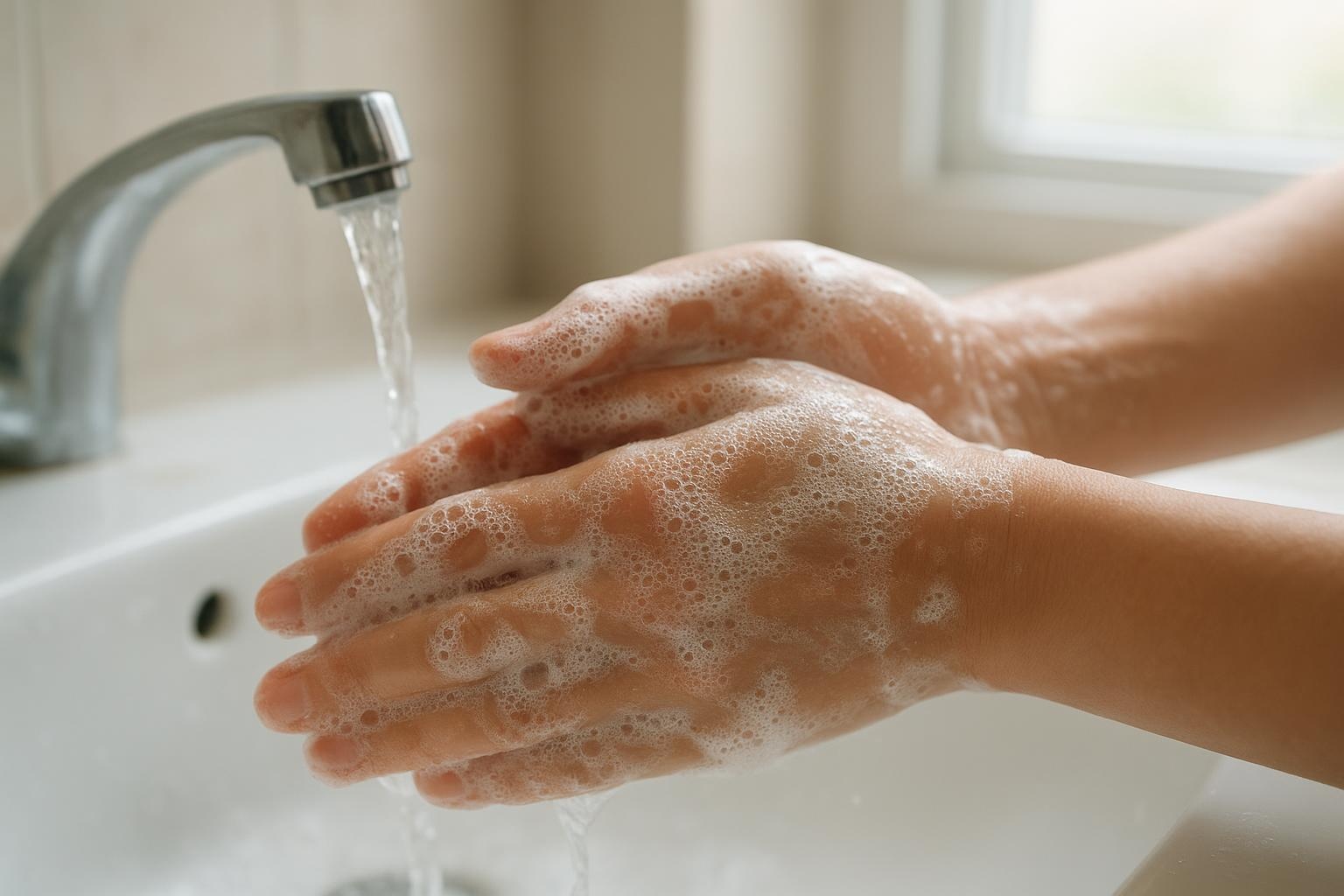
The FDA has explicitly stated: "Simple handwashing practices are one of the most effective ways to prevent the spread of many infections and illnesses at home, at school, and elsewhere. Currently, there is no evidence that antibacterial soaps are more effective at preventing illness than washing with plain soap and water."
Conclusion and Recommendations
This assessment identifies multiple evidence-based concerns regarding the routine consumer use of ActiveX antibacterial soap:
- The primary active ingredient BAC remains in FDA regulatory uncertainty.
- Multiple ingredients (BAC, SLES, EDTA, fragrance allergens) independently disrupt the skin barrier and have cumulative damage potential.
- BAC's contribution to the antibiotic resistance crisis is supported by peer-reviewed studies showing cross-resistance with clinical antibiotics.
- The environmental persistence of EDTA, QAC residues, and synthetic polymers is not reflected in the product's marketing.
- No clinical evidence supports the claim that ActiveX provides superior pathogen removal compared to ordinary soap and water.
The paper recommends that Turkish regulatory authorities (TİTCK) mandate full INCI disclosure across all sales channels, initiate independent post-market safety surveillance for consumer products containing BAC, and consider aligning with the FDA's precautionary approach.
Ordinary soap and water provide equivalent hygiene benefit without the associated chemical risks.
This article is a summary of an independent assessment prepared based on publicly available data and peer-reviewed scientific literature. It is not intended as medical advice.