Benefits of Blackberry and Its Leaves
Fresh Blackberry Nutritional Values (100g)
Nutritional Values
- Calories: 44 kcal
- Energy: 200 kJ
- Protein: 1.2 g
- Carbohydrates: 7 g
- Fat: 1 g
- Cholesterol: 0 mg
- Fiber: 3.2 g
- Vitamins:
- Vitamin A: 30-50 IU
- Vitamin E: 0.7 mg
- Vitamin K: 10 IU
- Vitamin B1: 0.03 mg
- Vitamin B2: 0.04 mg
- Vitamin B3: 0.6 mg
- Vitamin B5: 0.2 mg
- Vitamin B6: 0.1 mg
- Biotin: 0.4 IU
- Vitamin B9 (folic acid): 15 IU
- Vitamin B12: 0
- Vitamin C: 18 mg
- Mineral Values:
- Sodium: 2-3 mg
- Potassium: 200 mg
- Calcium: 40 mg
- Magnesium: 30 mg
- Phosphorus: 30 mg
- Iron: 0.9 mg
- Zinc: 0.3 mg
- Copper: 0.1 mg
- Manganese: 0.6 mg
Nutritional Profile
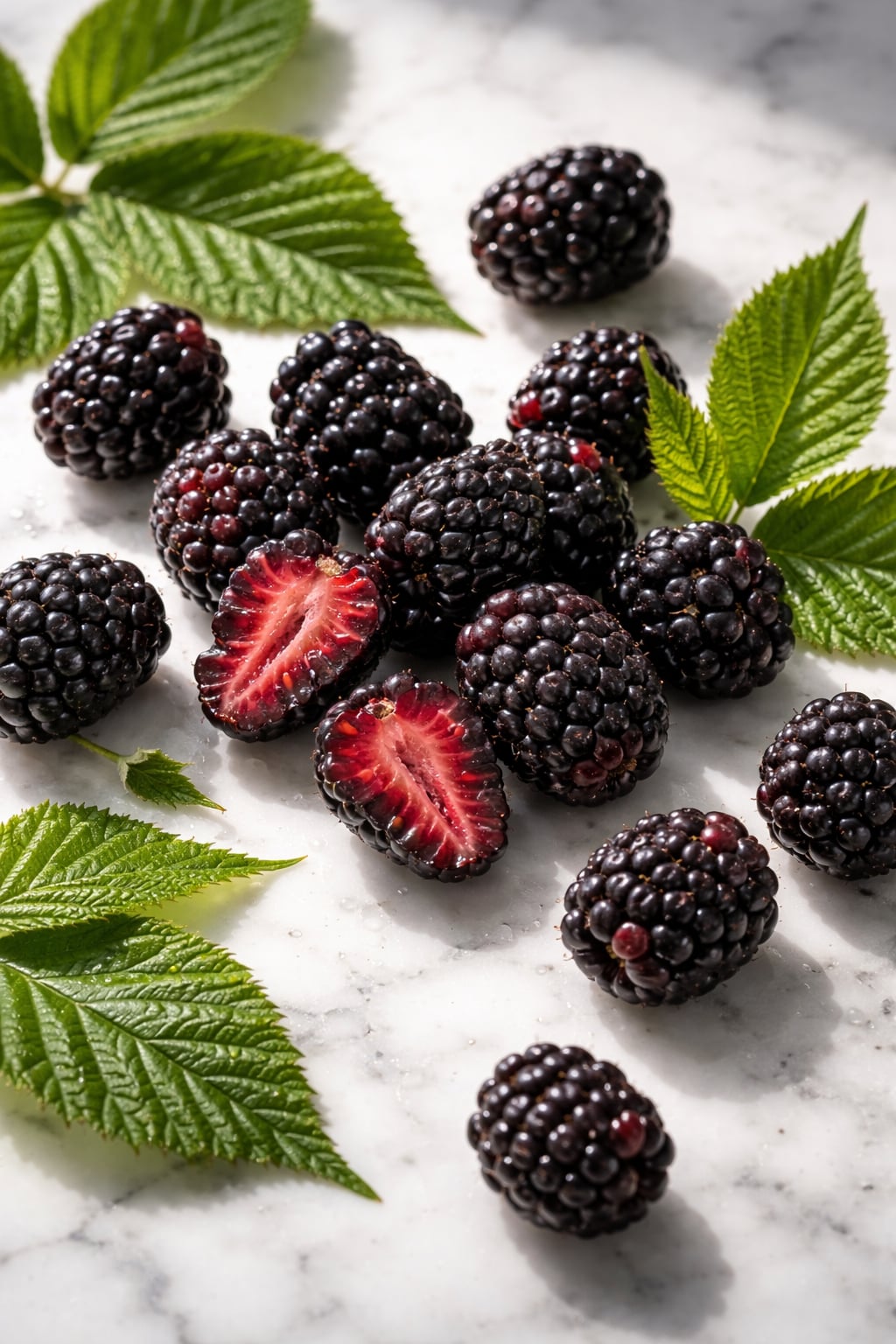
- (Blackberry has quite a few varieties. These vitamin and mineral values are useful for understanding its general characteristics.) Blackberry is red in color and darkens as it ripens. Latin name: Rubus fruticosus
- German name: Broombeerblaetter (name for its leaves)
- Other names: Thorny strawberry, Thorn mulberry
- Known compounds: The fruits contain fixed and volatile oils, fruit sugars, organic acids, citric acid, Vitamin C, pectin and iron; the leaves contain tannins and organic acids. Ellagic acid found in blackberry is known as an anti-carcinogen.
- Characteristics: It belongs to the Rosaceae family. It grows naturally at forest edges, roadsides, and garden fences. It is a perennial, thorny, shrub-like plant. The plant has thorny stems and evergreen leaves, with pink or white flowers that bloom individually or in clusters during summer. At the end of summer or beginning of autumn these flowers turn into red, blackish fruits resembling mulberries. Blackberry, which is not at all selective about location and soil, spreads through the seeds it occasionally sheds, more often by rooting of branches that touch the ground, or by resprouting of roots. Since it is a sun-loving plant, it frequently grows in sun-exposed areas of forests.
Health Benefits
- Benefits of Blackberry Leaf: Germany's Commission E — responsible for the preparation and licensing of herbal preparations — has stated that blackberry leaf can be used as a gargle for diseases of the oral and throat mucosa. Not only the fruit but also the leaf and root of the blackberry are effective against cancer. You can dry blackberry leaves and drink them as tea in winter.
- It is a body-strengthening tonic.
- It has a tissue and vascular astringent effect. It stops diarrhea and causes constipation.
- In women, it prevents excessive bleeding during menstruation. External use of blackberry leaf is pain-relieving.
- It relieves skin pain and inflammation. It is wound-healing. It is good for minor burns. It is effective in the treatment of hemorrhoids. To achieve these effects, a poultice is prepared from young leaves and applied externally to the affected areas.
- When the leaves are consumed as tea, it stops diarrhea and halts stomach and intestinal bleeding. If the root is boiled and the water drunk, it lowers blood sugar and urea levels.
- To relieve foot fatigue, boil 100g of blackberry root in 1 liter of water and use as a foot bath until it cools. For benefit from the leaf tea, it must be steeped on low heat for at least 15 minutes and then allowed to rest. To prepare a healing tea from blackberry leaf, it is said to mix it with couch grass and linden. Equal amounts of all plants — 15g each — are added to 1 liter of water, simmered on low heat for 15 minutes and rested for a while. One tea glass before meals. For calcification, uric acid, stones and diabetes. Drink for 3 days, pause for 10 days. Repeat periodically. If blackberry root is boiled together with couch grass root and consumed continuously, it eliminates kidney sand. If the root is boiled and its water drunk, it lowers blood sugar. Method and Dosage: Leaves are gathered before flowering and dried in the shade. Fresh leaves are also used. 30 grams of leaves per 1 liter of water. Boil for 15 minutes, steep for 1 hour. Strain through 4 layers of cheesecloth. Drink 2-3 glasses per day.
- Side Effects: No known serious side effects. Should not be consumed excessively.
- Benefits of Blackberry Fruit: In animal experiments in America, blackberry was found to inhibit the growth of cancer and tumor cells. It contains organic acids, ellagic acid, tannins, flavonoids, Vitamin C, fruit acids and valuable vitamins. The substance that gives blackberry its black and purple color has antioxidant properties. Purple foods offer greater protection against cancer. One handful per day is recommended. Strawberry, mulberry, blueberry, blackberry and similar foods contain proanthocyanidins that prevent heart disease and stroke. They protect against urinary tract health problems. Fruit seeds soften the intestines. With its immune-boosting effect it provides protection against cancer.
- It strengthens memory. It is stated to be effective in alleviating age-related memory problems (Alzheimer's). Blackberry is beneficial for mouth sores, gum bleeding, tonsillitis, throat infection, and inflammations. Blackberry is especially beneficial for urinary tract infection. It speeds up wound healing. For this reason it is recommended for diabetics. Its satiating property is an added benefit. Blackberry juice can be used against hoarseness. Warm fresh blackberry juice is swallowed in small sips after gargling.
- Fresh blackberry juice is beneficial in diarrhea. Pregnant women benefit from consuming blackberry. It prevents cataracts. It corrects visual weakness. Applying blackberry to wounds facilitates their healing.
- It is a good antioxidant. It helps cleanse the body of harmful substances.
- It lowers blood pressure and strengthens the body.
- Ripe blackberry is diuretic.
- It prevents hair loss. It relieves skin pain and inflammation. The ellagic acid, minerals and fruit acids it contains firm and revitalize the skin. For beauty, when blackberry flowers are boiled in water at a ratio of 50g per 1 liter of water, the medicinal liquid obtained is an excellent beauty lotion for hands. When fresh leaves are added to the bath water, they firm the skin. About 50g of fresh leaves. Blackberry is used in diets because it is a filling fruit. Blackberry is consumed raw as a fruit, as well as in the making of jam, syrup, confectionery, cake, liqueur and vinegar.