
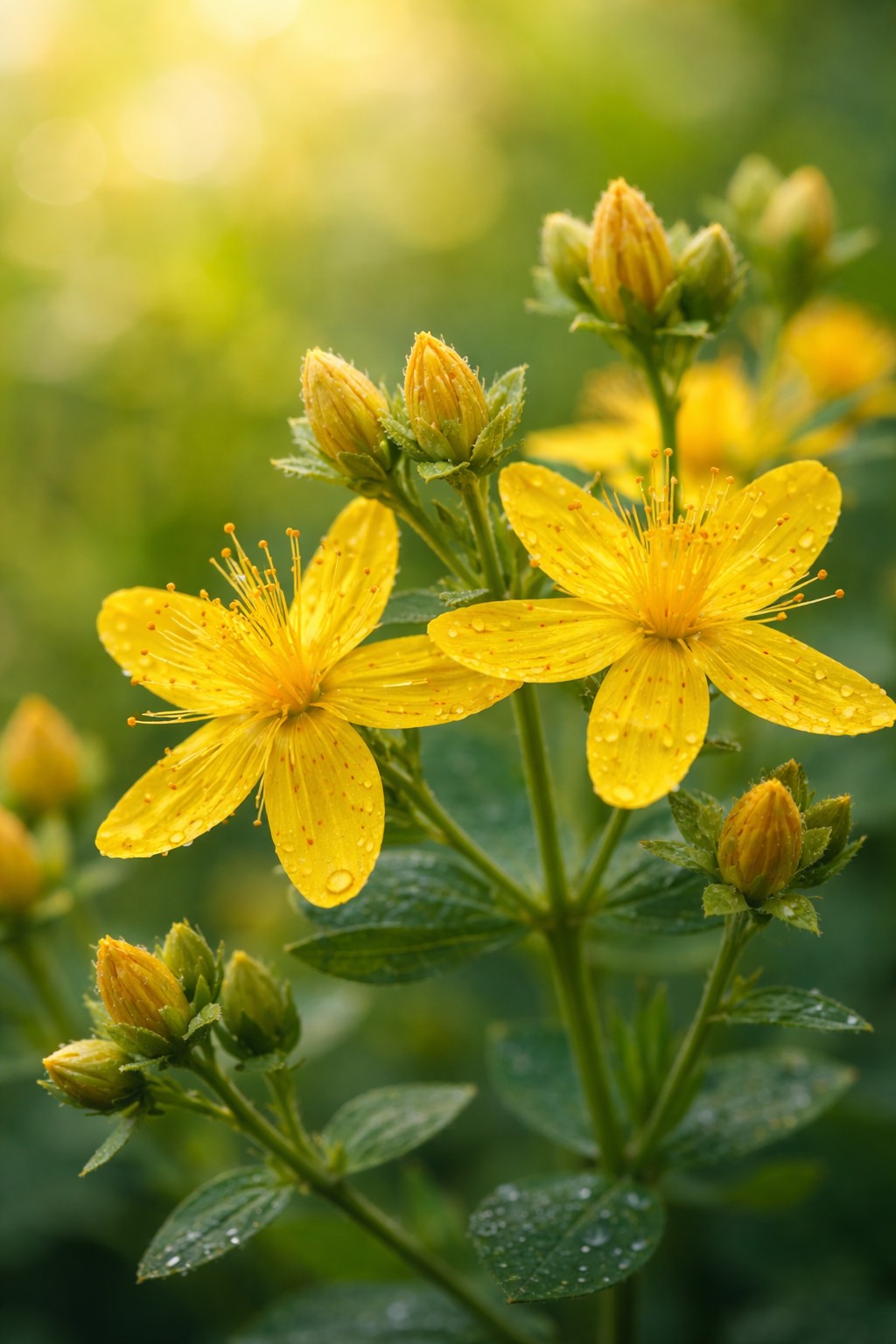
Among the plants used for mental disorders and the mind, nervous system, the most beneficial one is the yellow-flowered, fragrant plant also used in perfume making. St. John's wort.
St. John's Wort Flower (Hypericum perforatum) is a plant that blooms from July to September in fields, roadsides, forest edges, hills, and meadows. In our country, it is also known as thousand-hole herb, St. John's wort, sword herb, piles herb, and sheep breaker.
It is conveyed that the plant promotes the secretion of hormones called serotonin, known as the happiness hormone, along with dopamine and norepinephrine. It is known that when prepared as tea, the active ingredient hypericin does not pass into the water and does not provide benefit. Therefore, it should be observed whether the tablet form is effective. Random collection from roadsides and unconscious consumption is risky for health; because cadmium, which ranks among the top heavy metals, is found intensively in the composition of St. John's wort grown by roadsides.
Parts Used
During the flowering period, the flowers and buds or all above-ground parts of the plant are collected, dried immediately, and then used. In past dates, its yellow flowers were collected and kept in olive oil in a place receiving sunlight; after this oil turned red, it was used as a wound healer.
Characteristics
- Recently, it is one of the best-selling plants in America and Europe.
- Compounds such as hypericin and pseudohypericin are the characteristic components of the plant.
- Its preparations are available in tea form and as ready-made tablets or capsules.
Areas of Use
- It is recommended as an alternative antidepressant in mild and moderate depressions.
- It is seen as a suitable plant to prevent the mental disorders caused by menopause.
- There is experimental evidence that it may be useful in the treatment of addictions formed by substances such as alcohol, nicotine, and caffeine.
- It has been reported to strengthen sleep by increasing melatonin release.
- It has been reported to increase mental concentration and improve comprehension ability.
- It has antiviral and antibacterial effects.
- It has an anti-inflammatory effect.
- It is beneficial against the prostate.
- It is mentioned as an aid in vitiligo treatment.
- It has also been reported to be effective in ulcer treatment.
- It has been used among the public for diarrhea, rheumatic pains, children's bedwetting, and gout disease.
- It has been used against jaundice disease and as a wound healer.
- By affecting bile secretion in a favorable direction, it can relax the digestive system.
- It can be effective in chronic fatigue syndrome, insomnia, menopausal distress, stress, and tensions.
- It is said to be effective in cancer treatment, especially in preventing the vascularization of tumors.
- It is used to shrink benign tumors and prevent their growth.
- St. John's wort tea is used for neural facial pains and against diarrhea.
- Its tincture is used in nervous disorders, neuroses, insomnia, and nervous fatigue.
- It has also been stated to be very effective in drug addictions.
- St. John's wort oil is considered one of the best wound oils with its pain-relieving, anti-inflammatory, and healing properties.
Side Effects and Interactions
- Patients undergoing cancer treatment should not use it.
- Its use in pregnant women is not recommended due to insufficient clinical studies.
- In fair-skinned individuals, sensitivity to light may occur during plant use.
- It has caused digestive disorders in some patients.
- It can cause allergic reactions in some people.
- It may have positive or negative interactions with various medications.
- In case of side effects or interactions, use should be discontinued.
Forms of Use
To prepare tea: 1 teaspoonful of the plant is added to 1 medium-sized cup of boiled water and strained after steeping for 3-4 minutes. In the situations mentioned above, 1-2 cups are drunk daily.
To prepare St. John's wort oil: Flowers collected on sunny days are loosely filled into a bottle, and extra virgin olive oil is added on top. The olive oil should cover the flowers. The cap is left open for 3-5 days, then closed and left in the sun for 4-5 weeks.
To prepare St. John's wort tincture: 2 handfuls of plant collected in the sun and finely chopped are added into 1 liter of brandy. The bottle is left in the sun for 14 days and shaken occasionally.
St. John's wort extract: Especially in Europe and America, the capsule-form extract obtained from the flowers, leaves, and stems of the plant is also used.