
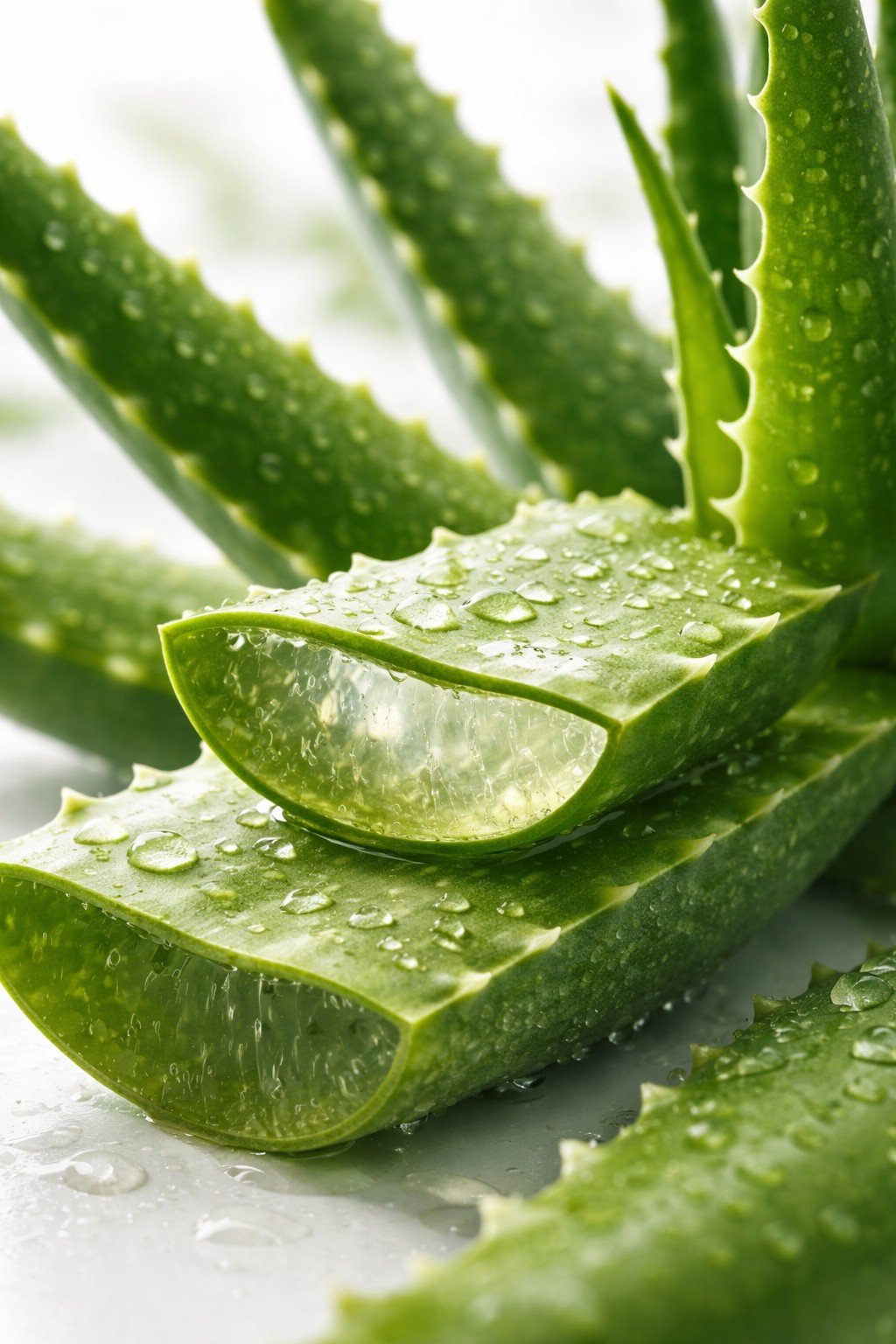
Its native homeland is the African continent. In our country, it grows wild in our southwestern and southern regions, and is also cultivated as an ornamental plant in some places. It is a perennial, succulent, and fleshy plant.
The edges of its sword-shaped leaves are serrated with small spines like a saw, and the leaves taper to a point. The surface of the leaves is pale-colored and lightly spotted; they grow by forming rosettes above the ground. The leaf consists of two parts: the green rind section, which contains substances called anthraquinones used as a laxative, and the mucilage section called aloe vera gel.
Yellow aloe leaves contain a slightly fragrant, transparent, jelly-like sap; it solidifies upon contact with air but dissolves readily in alcohol. This sap begins to oxidize when exposed to oxygen; therefore, it must be used within 5 hours. If kept longer, its medicinal effect diminishes.
It contains vitamins from groups A and B. The gel part contains 18 amino acids, 20 minerals, 12 vitamins, and polysaccharides such as acemannan, glucomannan, mannose-6 phosphate, and aloeride, which have been shown to be immunostimulants; various enzymes; alprogen, which has demonstrated antihistaminic effects; sterols such as lupeol, beta-sitosterol, and campesterol, reported to be effective on blood cholesterol levels and prostate hypertrophy; as well as lignin and salicylate.
Effects of Yellow Aloe (Aloe Vera)
- It is a strong laxative.
- It is used against excessive skin dryness during menopause.
- It is used therapeutically for wounds and burns.
- It has cholagogue properties.
- It is used as a pain reliever.
- It provides relief when used for skin inflammation and eczema.
- It is used for clogged heart vessels.
- It is used as an aid in prostate treatment.
- It is used for lung inflammation.
- It is used in the treatment of gonorrhea.
- It is used for polio and jaundice.
- It is used as a moisturizer for dry skin.
- It is used for psoriasis and minor burns, including sunburns (do not use on major burns).
- It is used internally for stomach ulcers.
- It is used for headaches and liver diseases.
- It is used as an alternative in cancer treatment.
- It is used externally for warts, age spots, and skin problems.
- When applied to hair with vinegar, it stops hair loss; it is beneficial as a moisturizer and for care in dandruff-prone hair, and for split ends.
Method of Use
For medicinal use, the tablet form must be preferred; these are produced through special processes. Direct use of the plant's sap can create toxic effects; reliable brands should be chosen. The sap from the fresh plant's leaves can be applied directly to the skin due to its moisturizing effect. Although aloe vera is stated to contain vitamins C and E, these vitamins are added during the processing of tablet forms to reduce toxic effects.
Side Effects
It should not be used in large amounts due to its laxative effect. Its use is not advisable for pregnant women and children.