
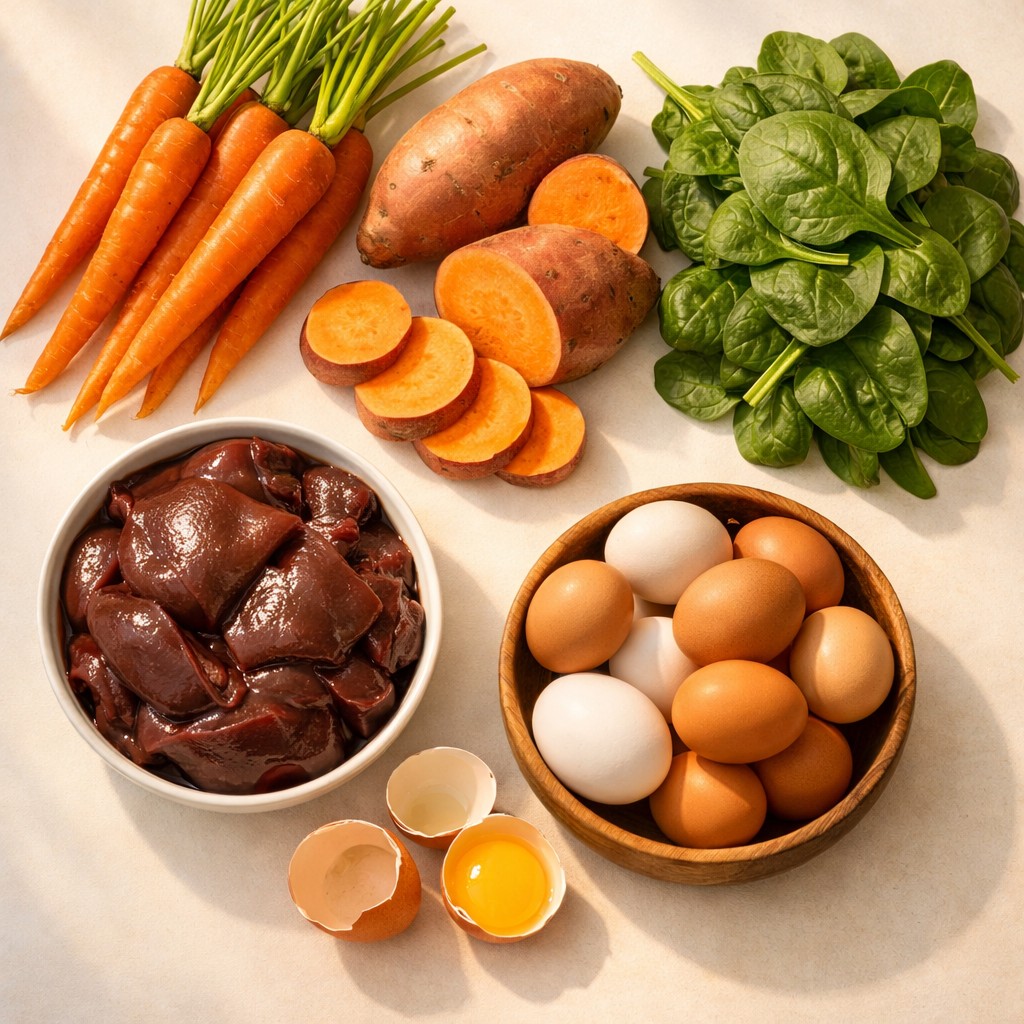
Vitamin A Food Sources (Retinol Equivalent)
- Liver (beef) — 6 g: 9124 RE
- Fish oil — 1 tablespoon: 4080 RE
- Egg yolk — 1 large: 97 RE
- Cheddar cheese — 2 g: 86 RE
- Milk — 1 cup: 76 RE
- Cream — 1 tablespoon: 63 RE
- Boiled chickpeas — 100 g: 39 RE
Beta Carotene Sources
- Potato — 1 medium: 2487 RE
- Carrot — 1 medium: 2025 RE
- Broccoli — 1 cup: 136 RE
- Apricot — 1 piece: 92 RE
Retinol is the name for the dietary form of Vitamin A.
Which Foods Contain Vitamin A? It is found more abundantly in animal foods. Primarily fish oil and liver, as well as kidney, milk, egg yolk, wheat, mushrooms, legumes, peanuts, walnuts, almonds, apricots, and tomatoes are among the foods containing Vitamin A. However, carrots specifically do not contain Vitamin A. When talking about the benefits of Vitamin A, the first thing that comes to mind is its effects on eye health. Vitamin A is the first vitamin discovered.
What is Vitamin A – What are the Vitamin A types?
Vitamin A is a fat-soluble substance that occurs naturally in two different forms. One is retinol, the ready nutrient found only in animal food sources.
The other is in the form of pro-vitamin known as carotene, which is converted into retinol only when needed. This is found in both animal and plant food sources.
What are the Benefits of Vitamin A?
This vitamin is an essential nutrient for maintaining eye health. It is effective against night blindness and helping in the treatment of many eye disorders are among the benefits of Vitamin A.
Your body also needs this micronutrient for the formation and maintenance of skin, hair, teeth, and bones.
Among the benefits of Vitamin A is its protective effect against infections, which is why it is also known as the "anti-infection vitamin." This is because it strengthens the body's natural defense system by increasing white blood cell (T-cell) and antibody production.
Foods Containing Vitamin A:
Vitamin A sources: The ready form is found in animal sources such as liver, fish oil, eggs, and milk. The pro-vitamin type is available in yellow and green vegetables including broccoli, carrots, peppers, squash, and also in yellow fruits.
Vitamin A is resistant to heat and cooking. It is not resistant to ultraviolet rays, so it should be stored in a colored bottle.
What are the Symptoms of Vitamin A Deficiency?
Vitamin A is stored in the liver, and when retinol or carotene intake is low, the body uses it from this source. Therefore, a deficiency does not occur in the short term. However, since the absorption of this substance depends on the presence of fat, any problem with fat absorption can lead to deficiency.
Vitamin A deficiency can cause eye disorders such as night blindness due to corneal damage in the eye. Dark circles under the eyes appear. As deficiency weakens the immune system, the body's capacity to fight infections also decreases. Supplementing Vitamin A externally is not healthy; it should be taken through foods. Deficiency is seen in smokers and drinkers. It is known that Vitamin A insufficiency increases the formation of respiratory, esophageal, stomach, prostate, breast, and lung cancers.
Harmful Effects of Vitamin A Excess:
Harmful effects of Vitamin A appear with continuous high-dose use. Excess Vitamin A causes headaches, joint pains, nausea, vomiting, hair loss, dry skin, liver problems, and risky birth. Pregnant women should adhere to the dose recommended by their doctor.
Excess Vitamin A can be understood most simply from yellowing of the skin color and palms.
Vitamin A should not be used together with acne medications.
Vitamin A Dosage:
Vitamin A usage: The RDA (Recommended Daily Allowance) value is 4,000-5,000 IU daily. There is no official RDA for beta carotene, but it is equivalent to an RDA value between 10,000 and 15,000 IU. Large amounts of this substance can cause toxic side effects such as bone pain, hair loss, weakness, and headaches, and doses exceeding 15,000 IU daily should only be taken under strict doctor supervision.
For the benefits of Vitamin A to be seen effectively, it must be taken together with the minerals zinc, calcium, phosphorus and vitamins C, D, E, and B. Excess Vitamin A is also toxic, like Vitamin D. For those who wonder why carrots do not contain Vitamin A; carrots do not contain Vitamin A, they contain carotene, and carotene is converted into Vitamin A in the small intestine and liver.