Benefits of Selenium
It is important for protection against cancer, heart health, thyroid hormones, and healthy development.
The amount of selenium in the soil is decreasing every day. The reasons for this are earthquakes, unconscious cutting of trees, forest fires, and soil erosion, among others. Therefore, in all countries, soil is being enriched with selenium through fertilization.
The daily dose of selenium is between 0.08 mg and 0.2 mg. This amount is the recommendation of university experts. The World Health Organization (WHO) has reported that intake above 0.90 mg will cause toxicity in adults. Excessive intake causes muscle pain, cramps, and nausea. High doses can lead to death. Errors with mg, gram, microgram have been made on websites.
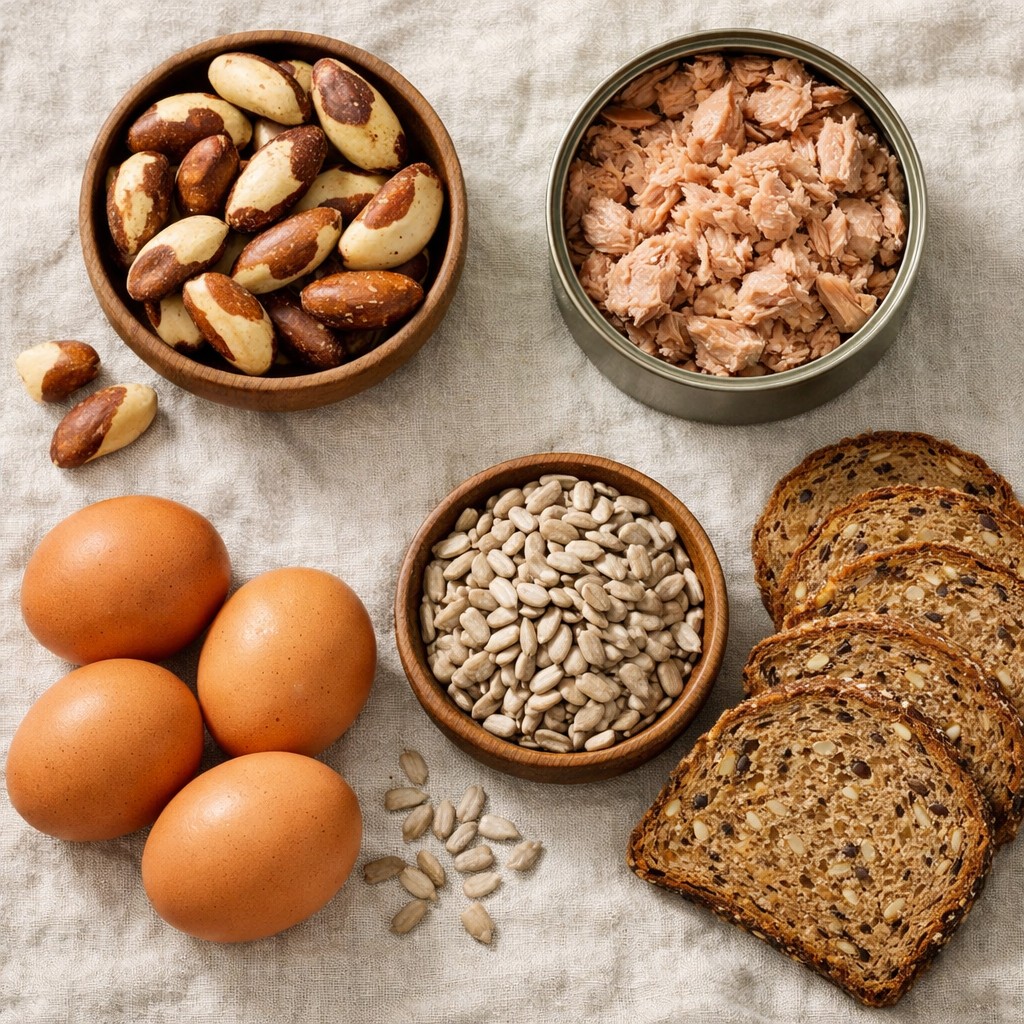
The amount of selenium in 100 grams of food varies according to the selenium content of the soil. These values are approximate.
- Potato: 0.40-0.45 mg
- Village egg: 0.11 mg
- Wheat: 0.13 mg
- Unrefined rice: 0.10 mg
- Wheat flour: 0.001 mg
- Oats: 0.15 mg
- Coconut: 0.81 mg
- Sesame: 0.80 mg
- Pumpkin seeds: 0.60 mg
- Cashew: 0.194 mg
- Sunflower seeds: 0.24 mg
- Tuna: 0.17 mg
- Sardine: 0.085 mg
- Mushroom: 0.194 mg
- Lettuce: 0.06 mg
- Onion: 0.03 mg
- Red onion: 0.06 mg
- Garlic: 0.04 mg
- Cucumber: 0.06 mg
- Herring: 0.16 mg
Hazelnuts and pistachios contain high levels of selenium, but these measurements are not official. Meat and meat products, grains, nuts, large white fish, pumpkin, seeds, nuts, black cumin, turkey meat and chicken meat, milk and dairy products contain selenium. It is found in high amounts in chicken and turkey white meat.
Selenium and Its Functions in the Body
Selenium, which works as a powerful antioxidant and cell protector together with Vitamin E, especially plays a role in the structure of the glutathione peroxidase enzyme. It prevents tissues from being damaged due to oxidation. In this way, it also has positive effects on preventing premature aging.
It is thought that men need selenium more than women. Half of the selenium in men is found in the reproductive system. Selenium is important for maintaining the elasticity of tissues.