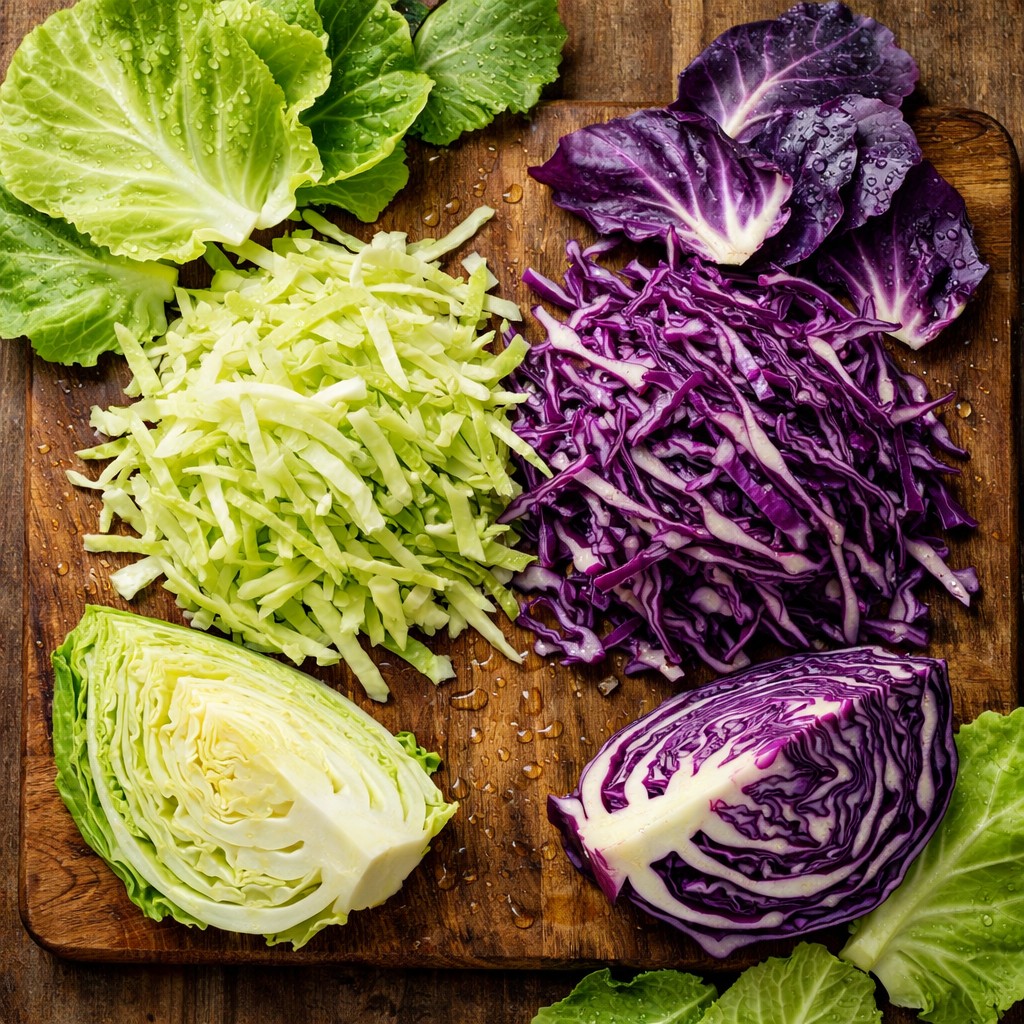
Many universities and health websites state that cabbage should be consumed raw to protect against cancer. It contains a high amount of Vitamin C, Vitamin A, Vitamin K, and minerals. Since vitamins C and B are water-soluble vitamins, they are destroyed by boiling and cooking. The most significant feature of cabbage is that it provides protection against winter illnesses with Vitamin C; it also helps with weight loss.
Cabbage contains more Vitamin C than oranges. It is one of the natural sources of the 8 amino acids necessary for our body; it is beneficial to eat it alongside meats. There are only 24 calories in 100 grams.
It contains high sulfur. Foods with high sulfur content protect against cancer, diabetes, and many diseases. Cabbage is a natural antibiotic. Its iodine content is necessary for healthy brain development. It has a suppressive effect on thyroid hormone during stressful periods; some experts call cabbage "penicillin".
It strengthens the immune system, is a breast softener; it is beneficial for jaundice and stomach ulcers. Its poultice is used in burn treatment.
Percentage of Daily Vitamin Need Met by 200g of Cabbage Varieties
| Nutrient | Red Cabbage | Green Cabbage | Brussels Sprouts |
|---|---|---|---|
| Vitamin A | %1 | %137 | %13 |
| Vitamin C | %46 | %83 | %95 |
| Vitamin E | %7 | %20 | %23 |
| Vitamin K | %291 | %629 | %671 |
| Iron | %7 | %20 | %12 |
| Potassium | %14 | %22 | %18 |
| Calcium | %7 | %35 | %5 |