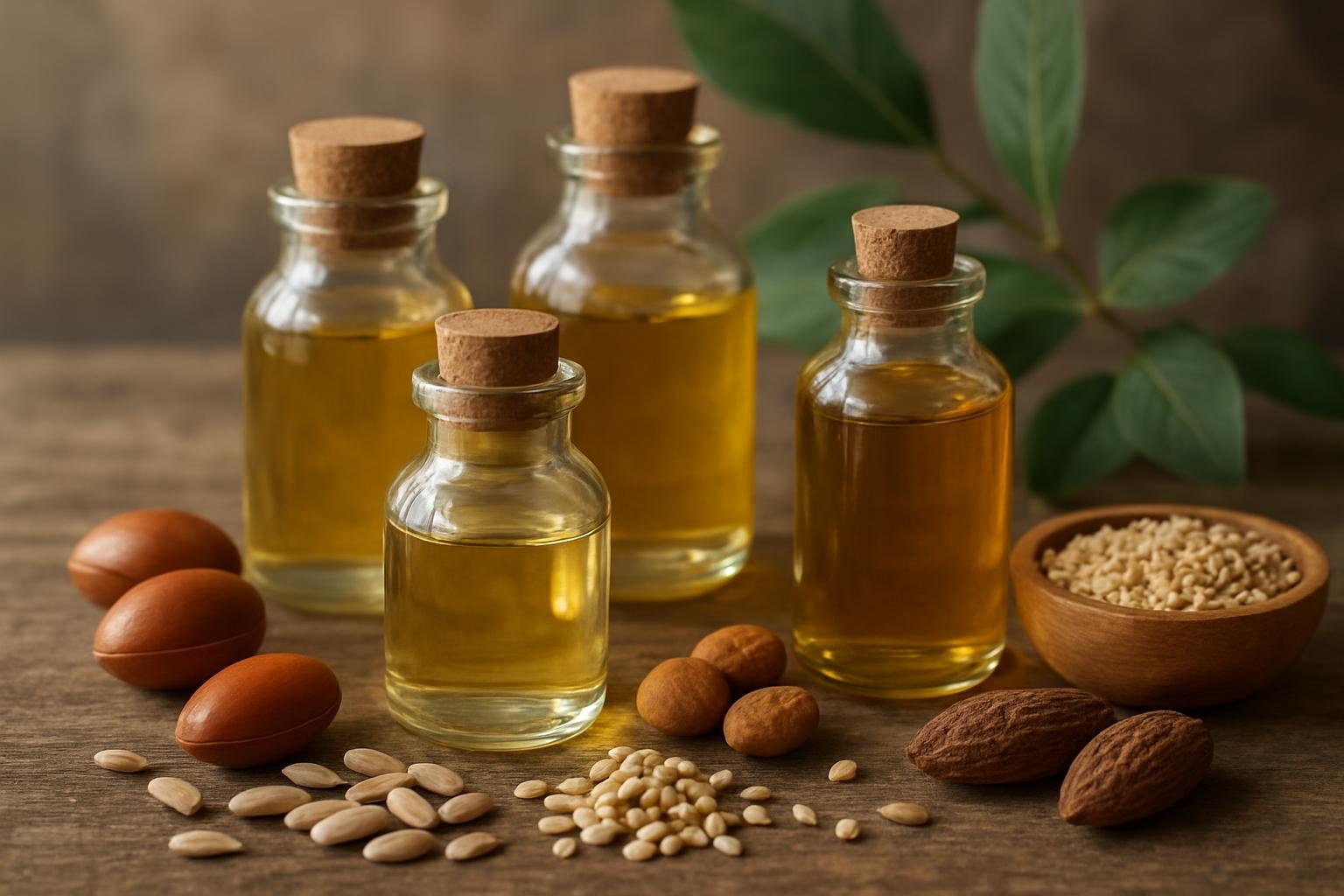
The benefits we derive from fats for our health are directly related to the production and extraction methods of fats.
About Fixed Oils
Scientifically, fixed oils are structures formed by a glycerol molecule with three similar or different fatty acid molecules in the presence of an enzyme and are called "Triglycerides."
The structural properties of the fatty acid in the molecule being saturated or unsaturated, and which fatty acids play a role in the structure, are qualities that determine the value and quality of that oil. As the liquid properties of natural vegetable oils increase, their value for health also increases proportionally.
Substances that the body cannot produce and must be obtained from the diet are called essential substances. Omega fatty acids like Omega-3 and Omega-6 are essential substance groups that the body cannot produce and are of great importance in determining the biological value of fixed oils. In addition to these, there is also Omega-9; however, it can be produced by the body.
Fixed oils, which have vital value, are unsaturated fatty acids and are easily digestible oils that carry vitamins A, D, E, and K.
Cold Press Method
In methods that use heat treatment and/or chemicals, such as the extraction method applied during oil production, the structures of fat-soluble vitamins and other valuable by-products found along with the important fatty acids for health are degraded. In oils obtained by natural methods like cold pressing, the oil yield is low; however, the vitamins and other valuable by-products contained in the seed can pass into the oil without their structures being degraded.
For example, cold-pressed soybean oil also contains natural substances with high nutritional value such as lecithins (phospholipids), phytosterols, organic minerals, lignans, and Vitamin E (tocopherol).
Cold-pressed olive oil is one of the richest sources of Coenzyme Q10 (ubiquinone), which plays a major role in energy metabolism (especially in the heart muscle). Coenzyme Q10 not only acts as an oxygen carrier in the conversion of carbohydrates or fats into energy in a cell but is also a regenerator of Vitamin E; that is, it renews fat-soluble antioxidants. Therefore, using cold-pressed soybean oil and olive oil together (2 parts olive oil, 1 part soybean oil) provides optimum benefit for the body.
When healthy nutrition is concerned, oils obtained by the cold press method should always be preferred. Fixed oils obtained by this method are known as virgin oils; virgin oils should be consumed directly and should not be used as cooking or frying oil.
Fat Glossary
Fats are among the most important sources of energy required by our body. Each gram of fat contains 9 calories. The recommended daily fat intake should be an amount that meets 25-35% of the daily required calories.
Saturated fatty acids: Animal-based foods like red meat, chicken, butter, and plant-based foods like coconut oil are rich in saturated fats. They are solid at room temperature and raise cholesterol levels.
Unsaturated fatty acids: They are the best sources of the essential fatty acids required by the body. They are liquid at room temperature and the vast majority are plant-based. Unsaturated fats are divided into two: monounsaturated and polyunsaturated:
- Monounsaturated fatty acids: They are in liquid form at room temperature. Hazelnut oil, olive oil, and canola are rich in these fatty acids.
- Polyunsaturated fatty acids: They are in soft or liquid form at room temperature. Corn oil, sunflower oil, and soybean oil have high polyunsaturated fatty acid content. Omega-6 and omega-3 fatty acids, which cannot be produced by the body, fall into this group; they must absolutely be obtained externally through food.
It is recommended that the daily diet contains a maximum of 10% saturated fatty acids (animal fats like butter), 15% monounsaturated fatty acids (olive oil, hazelnut oil, canola), and a maximum of 10% polyunsaturated fatty acids (soybean, sunflower, corn oil); this amounts to approximately 3-4 teaspoons/day.
Oils in Our Kitchen
Olive oil — Contains 9% polyunsaturated, 77% monounsaturated, 14% saturated fatty acids. It contains a high proportion of monounsaturated fatty acids; these acids are predominantly "oleic acid." Oleic acid plays an important role in protecting against cardiovascular diseases in adult nutrition. It is also rich in phytosterols and tocopherol (150-170 mg/kg). It is the only oil that contains a high amount of β-sitosterol, which reduces the intestinal absorption of cholesterol; the squalene and beta-carotene it contains have antioxidant properties. Unlike other oils, it does not reduce stomach acids and is digested in the intestines. It helps maintain the balance between omega-3 and omega-6 fatty acids. It is consumed raw in salads and olive oil-based dishes.
Canola oil — Contains 32% polyunsaturated, 62% monounsaturated, 6% saturated fatty acids. Like olive oil, it has high oleic acid content. It is rich in vitamins E and K; among all oils, it has the lowest saturated fatty acid ratio and the highest alpha-linolenic acid content. Due to its heat resistance, it can be preferred in salads and hot dishes.
Corn oil — Contains 52% polyunsaturated, 32% monounsaturated, 16% saturated fatty acids. It is a good source of Coenzyme Q10 and Vitamin E (alpha and gamma tocopherol). It has the highest phytosterol value among all vegetable oils: 968 mg of phytosterol per 100 ml. Research has shown that phytosterols play an important role in lowering blood cholesterol levels.
Sunflower oil — Contains 66% polyunsaturated, 21% monounsaturated, 13% saturated fatty acids. The polyunsaturated fatty acid ratio is quite high. Its Vitamin E content is higher compared to other vegetable oils.
Hazelnut oil — Contains 10% polyunsaturated, 82% monounsaturated, 8% saturated fatty acids. Like olive oil, it has high oleic acid content and is the lightest among all oils. It is rich in calcium, vitamins A, E, and B group vitamins (especially B6). Due to its lightness and heat resistance, it can be used in salads and hot dishes.
Soybean oil — Contains 62% polyunsaturated, 22% monounsaturated, 16% saturated fatty acids. It contains both linolenic and linoleic acids from the essential fatty acids. It is also rich in iron, B and E vitamins, calcium, and zinc.
Recommended Use
Fats are necessary for the functioning of our body; as long as they are consumed in balance, there is no need to fear fat. To adequately obtain both omega-6 and omega-9 fatty acids, vegetable oils should be used in rotation:
- Olive oil in salads
- A mixture of sunflower + canola or corn + hazelnut oil or soybean + hazelnut oil in cooked dishes
- 2-3 whole walnuts or 10-15 hazelnuts or almonds as a snack every day
If oils are stored in dark-colored or wicker bottles, they retain their volatile oil properties. For health purposes, using unrefined oils provides the highest benefit.