Vitamin B5, also known as pantothenic acid, was first isolated from rice husks in 1939. Since it is found in both plant and animal sources, it takes its name from the word "Panthos," meaning 'everywhere'.
Vitamin B5 Functions
- Supports normal growth and development.
- Helps in the synthesis of many body materials.
- Supports adrenal gland function (like cortisol).
- Gives color pigment to the blood.
- Is necessary for energy metabolism.
- Plays a role in the body as coenzyme A.
- Is necessary for red blood cell production.
- Helps convert carbohydrates, protein, and fat into energy.
- Vitamin B5 has a function in antibody production.
Vitamin B5 Benefits
- Helps in the fight against stress. It is also called the anti-stress vitamin.
- Accelerates the healing of wounds and burns.
- Is protective for the liver.
- Has protective effects for hair health and prevents skin wrinkles.
- Prevents premature graying of hair.
- Is beneficial against complaints related to rheumatoid arthritis.
- Helps relieve constipation problems.
- Is beneficial against acne problems.
In Case of Deficiency
Vitamin B5 deficiency is not seen in a healthy diet. Deficiency occurs with the use of vinegar, birth control pills, cigarettes, and alcohol. Vitamin B5 is lost during the cooking and refining processes of foods. Vitamin B5 is a water-soluble vitamin that is not stored in the body. Vitamin B5 is not resistant to heat, alkalis, and acid.
- Nerve damage
- Respiratory problems
- Skin problems
- Lifeless, dull hair and itchy scalp, premature graying
- Liver cirrhosis
- Rheumatoid arthritis
- Stomach ulcer
- Allergy
- Congenital disorders
- Mental fatigue
- Headache
- Sleep disorder
- Muscle spasms, cramps
Overdoses can cause diarrhea. Vitamin B5 can be used alone or taken together with other B group vitamins.
Daily dose: Varies by age but is between 10-20 mg.
Natural Sources (per 100g)
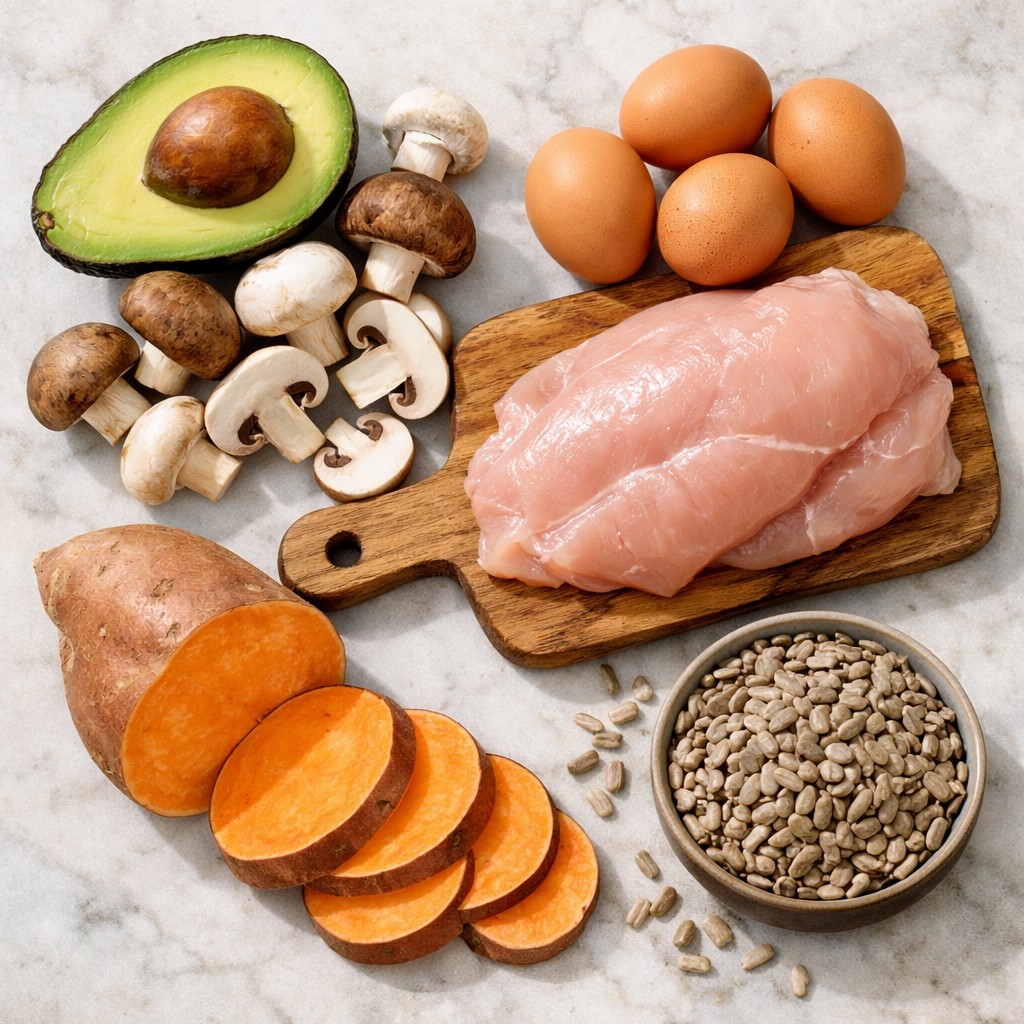
- Mushroom: 2.1 mg
- Cashew: 1.2 mg
- Pine nut: 1.8 mg
- Avocado: 1.1 mg
- Chickpea: 1.3 mg
- Peas: 2.1 mg
- Lentils: 1.3 mg
- Chicory: 1.6 mg
- Watermelon: 1.6 mg
- Cheese: 2 mg (cow)
- Tongue, cheddar: 1.5 mg
- Kidney: 3.8 mg
- Chicken liver: 7 mg
- Herring: 9.3 mg
- Brewer's yeast: 19 mg
- Natural rice: 1.7 mg
- Meat: 1.5 mg
- Bitter apricot kernel: 0.58 mg
Found in red meat, liver, chicken, grains, legumes, nuts, hazelnuts, almonds, pistachios, walnuts, fruits, eggs, and dairy products.