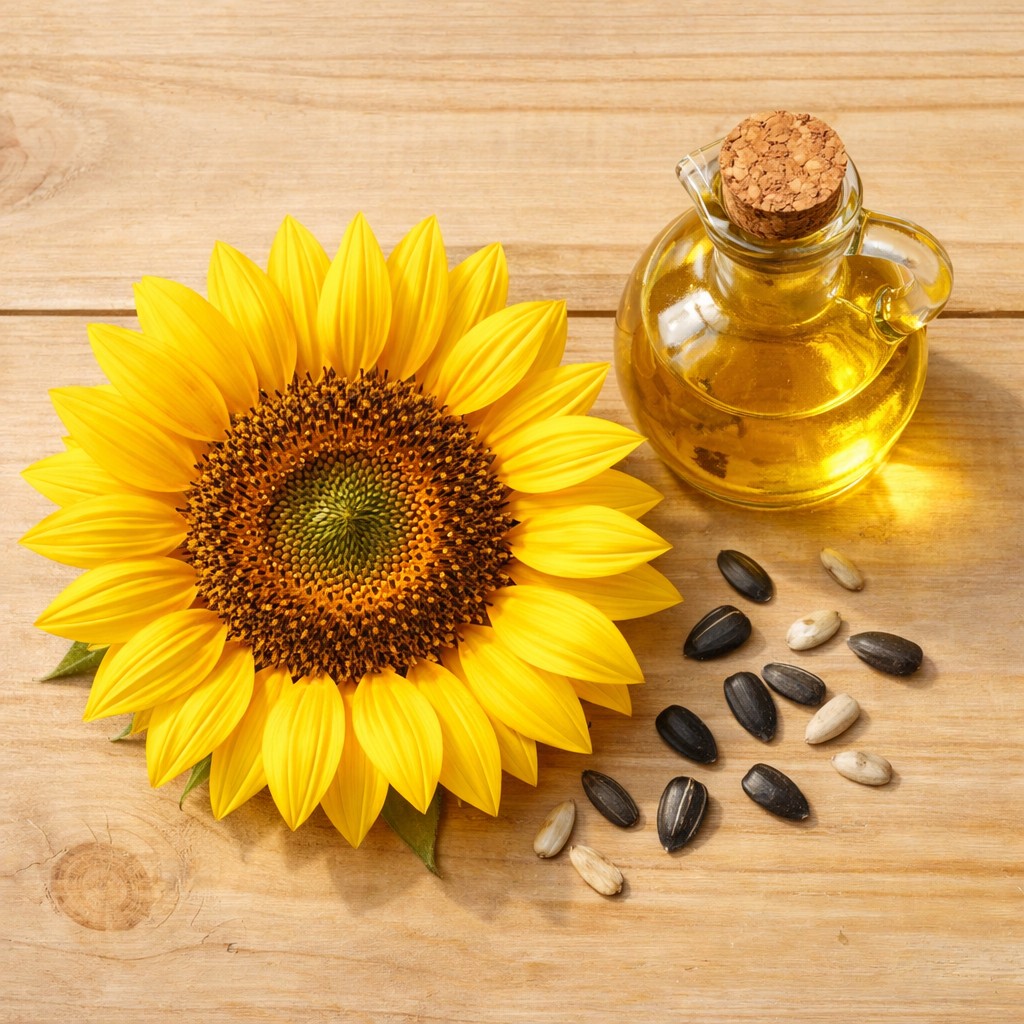
In many languages, the name of the sunflower begins with "sun" (Sonne-, Sun-); in Turkish, it begins with "moon". The benefits of sunflowers are likened to the benefits of the sun; both are referred to as natural sources of Vitamin D. Its use as a snack is very common in our country and worldwide; cracking seeds soothes nerves and provides fine motor skill development, especially serving as a replacement for hand habit during smoking cessation periods.
Its composition contains Vitamin E, which prevents the rancidity of fats in the body. Sunflower, which also contains Vitamin D rarely found in plants, supports the better utilization of calcium and phosphorus. Alongside its rich vitamin content, it also contains folic acid, nicotinic acid, and pantothenic acid, which prevent anemia. Sunflower, also valuable in terms of protein, contains the 8 amino acids the body needs in a balanced form. When sprouted and used, its digestion becomes easier and its biological value increases; its hulled seeds can be added to meals and bread.
Benefits
The phosphorus and zinc it contains are necessary for bone and tooth formation; phosphorus helps with heart muscle contraction and the regulation of kidney functions. Zinc is important for wound healing, acne prevention, strengthening the immune system, reducing recurrent infections, and in terms of taste and smell sensitivity and sperm motility. Vitamin B6 protects the immune system and is beneficial for low blood sugar. Its fiber content helps protect against cancer by reducing the time cancer-causing substances remain in the intestines and their contact with the intestinal wall.
Its leaves and flowers have fever-reducing and chest-soothing properties in cough-related illnesses; it is a known folk remedy in Russia. For this purpose, 50 g of hulled seeds are boiled in 0.5 liters of water until half the water evaporates, then 100 g of powdered sugar or honey is added; 2 teaspoons are consumed 3 times a day. Seeds boiled into a paste can also be used to mature boils. Sunflower root does not raise blood sugar, so diabetics can use it as a natural sweetener in some beverages.
Sunflower Oil
Sunflower oil obtained by cold pressing contains: 50-64% Linoleic Acid (Omega 6), 25-42% Oleic Acid (Omega 9), 4-7% Palmitic Acid. It also contains sterols such as campesterol, cholesterol, sitosterol, and stigmasterol; vitamins A, B1, B2, B6, C, and E; 30% protein, carotenes, lecithin, betaine, tannin, silicic acid, and the mineral potassium.
- Helps lower cholesterol and alleviate arteriosclerosis.
- Gives energy and strength to the body and mind.
- Increases sexual potency with its capillary-dilating property.
- Strengthens the immune system; beneficial against heart and nerve diseases.
- Supports recovery and development by meeting the protein, vitamin, and mineral needs of patients and children in their growth period.
- Good for anemia; ensures wounds heal quickly.
- Rich source of ALA (alpha-lipoic acid); linoleic acid is necessary for the central nervous system, eyes, and platelets.
- Rich in Vitamin E, betaine, phenolic acids, and choline; increases the fluidity of blood cells. Choline plays a role in memory functions, betaine in heart ailments.
- Meets 43% of the daily Vitamin E requirement; Vitamin E is known for its cancer-preventing, heart-protecting, and anti-aging effects.
- Used as a massage oil for removing skin lesions, in psoriasis, and in rheumatic ailments.
- Its Vitamin K content is lower compared to other oils (Vitamin K is a clotting factor), therefore it can be particularly preferred.
- It is recommended for those who have suffered a cerebral infarction to use active lecithin sunflower oil along with lecithin supplementation.
For internal consumption, the minimum dose is 2 teaspoons per day for adults, 1 teaspoon for children under 6; more is also harmless. However, calorie value and personal allergy possibility should be considered. It should not be used before surgery or by those with clotting problems. It is not harmful for pregnant women. All these benefits apply to plants and oils that have not undergone heat treatment.