Its benefits have been scientifically proven. It also has pain-relieving properties...
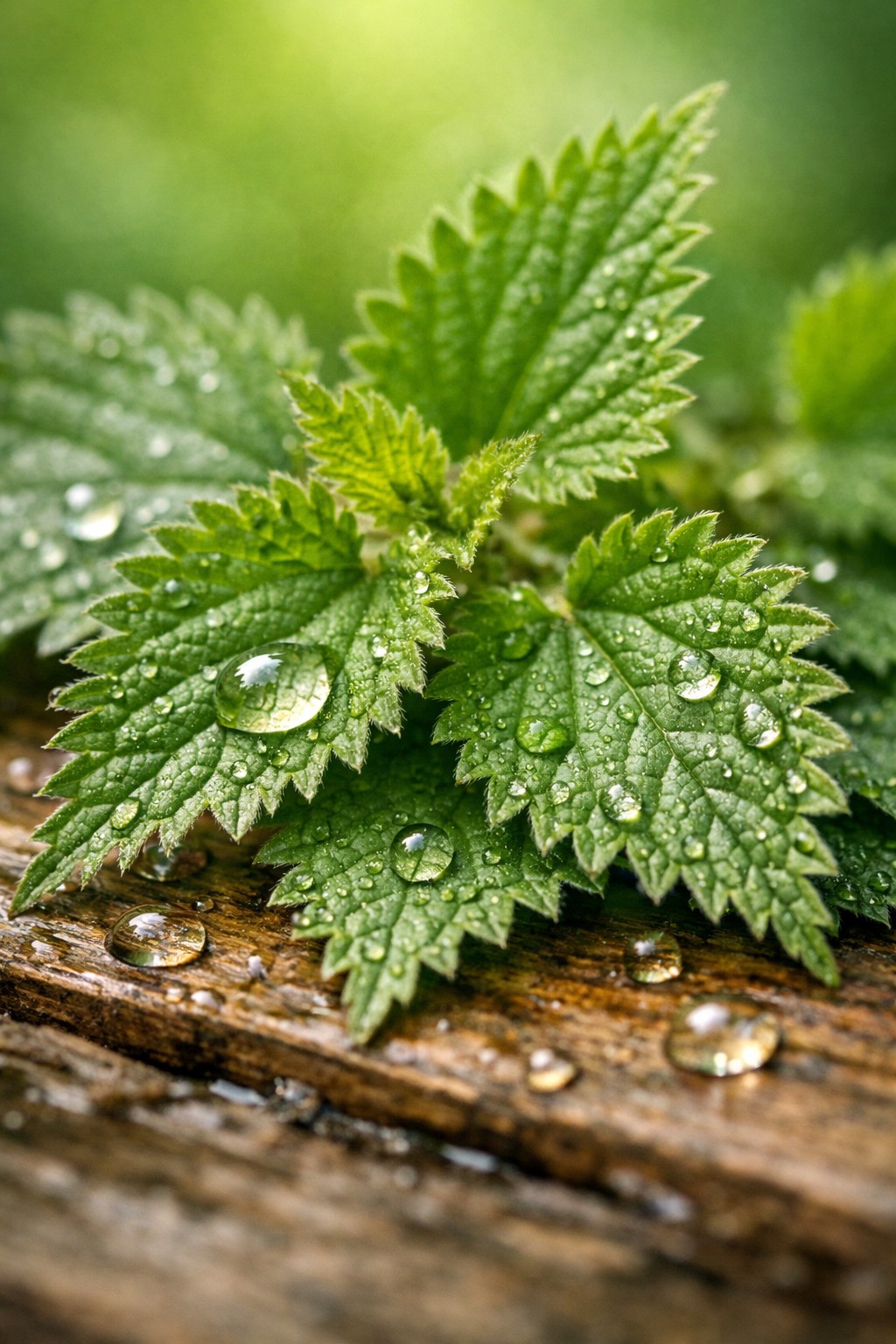
Assoc. Prof. Dr. İlhami Gülçin, a faculty member in the Department of Chemistry at Atatürk University's Faculty of Science, stated that through his work, he has scientifically proven that nettle prevents ulcers, heals wounds, even prevents the spread of resistant microorganisms, and has pain-relieving properties. In a statement to an AA reporter, Gülçin mentioned that nettle has various benefits, but most of these have not been scientifically proven and compiled in one place. Arguing that although studies on nettle in Turkey have attracted much attention, they could not be converted into data and remained only on paper, Gülçin said, "In my doctoral thesis, I conducted a scientific study on nettle by compiling all these studies. In my doctoral work, which lasted 5 years, I scientifically proved some of the benefits of nettle, in particular." Explaining that in their studies, they focused on nettle's antioxidant activity, anti-microbial activity, radical scavenging, ulcer-healing (anti-ulcer), and pain-relieving activities, Gülçin emphasized that they later conducted a comprehensive study and benefited from the experience of pharmacologists while carrying out this study. Stating that nettle is an excellent, health-important plant, Gülçin noted that nettle is also used abundantly in Anatolian culture. "IT EVEN PREVENTS THE SPREAD OF VERY RESISTANT MICROBES" - Asserting that nettle even prevents the spread of very resistant microbes, Gülçin noted the following: "
It Even Prevents the Spread of Very Resistant Microbes
Another advantage of nettle, which is so beneficial for health, is that it is found abundantly in Anatolian lands. Its use among the public is widespread. Nettle is used in salads, and there are also nettle teas and meals. In the study we conducted, we determined that besides its antioxidant effect, nettle has a lethal effect against microbes and is good for ulcers. We orally administered nettle extract to mice with induced ulcers. As a result, we observed that the ulcer-afflicted mice recovered. Thus, we determined that nettle is good for ulcer disease. We proved that it prevents ulcers by 68 percent." Gülçin said, "The Staphylococcus family is a very resistant microbial family. We observed that nettle prevents the growth of these microorganisms and its anti-candidal property is also effective. When we compared it with standards, we observed that nettle's anti-microbial property is quite good." "NETTLE'S PAIN-RELIEVING PROPERTY IS NOT WIDELY KNOWN" In his study, revealing nettle's pain-relieving property, Gülçin said, "In our study, we proved that nettle has pain-relieving properties. In another study conducted on laboratory animals, it was determined that as a strong pain reliever, it prevented pain by 62 percent. Nettle's pain-relieving property is not widely known among the public." Mentioning that when people think of nettle, its stinging property comes to mind, Gülçin said, "It was said that nettle's stinging property originated from formic acid. This was incorrectly known both among the public and in the scientific field. However, in scientific studies, it was determined that it originates from the histamine molecule found in nettle leaves." Explaining that nettle, which is very common in our country, has 3 varieties in Anatolia, Gülçin stated that especially the Urtica dioica species is found abundantly in gardens and along walls, and recommended the consumption of this species. Noting that male and female nettles are separate plants, Assoc. Prof. Dr. Gülçin said: "We can say that nettle, which emerges especially in the spring months, is much more medicinal. We observed that in later shoots, some compounds and properties are absent. These properties are found more in nettle that emerges in spring. Nettle that emerges in spring can be collected, dried in the shade, and used in tea, salads, and meals. It can also be consumed fresh. Instead of consuming a lot in one day, consuming a little every day is more beneficial." -"TO HEAL WOUNDS..."- Saying, "To distinguish the nettle we need to use from others, the nettle that stings when we touch it with our hand is the nettle we are looking for," Gülçin stated that nettle is good for many diseases and continued as follows: "In our study, we scientifically proved that nettle prevents ulcers, heals wounds, even prevents the spread of very resistant microorganisms, and has pain-relieving properties. It can be used for ulcers and external wounds. It has no side effects. If it is to be used to heal wounds, we should pound it a little in a mortar and apply it to the wound when it becomes liquefied. Because nettle has a very good anti-microbial property, thanks to this property, it heals wounds." Explaining that as a researcher, he continued his work for 5 years to scientifically prove the benefits of nettle, Gülçin emphasized that nettle, which is found abundantly in Anatolia, is healthier when used fresh after being collected and dried in the shade, rather than using ready-made teas. Explaining that nettle is found abundantly in our country and is sold very cheaply in herbalists, Gülçin recommended daily consumption in small amounts throughout the year. Stating that nettle is widely used in the pharmaceutical industry, Gülçin said, "The use of components made into pills in medicine is common. In Germany and the Netherlands, fibers obtained from nettle are used as textile products. They have almost 100% no side effects and are worn comfortably." Assoc. Prof. Dr. Gülçin stated that nettle has no side effects when used appropriately, and mentioned that when used excessively daily, it may have a laxative effect due to its bowel-cleansing property. -HIS STUDY WAS PUBLISHED IN TWO JOURNALS- Stating that he completed his doctoral thesis on nettle in 5 years, Gülçin said, "My study on nettle was published in the 'Journal Of Ethnopharmacology', which publishes scientific studies on endemic and popularly used plants, and the part related to enzymes, which is the second leg of my study, was published in the 'Journal Of Enzyme Inhibition and Medicinal Chemistry'."