Mi az az E-vitamin és mely ételekben található?
Az 1922-ben felfedezett és antioxidáns hatásáról ismert E-vitamin (tokoferol) védő hatással van bizonyos rák- és szívbetegségekkel szemben. Nyolc különböző tokoferol létezik, ezek közül a leghatásosabb az alfa-tokoferol.
Elsősorban a gabonafélékben, valamint a zöld zöldségekben, mint a spenót, tök, káposzta, saláta, bőségesen megtalálható. Az emberi szervezetben a májon kívül a zsírszövetekben, a vesében, a szívben, az izmokban és a mellékvesekéregben tárolódik. A felesleges mennyiséget a vizelet és a széklet eltávolítja. Antioxidáns tulajdonságokat mutat. Az E-vitamin hiánya rendkívül ritka és vérszegénység formájában jelentkezik.
Alfa-tokoferol (E-vitamin)
Az E-vitamin tartalmaz alfa, béta, gamma és delta tokoferolokat. Ezek közül különösen az alfa-tokoferol fontos antioxidáns.
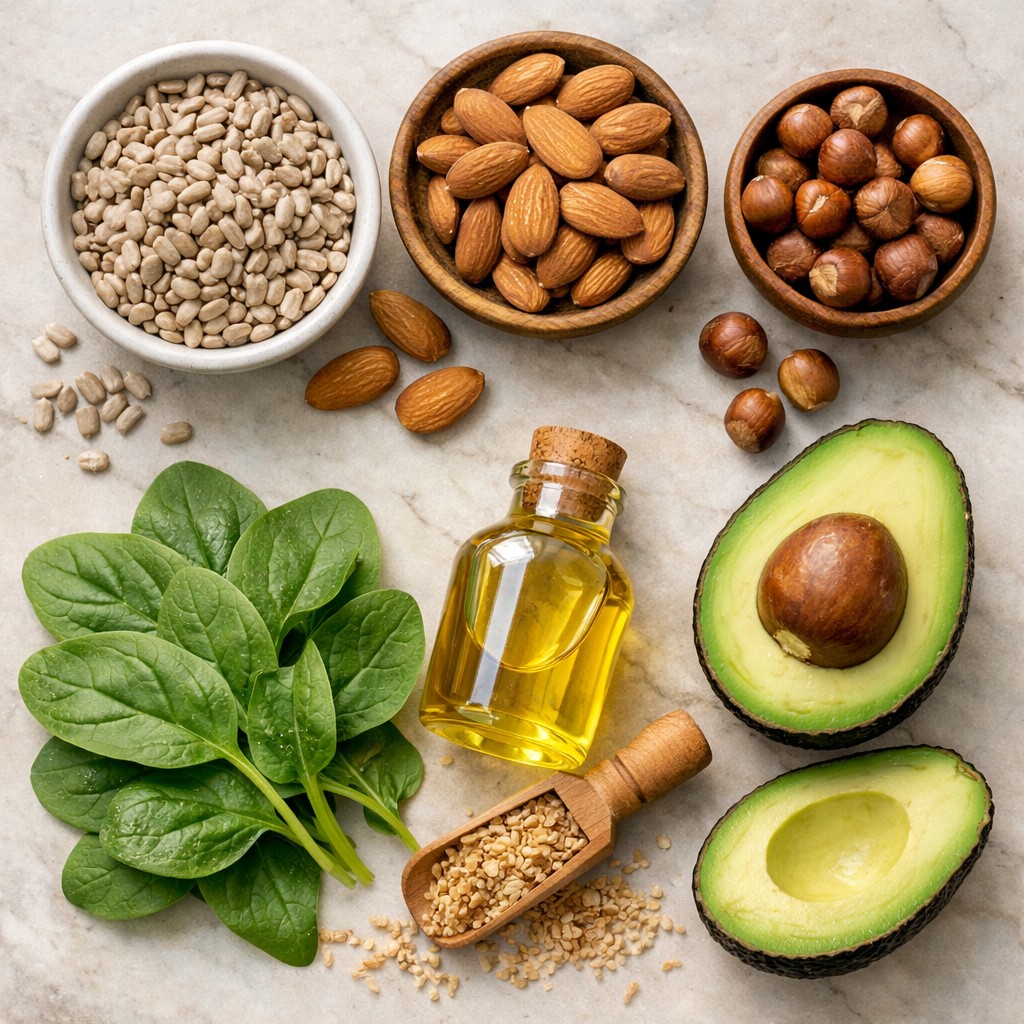
Búza, kukorica, köles, rizs stb. gabonafélékben nagyon sok található. Ezen kívül napraforgóolajban, kukoricaolajban, gyapotmagolajban, diófélékben, mint a dió, mandula és földimogyoró, valamint zöld zöldségekben található.
Az E-vitamin ellenáll a főzésnek és a hőnek; ��gy a főzés során nem semmisül meg teljesen. Azonban a olajban történő sütés és a gabonafélék őrlése során az E-vitaminok is károsodnak. Ezért az E-vitamint tartalmazó termékeket olajban sütés nélkül főzni és a nem fehérített gabonatermékeket fogyasztani egészségesebb.
Mely ételekben található E-vitamin?
Az E-vitamin megtalálható olyan ételekben, mint a spirulina, növényi olajok, brokkoli, mogyoró, pisztácia, borsó, szárított gyümölcsök, tökmag és tökmagolaj, mandula, búzacsíra, szezámmag és szezámolaj, olívaolaj, kukoricaolaj, napraforgóolaj, búzacsíra, hüvelyesek, leveles zöld zöldségek, barna rizs, zabpehely, tej, tojás, szójabab, lenmag, avokádó és tahini.
Mik az E-vitamin előnyei?
- Erősíti az immunrendszert.
- Segít a rák megelőzésében.
- Védi a bőrt a nap káros hatásaival szemben.
- Antioxidáns tulajdonsága miatt véd a szabad gyökökkel szemben.
- Csökkenti a mérgező anyagok káros hatásait.
- Hatékony a vörösvértestek fejlődésében és szaporodásában.
- Csökkenti a szívrizikót; védi és megerősíti az ereket.
- Javítja a vérkeringést.
- Megelőző hatással van a szürkehályogra.
- Megelőző hatással van az öregedéssel járó memóriaproblemákra.
- Fontos a haj és a bőr egészsége számára.
A Harvard Egyetemen végzett kutatások kimutatták, hogy a napi E-vitamin bevitel 40%-kal csökkenti a szívbetegségek valószínűségét.
Az Egyesült Államokban végzett tanulmányok szerint az E-vitamin használata jelentősen csökkenti a rossz koleszterin oxidációját. Azt is mondták, hogy napi 60 gramm pisztácia fogyasztása a benne lévő E-vitaminnal elegendő lehet a rák megelőzéséhez.
Milyen kockázat jelent az E-vitamin hiánya?
Az E-vitamin hiánya növeli az olyan betegségek, mint a szívbetegség és a rák kialakulásának kockázatát. Fáradtság, vérszegénység és koncentrációs zavarok jelentkezhetnek.
A dohányzók és a fogamzásgátló tablettát szedők veszélyeztetettek az E-vitamin hiánya szempontjából. Cirrózisban, cisztás fibrózisban és hasnyálmirigy-elégtelenségben fordul elő hiány.
A túlzott E-vitamin használat hányingert és hányást okozhat.
Figyelmeztetések és napi adag
A szelén megvédi az E-vitamint. Az E-vitamin hatékonyabb a szelénnel együtt. A bétakarotin és a cink szintén fokozza az E-vitamin hatékonyságát.
Ne szedjük vérhígító gyógyszerekkel együtt. K-vitamin hiányban szenvedők sem használják. Szintetikus kiegészítésként szedve rákot okozhat.
A tökmagolaj elég E-vitamint tartalmaz a prosztata megelőzéséhez. A füge, dió, tojás és búzacsíra sok E-vitamin forrása. A legmagasabb E-vitamin forrás a búzaolaj.
| Forrás | E-vitamin |
|---|---|
| Búzaolaj | 174 mg |
| Dióolaj | 5.8 mg |
| Földimogyoró | 9.2 mg |
| Sárgabarackmag-olaj | 4.18 mg |
| Vaj | 2 mg |
| Napraforgómag | 21 mg |
| Szemölcsmag | 32 mg |
| Pisztácia | 5.2 mg |
| Mogyoró | 25 mg |
| Mandula | 25 mg |
(Az E-vitamin tartalomra nem szabad egyedül tekinteni; például a dió más értékes vitaminokat és ásványi anyagokat is tartalmaz. Ezek az értékek hőkezelés nélküli, hidegen préselt termékekre érvényesek.)
E-vitamin napi adag: Csecsemők 5-6 mg, 4-11 évesek 8-10 mg, felnőttek maximum 15 mg-ot fogyaszthatnak.