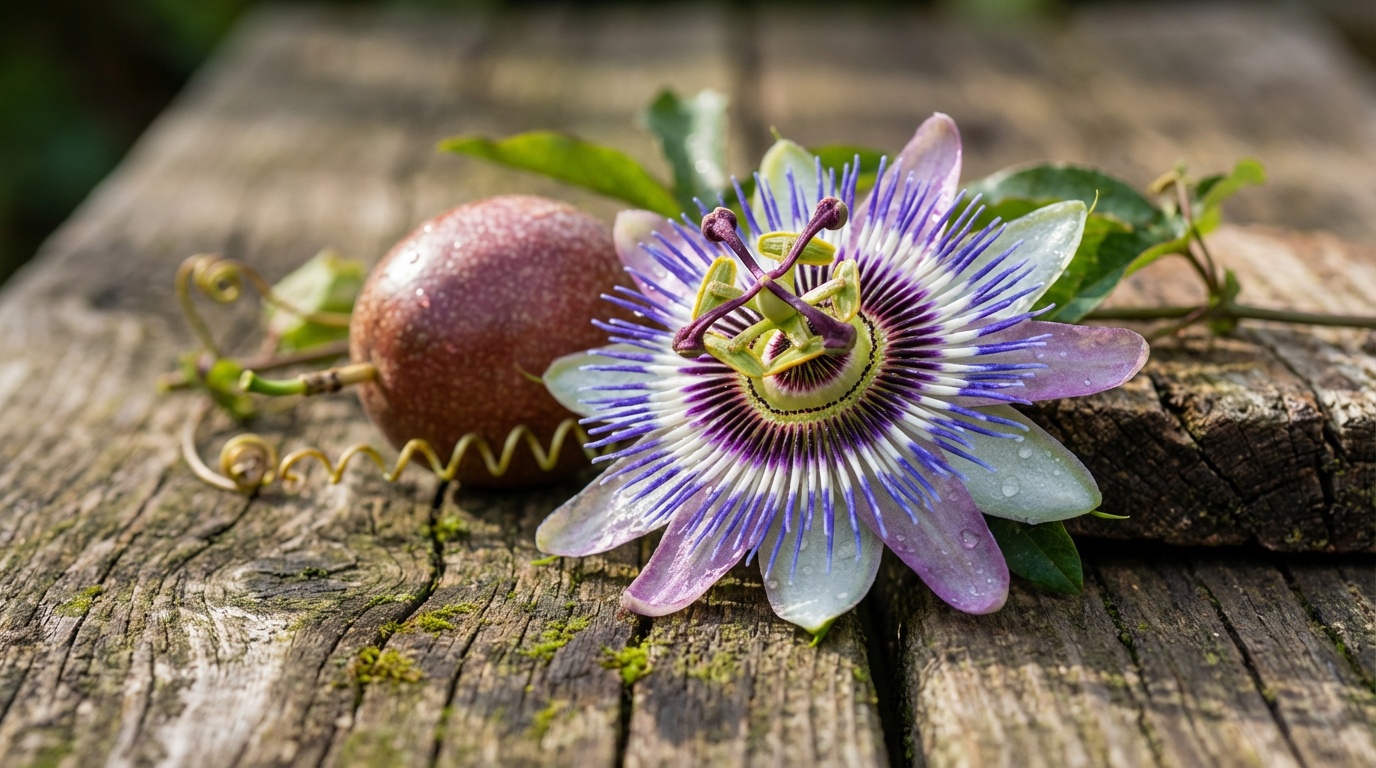
Passiflora; also known as passion fruit, passionflower, maracuja, maracuja, passion fruit, and love fruit.
Characteristics and History
- Latin Name: Passion flower
- German Name: Passions Blume
- Other Names: Pinwheel flower, Clock flower, Passionflower
- Known Compounds: Alkaloids called harmine, harmol, harman, and passiflora; other substances named flavon, glycoside, and sterol.
It grows in America; there are 400 varieties worldwide. In Turkey, it is cultivated as an ornamental plant in some regions. It likes shady and moist wall bases. Its showy, wheel-shaped flowers that bloom in summers are purple, pink, or red and large. The plant is propagated by seed or stem cuttings. The fruits of some species can be eaten raw, and are also used in making drinks and sherbets.
Recommended Conditions
It is a plant used to help with insomnia. It also has a calming effect on nerves; it relieves the person's states of tension and anxiety. It is a reliever of nervous seizures in conditions such as Parkinson's disease and hysteria. It is also calming in nerve pains like shingles. Its most important feature is that it reduces fears and ensures good sleep. It lowers blood pressure, increases sexual potency, and is used in sexual problems.
Usage Method and Dosage
It can be used as tea, liquid tincture, syrup, or solid extract. The fruit of passiflora can be eaten completely raw, including the seeds. It is used in ice cream and desserts; its syrup and cocktail with tropical fruits are also made.
To prepare tea, 1 teaspoon of dried leaves is poured over with 1 cup of boiling water and infused for 15 minutes without boiling. To relieve insomnia, one cup is drunk in the evenings before bedtime; to provide relaxation and relieve other complaints, two cups are drunk per day.
Cultivation Areas
Passiflora is a fruit originally from southern Brazil and northern Argentina. The origin of the yellow-skinned passion fruit is not exactly known; however, it is thought that the purple passion fruit turned yellow-skinned in this geography during a long adaptation period around Australia.
Many of the passion fruits in Hawaii come from Australia and were first started to be cultivated in home gardens in 1880. Its cultivation in Hawaii is in the early 1930s. Passion fruit, which started to be cultivated in Kenya in 1933, reached a production capacity of 2000 tons in South Africa in 1947.
The passion fruits imported to our country are the purple-skinned ones. Purple-skinned passion fruits are richer in both vitamins and minerals.
Nutritional Value
Passiflora is a fruit rich in vitamins C, B1, B2, B5, and Calcium, Phosphorus, and Protein. It also contains alkaloids called harmine, harmol, harman, and passiflora; and substances named flavon, glycoside, and sterol.
You can eat the entire passiflora raw as a fruit, including its seeds. You can use it in fruit juice, cocktails, desserts, ice cream, and fruit salads; you can also consume it as a garnish with your meals for its pleasant aroma and taste.
Storage Conditions
Passiflora should be stored at 85%–90% humidity. Ripe fruits can be stored at 7°C for 1 week.
Nutritional Values of 100 gr. of Passiflora
- Energy: 90 kcal
- Moisture: 75.1 g
- Fat: 0.7 g
- Carbohydrate: 21.2 g
- Ash: 0.8 g
- Total Fat: 13.8 g
- Saturated Fatty Acids: 2.2 g
- Calcium: 13 mg
- Phosphorus: 64 mg
- Iron: 1.6 mg
- Sodium: 28 mg
- Potassium: 348 mg
- Vitamin A: 700 IU
- Vitamin B2: 0.13 mg
- Nicotinic Acid: 1.5 mg
- Ascorbic Acid: 30 mg
In European countries, its fruits are sold very widely; in our country, its sale in large supermarkets has just begun.