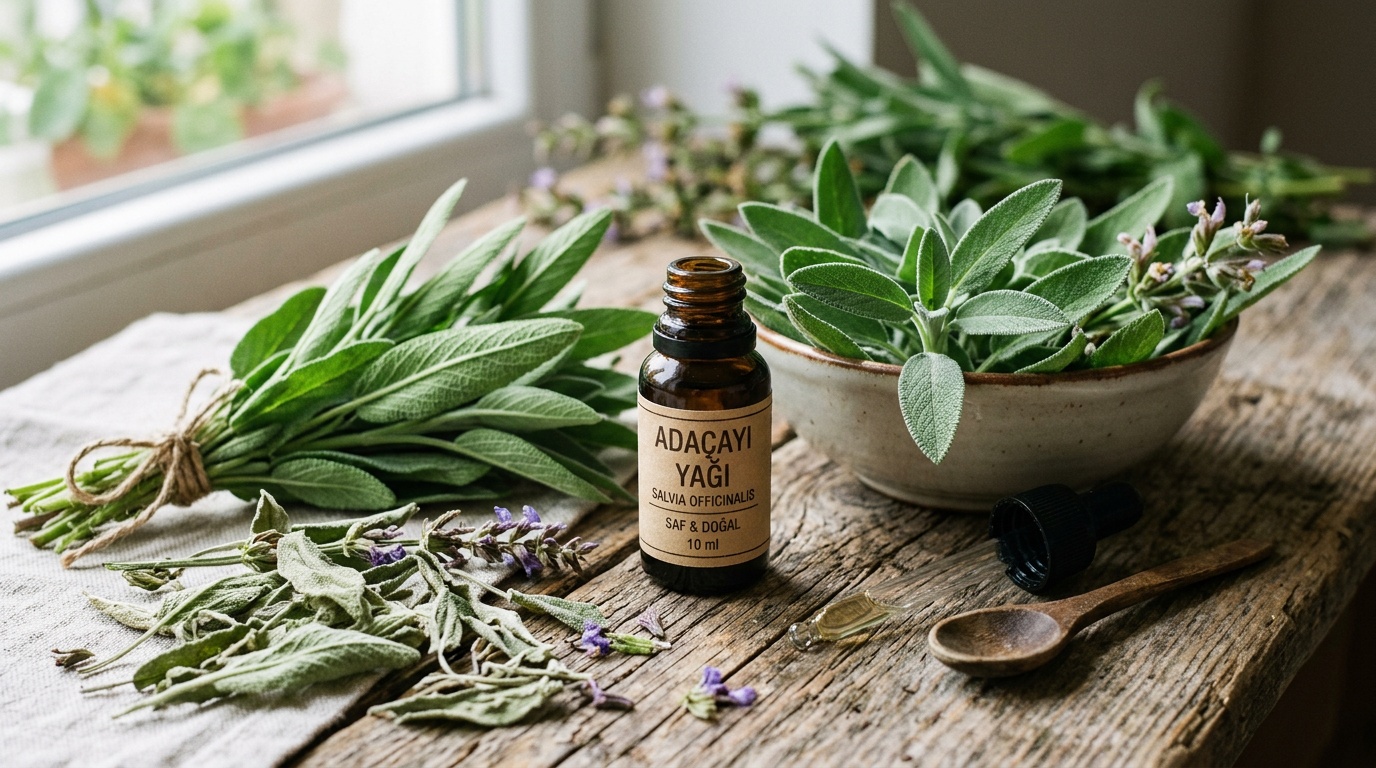
Sage oil, also known as bitter apple oil; this name is given because the plant seeds resemble apples. It is also known as "God's plant" because it is believed that Virgin Mary used it for women's diseases. It is germicidal and antiseptic; like antibiotics, it is not for continuous use. It is not recommended for pregnant women, adolescents, and those who wish to have children. One or two cups can be drunk during illness and colds.
Benefits of Sage Oil
- Its pleasant scent is mind-clearing; it is used in aromatherapy. 7-8 drops are added to a glass of water and placed on a radiator.
- Its scent is a breath-opener for asthma patients.
- It is wound-healing, muscle-relaxing, and cramp-relieving.
- It is used externally as a sweat reducer; prevents excessive sweating and bad odors.
- It is diluted and used for massage in babies' gas complaints; however, it may irritate baby skin.
- It is used for acne due to its germicidal property; it can be applied in water or oil form.
- It plumps the skin and tightens pores.
- It is used externally for foot odor and fungus.
- It is used as a gargle for gum problems and against oral bacteria.
- It is beneficial for dandruff and scalp fungus.
- It is used externally for hand and foot sweating.
- It is applied as a gargle for tonsillitis.
About Sage
The Italian word for sage means "health." It has been used by all societies throughout history and is known as the plant of immortality. It has been used as an antibacterial in epidemic diseases. It was preferred by witches who believed it brought abundance and prosperity. Its contribution to health is great as it also kills germs in the home; it increases work power.
Making its incense at home is germicidal. Placing its leaves inside cupboards or next to dry foods prevents insect infestation. For vinegar made with sage, fresh leaves are placed in grape vinegar and left to infuse; it has germicidal and pain-relieving properties. Leaves added to meals are germicidal thanks to thujone; they are used especially in sauces and mayonnaise so that raw eggs do not carry salmonella risk.
It is used to stop milk accumulated in the breasts after weaning and to prevent cyst formation. It is beneficial for menopausal tension. It is applied externally for breast cysts.
Characteristics of the Plant
Sage (Salvia officinalis) is also known by the names dişotu and meryemiye. The violet-colored flowers of the 30–70 cm tall plant are arranged in whorls. Its oppositely positioned, white-felted leaves shimmer like silver and emit a slightly bitter, fragrant scent. Garden sage should be grown in a sunny place; as it is sensitive to frost, it is recommended to cover it with pine branches throughout winter. It is cultivated in the Izmir region of our country.
Another species, meadow sage (Salvia pratensis), grows in meadows, slopes, and pastures. The sparkle of its blue-violet flowers can be discerned from afar. This species, also known as Anatolian sage, is abundant in western and southwestern Anatolia; "apple oil" or "bitter apple oil" is produced from this plant.
The leaves of the plant are collected before flowering, in May-June. Leaves collected at noon when their active ingredients peak are left to dry in a shady and airy place; after thoroughly drying, they are finely chopped and stored in airtight containers.
Content
It contains volatile oils: 30% Thujone, 5% Cineol, Linalool, Borneol, Salvene, Pinene, and camphor. It also contains tannins, triterpenoids, flavones, and resinous compounds. The plant's composition also includes water, protein, carbohydrates, calcium, iron, magnesium, phosphorus, potassium, sodium, and zinc, along with vitamins A and C, and niacin (vitamin B3).
Warnings
Excessive use of sage may increase blood pressure. Pregnant or breastfeeding women should not use it.
Forms of Use
Tea: Half or one teaspoon of finely chopped dry leaves is steeped covered in a cup of boiling water for 10 minutes, then strained. If fresh plant is used, 4–5 minutes is sufficient.
Mouthwash and Gargle: 2–3 teaspoons of dried finely chopped leaves are added to 2 cups of cold water and placed on heat. When it begins to boil, it is removed from the stove, steeped covered for 15 minutes, then strained. Gargle several times a day for 5–10 minutes.
Sitz Bath: Two handfuls of leaves are soaked in cold water overnight. The next day, it is heated to boiling point, steeped for 5–6 minutes, then strained and added to bath water. It is used as a sitz bath for women's diseases.