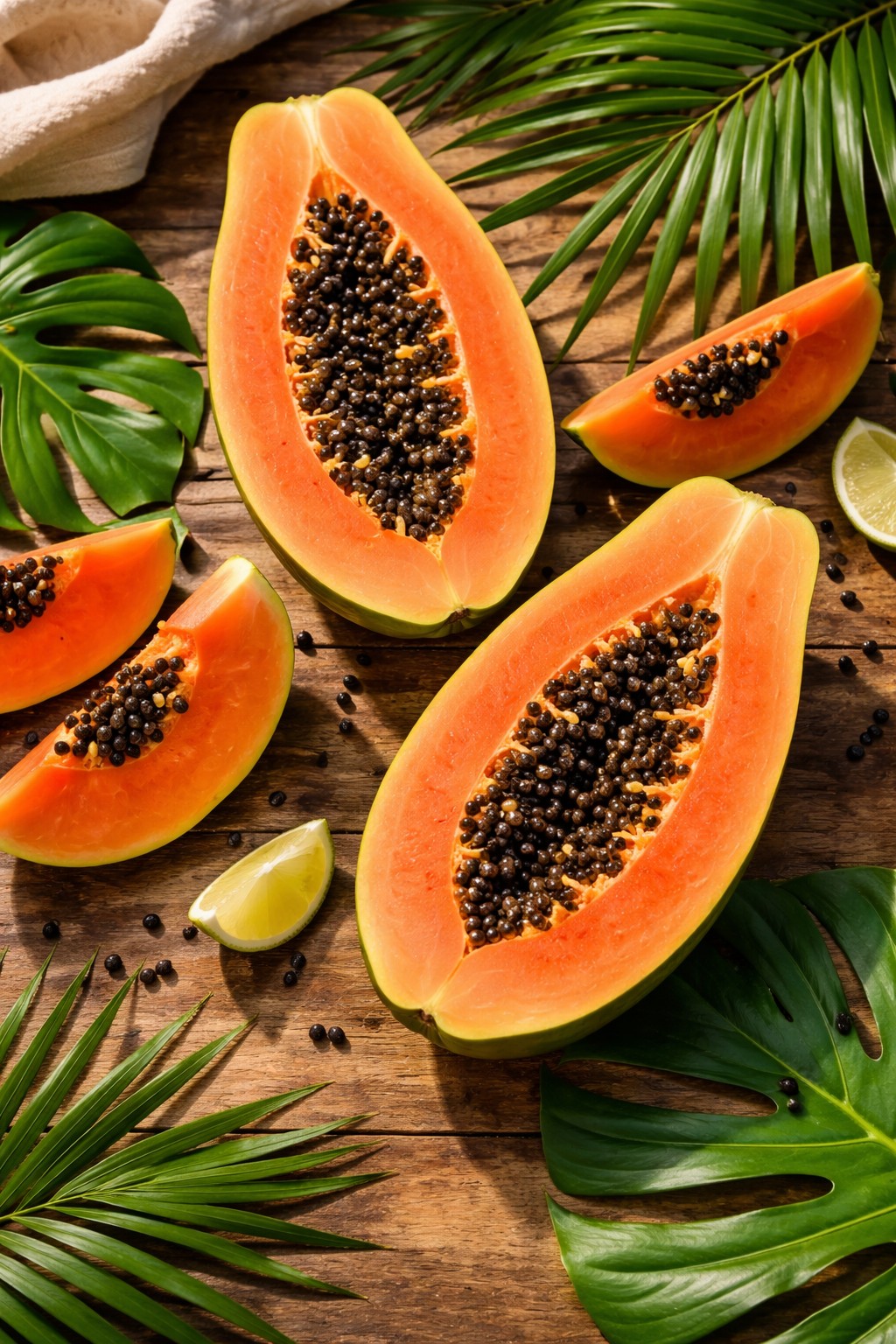
Papaya (Carica papaya L.) is a large shrub or small tree that is evergreen and grows in tropical regions. Its fruit resembles a melon, so it is also called the melon tree. It grows in sunny, warm, humus-rich, and well-watered soils. Female and male papaya plants are separate; both are needed to produce fruit. Unripe papaya fruits are cooked as a vegetable or used in salads in some countries (for example, in South America). Papaya fruit is also used to meet the increased energy needs during school and intense work periods.
Composition of the Raw Fruit
- High levels of enzyme derivatives; primarily Papain and Chymopapain A and B
- Monotetrahydrofuran derivatives: Longicin and Goniothalamicion
- Vitamin B17 (Laetrile) — also known as the anti-cancer vitamin
- Amino acids
Composition of Its Leaves
- Papain and Chymopapain A and B
- Alkaloid derivatives (0.1-0.15% Carpain and Pseudocarpain)
- The glycoside Carposide
Its Ripe Fruit
Contains fixed oils, phospholipids, peptides, saponins, phytosterols, potassium, magnesium, provitamin A and vitamin C, flavones, essential oils, amino acids, and tannins.
Effect on Cancer
At the end of a joint study conducted by Japanese and American professors, it was proven that papaya fruit stops cancer cells. It was shown to slow the growth of uterine, breast, liver, lung, and pancreatic cancer cells. It was also stated that papaya leaf has a direct anti-tumor effect on cancer cells and strengthens the immune system. The researchers determined that after 4 different powerful cancer cell cultures were exposed to papaya extract, the growth of the cancer cells slowed after 24 hours, yet healthy cells were not harmed.