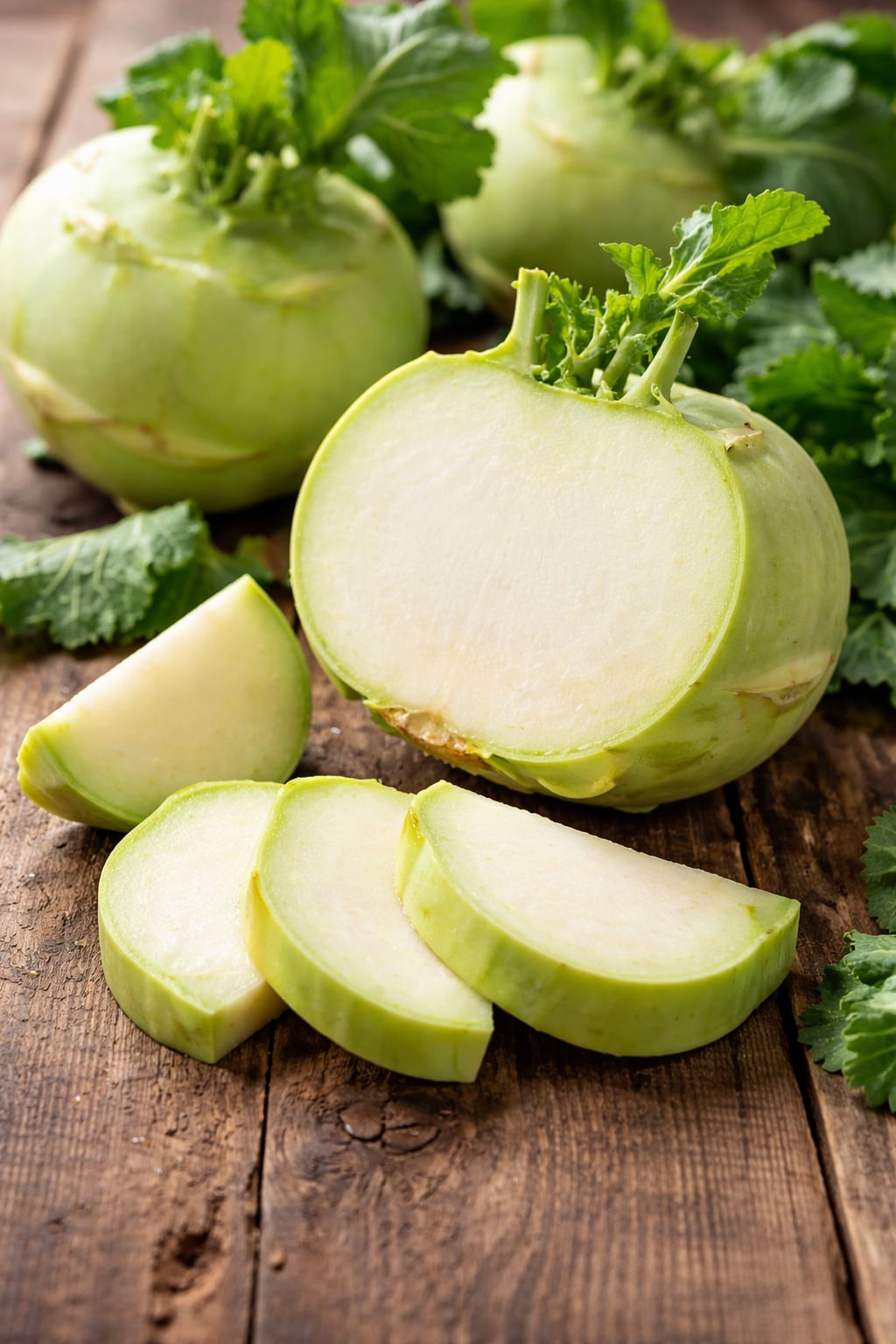
It is beneficial for winter season pains and refreshing in summer. Kohlrabi, widely cultivated in Central and Northern Europe and America, is also successfully produced in Turkey, especially in the Black Sea and Marmara regions. Because it is ideal for balanced nutrition, kohlrabi, which is consumed abundantly in England, Germany, Belgium, and the Netherlands, is eaten with its leaves in salad form, and its bulb is eaten raw, cooked, or canned. Green and red (purple-top) varieties are available.
The bulbs of kohlrabi, whose shape and taste somewhat resemble turnip and somewhat radish, are usually light green and purple in color. The size of the bulbs varies between 300 grams and 1 kg. Kohlrabi reaches harvestable size on average 45-65 days after planting, and a yield of 4-8 tons per decare can be obtained.
Vitamin and Mineral Value
100 grams of kohlrabi: 26 calories, 4.2 g carbohydrates, 2 g protein, 90% water. Antioxidant; contains approximately 63 mg of vitamin C, B1, B2, B3, B6 vitamins, phosphorus, iron, sodium (30 mg), folic acid, and plenty of potassium and magnesium.
Benefits
- Strengthens the immune system.
- Useful in replenishing water lost by cells.
- Moisturizes the body and skin; may be protective against colds and beneficial for winter illnesses and asthma.
- Because it contains plenty of magnesium, it is beneficial for joint pain; may also be good for muscle cramps and sleep problems.
- Accelerates blood circulation.
- Beneficial during pregnancy, growth, and development periods due to its folic acid content.
- May be beneficial for osteoporosis.
- Strengthens the kidneys and prevents constipation.
- Known as a good diet product.
- Its leaves contain more minerals; just like cabbage, it is detoxifying and protective against cancer.
Note: Like other vegetables in the brassica family, kohlrabi can also reduce the body's iodine absorption. People who eat it more frequently than 3-4 times a week benefit from consuming iodine-rich foods and iodized salt. This situation should be taken into account, especially in regions where drinking water contains little iodine. Not recommended for goiter patients.
Its salad is made with carrots; dressed with mayonnaise or vinegar-lemon. Sliced kohlrabi can also be baked in the oven with added cream. It is also used for making stuffed vegetables. A slice can be consumed raw between meals.