As research documenting the importance of foods containing OMEGA-3 (N-3) fatty acids for our health increases, the interest of nutritionists, doctors, and consumers in fish oil and flaxseed has also grown. N-3 fatty acids, which our bodies cannot produce, must be obtained externally through food. One of the main reasons for the increasing interest in flaxseed is the excessive pollution of the seas and the presence of mercury in fish oil. Flaxseed oil is both rich in omega-3 and a hormonal balancer.
Nutritional Values and Lignans
Flaxseed contains a high proportion of polyunsaturated fatty acids, a low proportion of saturated fatty acids, a high amount of fiber along with plenty of potassium; and small amounts of magnesium, iron, copper, zinc, and various vitamins. 100 gr. of flaxseed oil contains 13.4 mg. of Vitamin E, and 100 gr. of flaxseed contains approximately 450 kcal. The amino acid profile of flaxseed shows characteristics similar to soy flour.
The proportion of N-3 fatty acid it contains is approximately four times that of omega-6. Flaxseed is frequently recommended by nutritionists due to its richness in soluble and insoluble fibers and being the richest source of lignans, a type of phytoestrogen. Lignans provide protection against cancer by interfering with sex hormones in hormone-related cancers (breast, prostate, etc.); they prevent the growth of tumor cells.
The lignans found in flaxseed are natural SERMs (selective estrogen receptor modulators); they protect against the harmful effects of estrogen use while allowing the utilization of all its other positive effects. For example, they allow estrogen to connect and promote growth in bones but do not allow it to enter sensitive areas like the breast and uterus where it could cause damage. Flaxseed contains a total of 240.6 mg. of phytoestrogen per 100 grams, while in many other foods this amount does not exceed 17 mg. per 100 grams.
Fiber Content
Approximately two-thirds of the fiber it contains is insoluble in water, and the remainder is soluble fiber. Insoluble fibers increase stool bulk, reducing intestinal transit time; they have a laxative and stool-softening effect. The water-soluble fibers (mucilage gum) found in flaxseed maintain blood sugar levels and lower cholesterol levels. The high amount of fiber in the diet also has cancer-preventive effects.
Omega-3 and Heart Health
Flaxseed is the richest food source in terms of alpha-linolenic acid (the most important member of N-3 fatty acids) it contains. A portion of alpha-linolenic acid is converted in the body into the long-chain N-3 fatty acids EPA and DHA; these raise good cholesterol, have a blood pressure-lowering effect, reduce the tendency of blood to clot, lower plasma triglyceride levels, and reduce the risk of arrhythmia. Therefore, alpha-linolenic acid has been found to reduce the risk of coronary heart disease.
Research on flaxseed shows that regular use can prevent the development of arteriosclerosis (hardening of the arteries) and can be effective in inflammatory diseases and autoimmune disorders. To achieve an ideal fatty acid balance in our diet, we should choose our main oil as cold-pressed olive oil, which is high in monounsaturated fatty acids, minimize saturated and trans fats, consume plenty of green leafy foods, and supplement our kitchen with flaxseed.
Storage and Preparation
You can obtain flaxseed from natural product stores or herbalists. To check its freshness, you can see if it sprouts; if it does not sprout, return it to where you bought it. Since flaxseeds are hard, even careful chewing may not grind them sufficiently; this causes them to be excreted from the body undigested. Ground flaxseed is much easier to digest.
To grind flaxseeds, you can use pepper or coffee hand mills or electric grinders specifically produced for grinding such seeds. Flaxseed maintains its freshness for one year at room temperature. Ground flaxseed can be stored in an airtight jar in the refrigerator for 30 days.
Use in the Kitchen
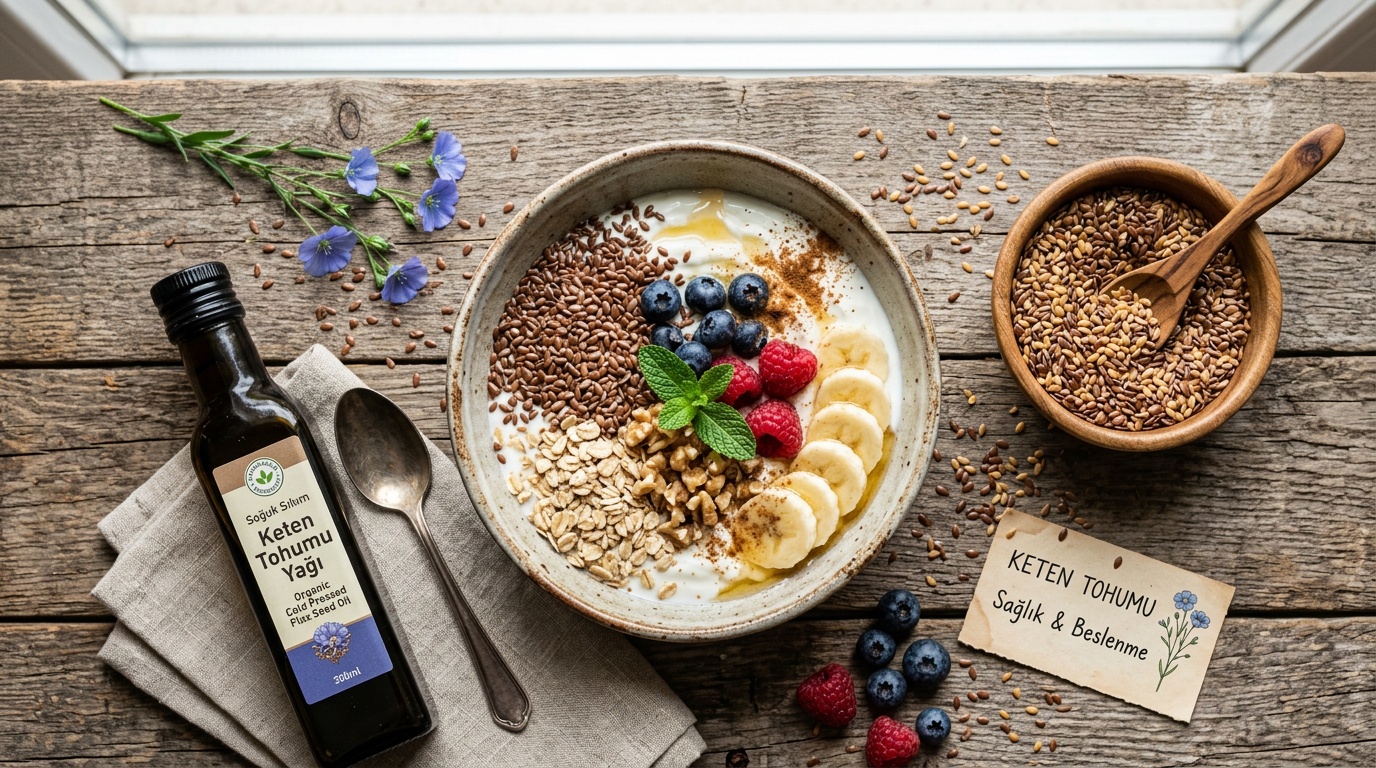
By keeping ground flaxseed on hand, you can sprinkle it on your salads, yogurt, muesli; add it to your baked goods, and use it in every dish from rice to soups, from sweets to savory foods. For a person consuming food equivalent to 2000 kcal daily, 1 tablespoon of unground flaxseed per day will provide sufficient contribution in terms of N-3 fatty acids.
In your baked goods, you can remove 2 tablespoons of flour from each cup of flour and add 2 tablespoons of ground flaxseed instead; or if you want to make a fat substitution, you can add 3 measures of ground flaxseed for every 1 measure of fat. Laboratory studies have determined that ground or unground seeds lose almost none of their N-3 fatty acids and lignans when baked at 178 degrees Celsius for 2 hours. It is recommended not to expose flaxseed oil to heat; use it after meals are cooked and in salads.
In the West, the baking industry has started adding ground flaxseed to multigrain breads to meet consumer demand. Additionally, there are omega-3 enriched eggs obtained by feeding chickens flaxseed.
Use in Traditional Treatment
Flaxseed has antifungal, antimitotic, and antioxidant properties. The mucilage found in flaxseeds absorbs water and swells in the intestine, acting as a mechanical laxative. It takes some time for flax to show this effect, but it has the important advantage of not causing irritation; with this property, it can be used for longer periods compared to other laxatives. It has been known to be used for this purpose since ancient Egyptian times. Due to the softening effect of mucilage, it is also beneficial in digestive system irritations such as gastritis and stomach ulcers.
- For constipation: eat 1-2 teaspoons of seeds once a day, preferably before bedtime, followed by 2 glasses of water.
- For cough, cold, and chill: boil 1 tablespoon of flaxseed in 3 cups of water for 10 minutes; let it steep for 3-5 minutes, strain, and drink; also inhale the steam through the nose.
- For lung diseases and pneumonia: mix 80 gr. of flaxseed with 40 gr. of fennel seed to make a poultice with a little hot water and place it between two pieces of gauze on the chest and back.
- For boils, burns, and bruises: make a poultice with 80 gr. of flaxseed and 40 gr. of mallow and apply it on the wound.
- For kidney pain and cramps: boil 2 teaspoons of flaxseed in 6 cups of water for 10 minutes, let it steep for 5 minutes, and strain.
It is also helpful in strengthening the immune system and providing hormonal balance during menopause.
Health Benefits
- Protective against heart diseases; has cholesterol-lowering, triglyceride-lowering, and blood pressure-lowering effects.
- Beneficial against joint rheumatism thanks to some acids it contains.
- Has regulatory properties in stomach-intestinal problems.
- Strengthens bones and the immune system.
- Soothes the surfaces of internal organs.
- The lignan (SDG) in its content is an anti-cancer substance that is protective against breast, colon, and prostate cancer, slows the growth rate of cancer cells, and strengthens the immune system.
- Positive effects have been observed in cough, hoarseness, and stomach problems like gastritis.
- Can be used as a gargle for oral cavity, throat, and gum disorders.
- Used in the prevention of rheumatic diseases.
- Recommended as a strengthener for the nervous system and memory.
- Used in the treatment of eczema and psoriasis.
- The infection-fighting substances in its content have healing effects in rheumatoid arthritis, psoriasis, allergies, and other inflammatory diseases.
- Used in diets because it provides a feeling of fullness.
- Being rich in Omega-3, Vitamin B-12, and fibers provides an anti-aging effect by keeping cells young.