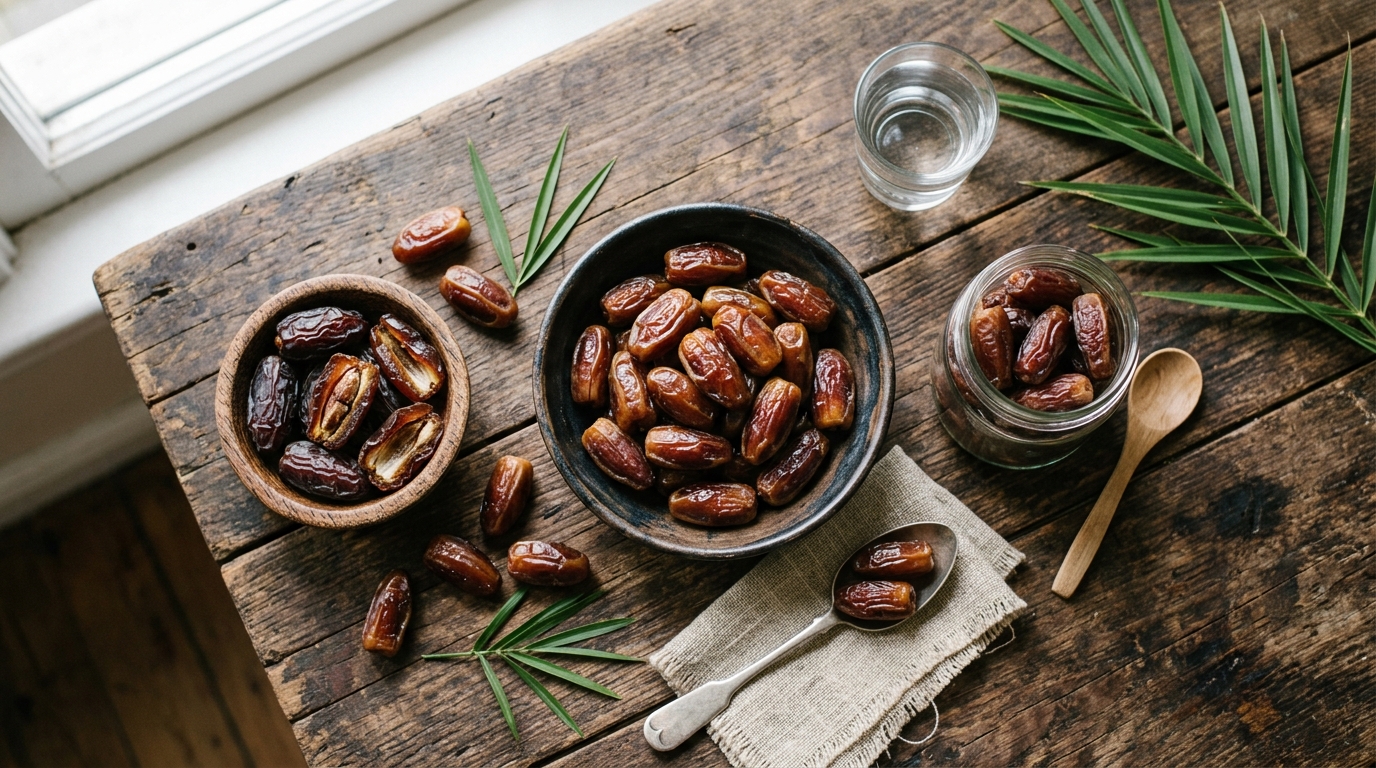
Dates are extremely rich in fructose, a fruit sugar that provides the human body with abundant movement and heat energy. Unlike glucose, which rapidly raises blood sugar, fructose is a much safer energy source, especially for diabetics. Dates also contain fiber, fat, protein, sodium, potassium, calcium, magnesium, iron, sulfur, phosphorus, and chlorine; they also harbor Vitamin A, beta-carotene, and Vitamins B1, B2, B3, and B6.
Folic Acid and Pregnancy
Dates are a rich source of folic acid (Vitamin B9), which women need during pregnancy. Folic acid plays critical roles in the production of new blood cells, the synthesis of amino acids, and cell renewal. The need for folic acid doubles during pregnancy; when it is insufficient, abnormally large but non-functional red blood cells form, leading to symptoms of anemia. The nutritional power of dates partly stems from this balanced mineral structure.
Potassium
Long-term nausea and physical reactions during pregnancy can lead to potassium deficiency. Potassium, abundant in dates, maintains the body's water balance, helps transport oxygen to the brain enabling clear thinking, stimulates the kidneys to expel toxic waste, helps lower high blood pressure, and supports healthy skin formation.
Iron
The iron contained in dates supports hemoglobin synthesis in red blood cells; it prevents anemia during pregnancy and ensures the red blood cell balance vital for the baby's development. A person can meet their body's iron needs by eating just 15 dates a day.
Calcium and Phosphorus
Dates are also rich in calcium and phosphorus, which are essential for skeletal formation and balancing bone structure. These elements provide protection against bone weakness and help reduce bone diseases.
B Vitamins and Magnesium
Scientists point out the stress and tension-relieving effect of dates. Research by experts at the University of California, Berkeley, has revealed that dates contain high amounts of Vitamin B6, which strengthens nerves, and magnesium, which plays an important role in muscle function. The body's magnesium needs can be met by eating 2-3 dates a day.
With the Vitamin B1 it contains, it facilitates the healthy functioning of the nervous system; it helps convert carbohydrates into energy. With Vitamin B2, it supports the burning of proteins, carbohydrates, and fats for energy production and cell renewal.
Vitamin A, Beta-carotene, and Protein
The need for Vitamin A increases during pregnancy; the Vitamin A in dates enhances vision and body resistance, and strengthens bones and teeth. Beta-carotene, on the other hand, has cancer-preventive properties by controlling free radicals that attack cells.
Unlike most other fruits, dates also contain protein. Thanks to this property, they protect the body against diseases and infections, renew cells, and balance body fluids.