Vitamin D is a fat-soluble and storable type of vitamin; it can be stored in the body for 2 to 4 months. It enables the storage of calcium and potassium in bones, aids growth, plays a role against fatigue and in protection from diseases. It increases the utilization of B group vitamins.
Disorders Seen in Vitamin D Deficiency
- Anemia, pale skin, weakness, apathy, loss of appetite
- Nausea, pain
- Bowing of the legs, rickets, X-legs
- Marble-sized swellings on the rib cage
- Growth retardation
- Restless legs syndrome
- Sensitivity to sunlight, intolerance to cold, irritability
- Muscle weakness, difficulty climbing stairs, cramps
- Bone pain, bone deformation, osteoporosis
- Tooth disorders and decay
- Hearing loss, lung diseases
It is more common in women who stay indoors, give birth to many children, and cannot benefit sufficiently from the sun. The typical symptom of osteomalacia is pain in the skeleton and weakness in muscles; there are severe pains in the rib cage, shoulder, hip, arm, and legs, and kyphosis may develop. After the age of 70, calcium absorption deteriorates in both women and men; in women, the decrease in estrogen also increases mineral loss from bones. Inadequate vitamin D intake and insufficient sun exposure also cause osteoporosis to emerge.
Vitamin D Requirement
The daily vitamin D requirement in adults is about 200-400 IU (10 mcg). A daily dose exceeding 1000 IU is toxic. Infants should take vitamin D supplements in drop form from the first months. The need increases in individuals who get little sun, cannot consume enough fish and dairy products, and are vegetarian.
Foods Containing Vitamin D
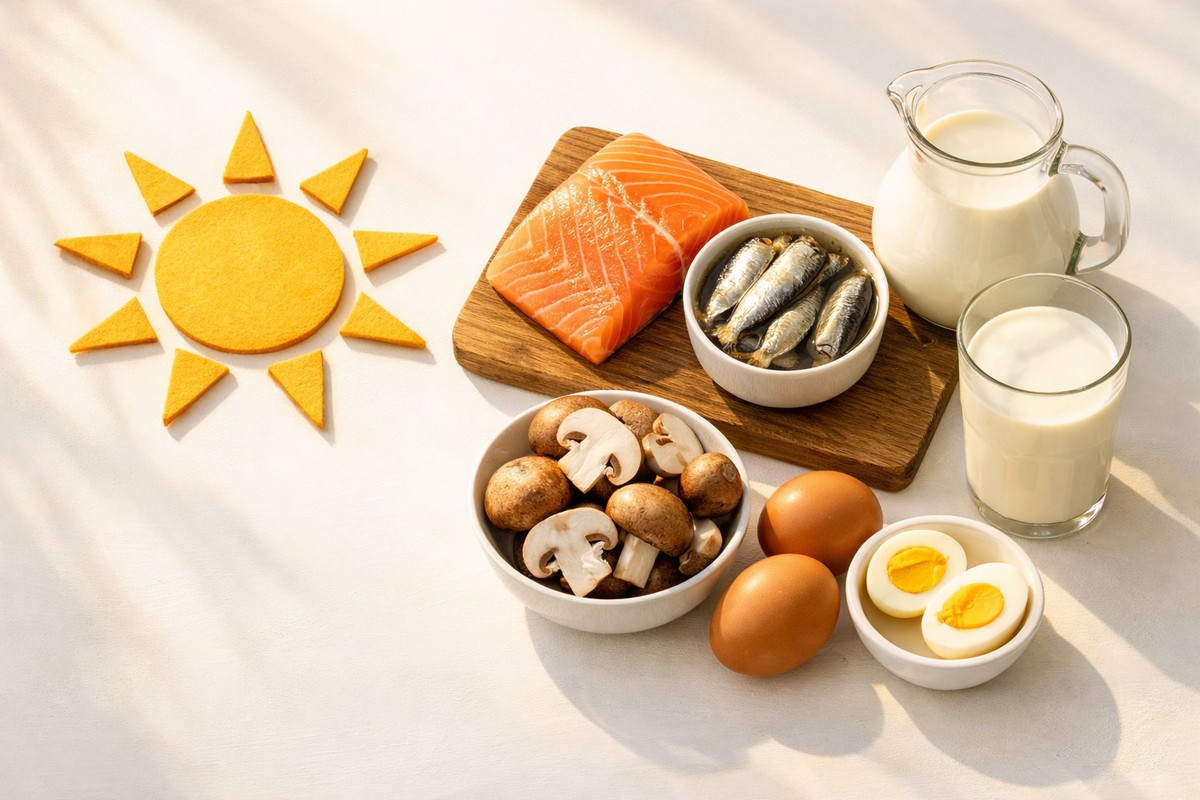
Vitamin D is found in very small amounts in fruits and vegetables. It is found in high amounts in fatty fish types. In addition to these, meat, egg yolk, offal, dried fruits (especially raisins, figs, dates, and plums), dried legumes, pumpkin seeds, brewer's yeast, spinach, wheat germ oil, beef, parsley, almonds, and peanuts also contain vitamin D.