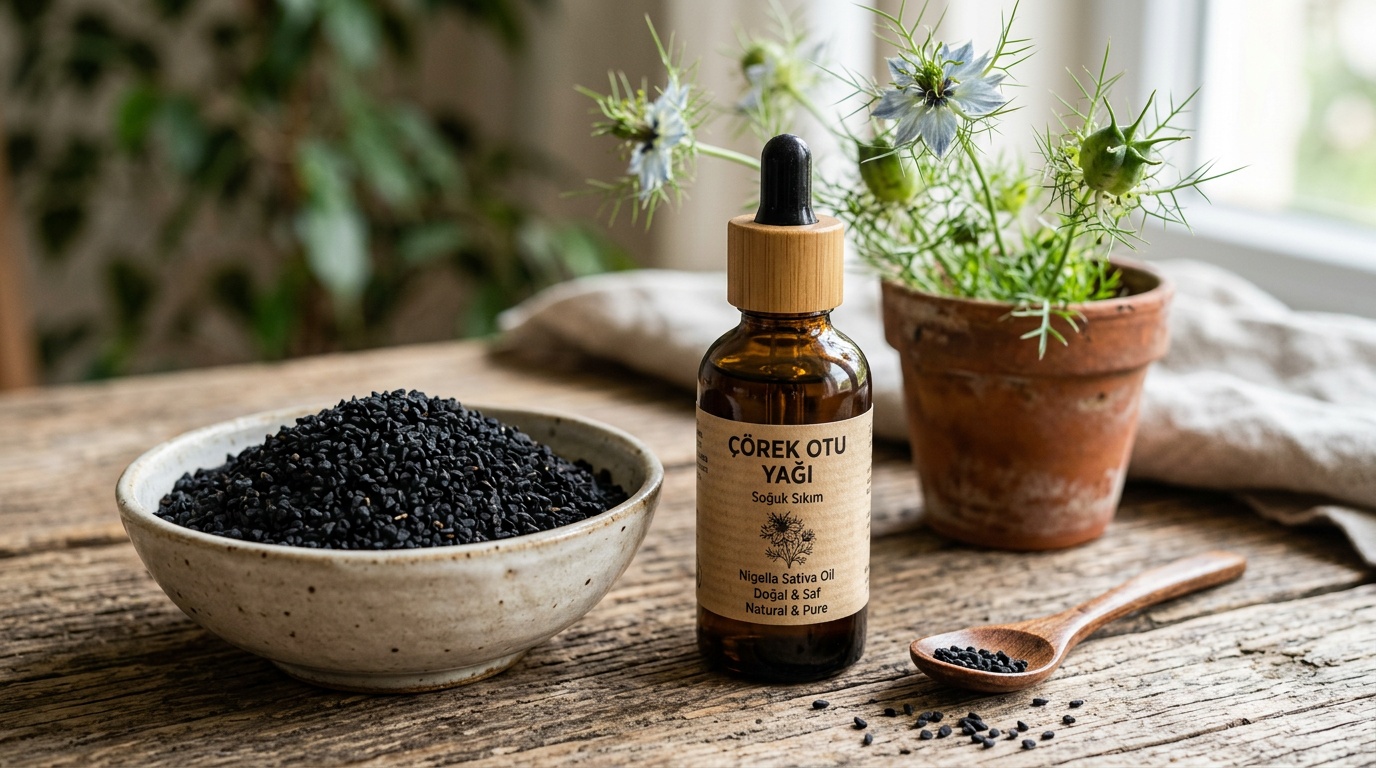
There is a lot of information and research available about black seed; research is still ongoing. German researchers have also examined its use in Anatolia. Experiments on animals have observed effects that lower blood pressure, sugar, and cholesterol. People with low blood pressure and sugar should be cautious; users should regularly monitor their blood pressure values. In some constitutions, blood pressure may not drop immediately; if the body has adapted to high blood pressure, a decrease may be seen over periods like 6-7 months.
Since the surface of black seed is waxy, it does not spoil or become rancid under normal conditions. When ground, it oxidizes very quickly, so it should be used immediately. Its oil is also sensitive to light and heat; it must be cold-pressed and fresh. If it is to be used by crushing, it should be immediately mixed with honey and protected from light.
Usage
According to research, black seed, its oil, or capsules are used primarily for all kinds of allergic disorders; including immune system weakness, red and itchy skin diseases, hay fever, allergic asthma, spastic bronchitis, shortness of breath, cough, frequent infections, and premenstrual disorders.
One teaspoon of the oil is taken 3 times a day. It can also be used mixed with yogurt or honey. If those with stomach, gastritis, or ulcer issues consume it mixed with yogurt, sores will not open and gas will not form. It is also recommended for stomach patients to eat it with banana. Those who want to stimulate appetite can take it with water 5-10 minutes before meals; if taken between meals, the appetite-stimulating effect is more pronounced.
Black seed oil is used in Anatolia for underweight children to gain weight; it is given one hour before meals. Consuming it mixed with yogurt is also known to prevent graying of hair. For smokers whose lung sinuses are blocked, 1 teaspoon of cold-pressed black seed oil helps open the sinuses; pineapple and apple also support removing edema from the lungs.
Fatty Acid Composition (Cold-Pressed)
Saturated fatty acids:
- Myristic acid: 0.19%
- Palmitic acid: 12.48%
- Palmitoleic acid: 0.22%
- Stearic acid: 3.22%
Unsaturated fatty acids:
- Oleic acid (Omega 9): 22.66%
- Linoleic acid (Omega 6): 57.66%
- Linolenic acid (Omega 3): 0.25%
- Arachidic acid: 0.20%
- Eicosenoic acid: 0.35%
- Eicosadienoic acid: 2.77%
Effects
Ethereal oils like nigellone and alpha-pinene found in black seed widen the respiratory tract, relieve spasms, and alleviate cough. It also has anti-inflammatory, pain-relieving, and diuretic effects. With regular use, it has a blood sugar-lowering effect. The B1, B2, and B6 vitamins it contains play a role in the production of many enzymes and strengthen the defense system. Folic acid vitamin reduces the risk of heart and blood pressure problems; it lowers cholesterol. Antioxidants like beta-carotene, vitamins A, E, and C, and selenium support the body's defense system; selenium also helps eliminate toxic substances.
Benefits
- It is an effective defense tool against germs, viruses, and fungi.
- Widens the respiratory tract and relieves bronchial spasms.
- Lowers blood sugar and cholesterol.
- Prevents vascular diseases.
- With its diuretic property, it relieves bile.
- Facilitates the elimination of toxins from the body.
- Facilitates digestion; expels gas in the stomach and intestines.
- Accelerates wound healing and cell regeneration (not used on open wounds).
- Balances the defense and hormone system, strengthens mood.
- Expels sand and stones in the kidney.
- Beneficial for rheumatism; eaten mixed with honey or its oil is applied with massage to the painful area.
- Beneficial for flu, cold, and headache.
- For toothache and inflammation, it is boiled with vinegar and used as a gargle.
- Kills intestinal parasites; boiled with vinegar and drunk on an empty stomach.
- For skin diseases like acne, scabies, and eczema, it is boiled with vinegar and applied.
- It is blood-building; eaten with dried raisins every morning.
- Nourishes hair, prevents dandruff; oil is applied to hair (applying to the face may cause hair growth).
- In psoriasis, it prevents itching and boosts immunity.
Warnings: A doctor must be consulted regarding its use with cholesterol and blood pressure-lowering medications and its use during pregnancy. Excessive use may cause bleeding in the urinary tract and a decrease in beneficial bacteria in the intestinal flora. MS patients should be cautious due to its high Omega 6 content. Do not use during pregnancy.