
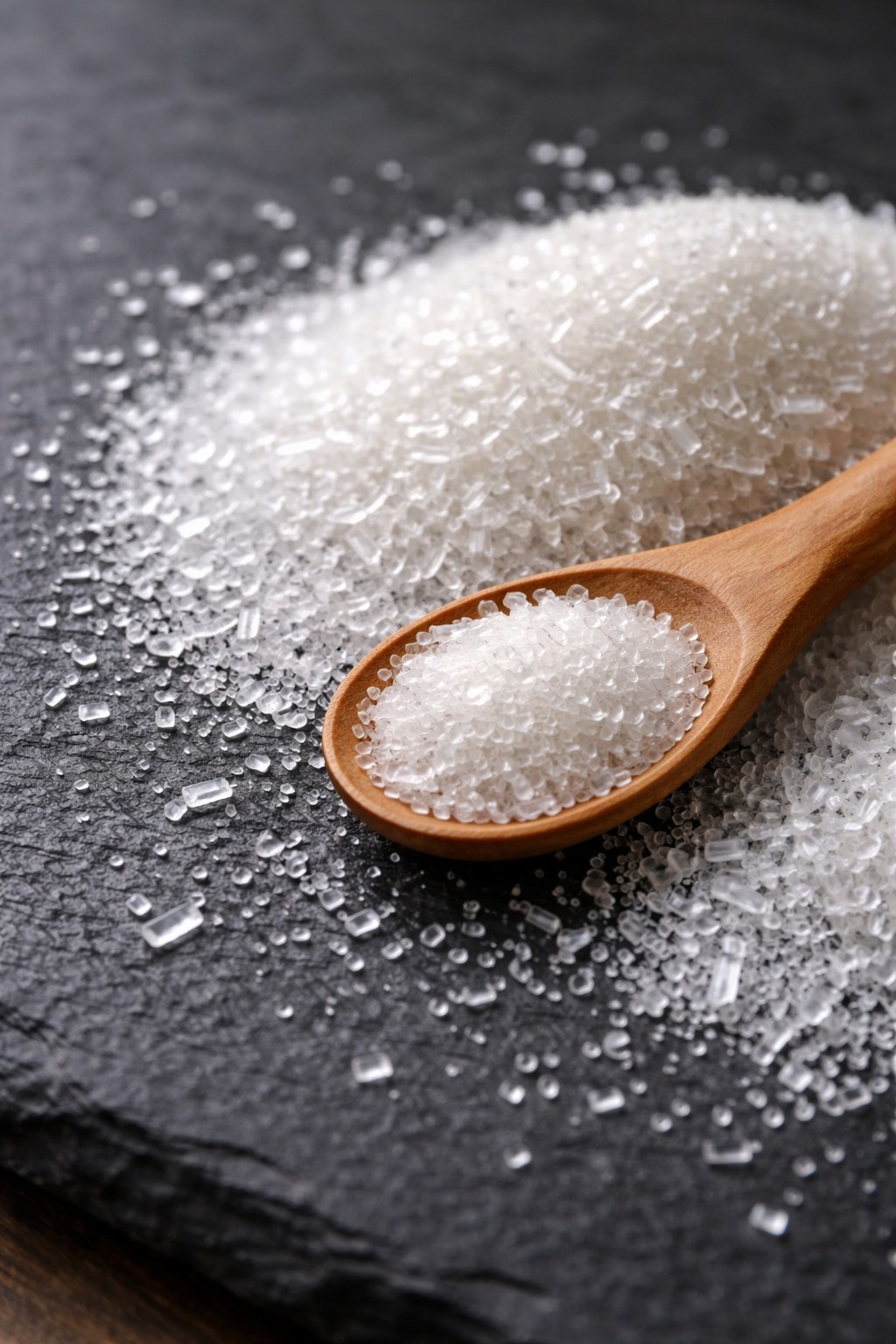
What is MSG?
It is sold under the name Chinese Salt. Since glutamate is also found in healthy foods like breast milk, cow's milk, and tomatoes, some experts say it is not harmful but beneficial.
The Hidden Danger in Processed Foods
It is found as E621 in processed foods. It is reported that Chinese salt is also used in meals and doner kebabs by some businesses as a flavor enhancer, apart from processed foods.
Monosodium Glutamate (E621)
Monosodium Glutamate, the indispensable flavor of Chinese and Japanese cuisines, is widely used in processed foods in many countries, including Turkey. Experts say that this flavor enhancer in processed foods poses a significant risk, especially in children's development, and when used frequently, brings many diseases with it.
MSG - Monosodium Glutamate (E621), used as a flavor enhancer especially in Chinese and Japanese cuisines, is now also frequently used in Turkish cuisine. Experts say that Monosodium Glutamate, which is also frequently used in Turkish cuisines, has many harms. Experts, stating that children are particularly affected due to the harmful reactions that occur, report that this flavor enhancer causes many ailments "from Alzheimer's to Parkinson's, from eye damage to suppression of growth hormone in children." The reactions to MSG are also called "Chinese Restaurant Syndrome."
MSG and Glaucoma Risk
Research shows that Monosodium Glutamate (E621) attacks cells in the retina.
Japanese scientists observed that monosodium glutamate (E621), used as a flavoring in many processed foods, damages the eyes. In experiments conducted by scientist Hiroshi Ohguro and his team at Hirosaki University, mice were given various amounts of monosodium glutamate. Japanese scientists determined that the glutamate substance attacks cells in the retina and therefore the mice's vision decreased. Hiroshi Ohguro stated that in the Asian region where the flavoring monosodium glutamate is used intensively, a type of eye disease known as glaucoma is very common, and this situation needs to be investigated. Monosodium Glutamate is also used as a flavoring in many processed foods in Turkey.
MSG-added foods affect our "Sense of Taste"
How Does Our Sense of Taste Work?
The sense of taste begins when chemical substances, broken down by saliva, enter the 200 taste buds on the tongue. The signals formed here are carried to the brain via nerves, triggering our sense of taste. Our tongue can generally perceive 4 different tastes. These are known as sweet, bitter, sour, and salty.
Sweet foods are distinguished by the tip of the tongue, bitter by the back of the tongue, and sour and salty by the sides of the tongue. While our tongue can distinguish 4 or 5 tastes, our brain can evaluate the mixture of hundreds of tastes. Flavor is perceived through the joint work of taste and smell senses. The sense of smell undertakes a significant part, about 70-80%, of the task of distinguishing flavor.
Beware of MSG-Added Products
Monosodium Glutamate affects our sense of taste. With the first bite of food we put in our mouth, the sense of taste is activated and sends its first signal to the brain. With this first signal, as long as the substance creating the taste remains in our mouth (the taste also stays in our mouth for a while after swallowing), sensitivity to the level of signals begins to drop rapidly. Therefore, sometimes food taken after eating a very sweet food (e.g., tea) tastes unsweetened to us. Even if we are not aware, the same event occurs even while eating a meal. There is a decrease in taste between the first bite and the last bite of the same meal we eat. When we eat foods containing Monosodium Glutamate, our sense of taste becomes more sensitive, and therefore MSG-containing foods are consumed more. After eating MSG-containing foods, our taste sensitivity to normal foods decreases. In studies, it was observed that children and young people, after eating processed food items (e.g., chips, wafers), do not eat other nutritious foods because they cannot taste them.
Monosodium Glutamate, as in many carbonated drinks and processed foods, some of the chemicals rapidly break down the residues on our tongue and send them to our stomach, while another part neutralizes them, causing each bite to be perceived as if it were the first bite.
MSG and Growth Hormone
Thanks to the flavor-enhancing additive Mono Sodium Glutamate (E621), processed food products are frequently consumed by people because they are very tasty. This substance (MSG) makes the brain perceive even the worst foods as extremely delicious.
Harmful Effects
- MSG, being a neurotoxin, damages nerve cells.
- The diseases it causes are Alzheimer's, Parkinson's, Huntington's diseases, and Epilepsy due to central nervous system damage.
- Retinal degeneration (damage to the eye's retinal layer)
- Fat accumulation, impairment in the satiety mechanism, obesity
- Suppression of growth hormone
- Pancreatic damage, increase in insulin, and consequently development of diabetes
- Damage to kidneys and liver
- This substance passes the placental barrier in pregnant women, causing their babies to be exposed to the same effects.
All these harms have been proven by numerous studies, and a report on this has been submitted to the World Health Organization.
Reactions Caused by MSG
- Headache
- Nausea
- Diarrhea
- Sweating
- Chest tightness
- Burning in the back of the neck
These types of reactions occur as a result of consuming too much MSG. Severe asthma attacks can occur in asthmatic patients who consume this substance.
Product Groups with MSG Additives
- In almost all chips
- In some solid and spreadable fats, in cheese
- In meat broths
- In instant soups
- In ready-made sauces
- In some sweet and salty ready-made products
This substance is named in some product groups as: Mono Sodium Glutamate, MSG, Glutamic acid, Glutamine, and Glutamate.
MSG Also Affects Pregnant Women and Babies
Babies developing in the womb or babies in the breastfeeding stage are also affected by MSG. Expectant mothers or mothers, due to the MSG-containing processed foods they eat, unknowingly cause their babies to also ingest this harmful additive both during pregnancy and while breastfeeding. This additive is sold with a warning in some countries. In others, it is prohibited to use in products produced for children. This substance "must be taken very seriously" especially for children.
Monosodium Glutamate is a substance with serious harms, and it has been determined that it may have "carcinogenic properties" in babies in the womb and in children up to at least two years old.