
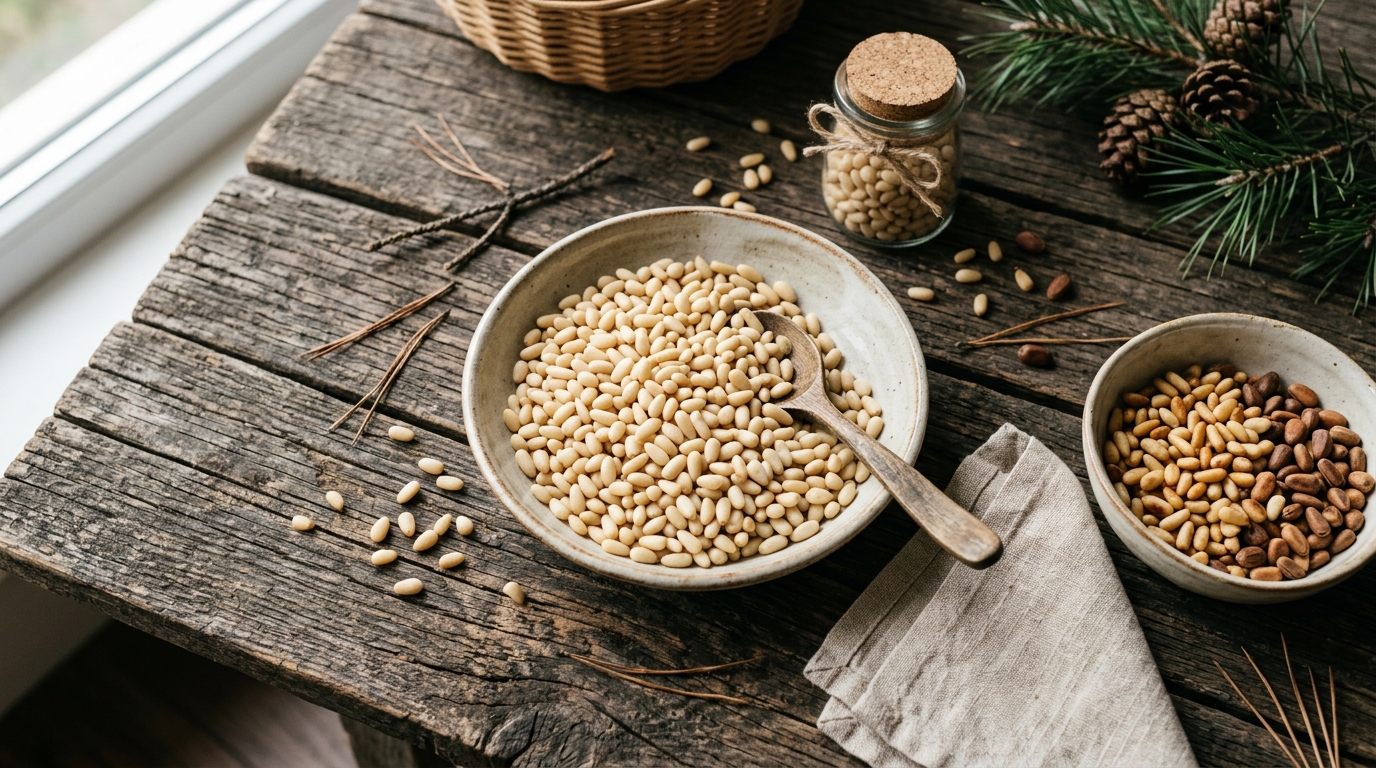
Eating only 12 pine nuts a day protects you from brain stroke. When pine nuts and currants are consumed regularly every day, they prevent stomach diseases and heal wounds.
Pine nuts, obtained by breaking the hard shells extracted from the cones of the stone pine, have a unique aroma and a whitish color. They generally grow in regions with a Mediterranean climate. The conditions in our country are suitable for growing pine nuts. Stone pine, black pine, red pine, Aleppo pine, and yellow pine are the main pine species grown in our country.
Benefits
Pine nuts are rich in protein and minerals. 100 grams contains approximately 45g of fat, 31g of protein, 5g of carbohydrates, along with vitamins, minerals, and water. Vitamin C, B1, and B2 are the most prominent vitamins. 100 grams is 580 calories. It contains the unsaturated fatty acids linoleic acid and oleic acid. It is a source of omega-3, omega-6, vitamin B, vitamin E, carotene, iron, zinc, potassium, manganese, and phosphorus.
- The body cannot convert omega-6 fat into GLA during periods of illness; pine nuts help compensate for this deficiency during times of stress and hormonal imbalances.
- Its linoleic acid content acts as an antidote against many potential toxins in the body.
- It helps prevent the development of tuberculosis and anemia.
- It is beneficial for problems such as cirrhosis, duodenal ulcers, stomach, and vascular occlusion.
- It is also stated to be beneficial for pancreatic diseases and rheumatism problems.
Pine nuts are sold either shelled or unshelled.