
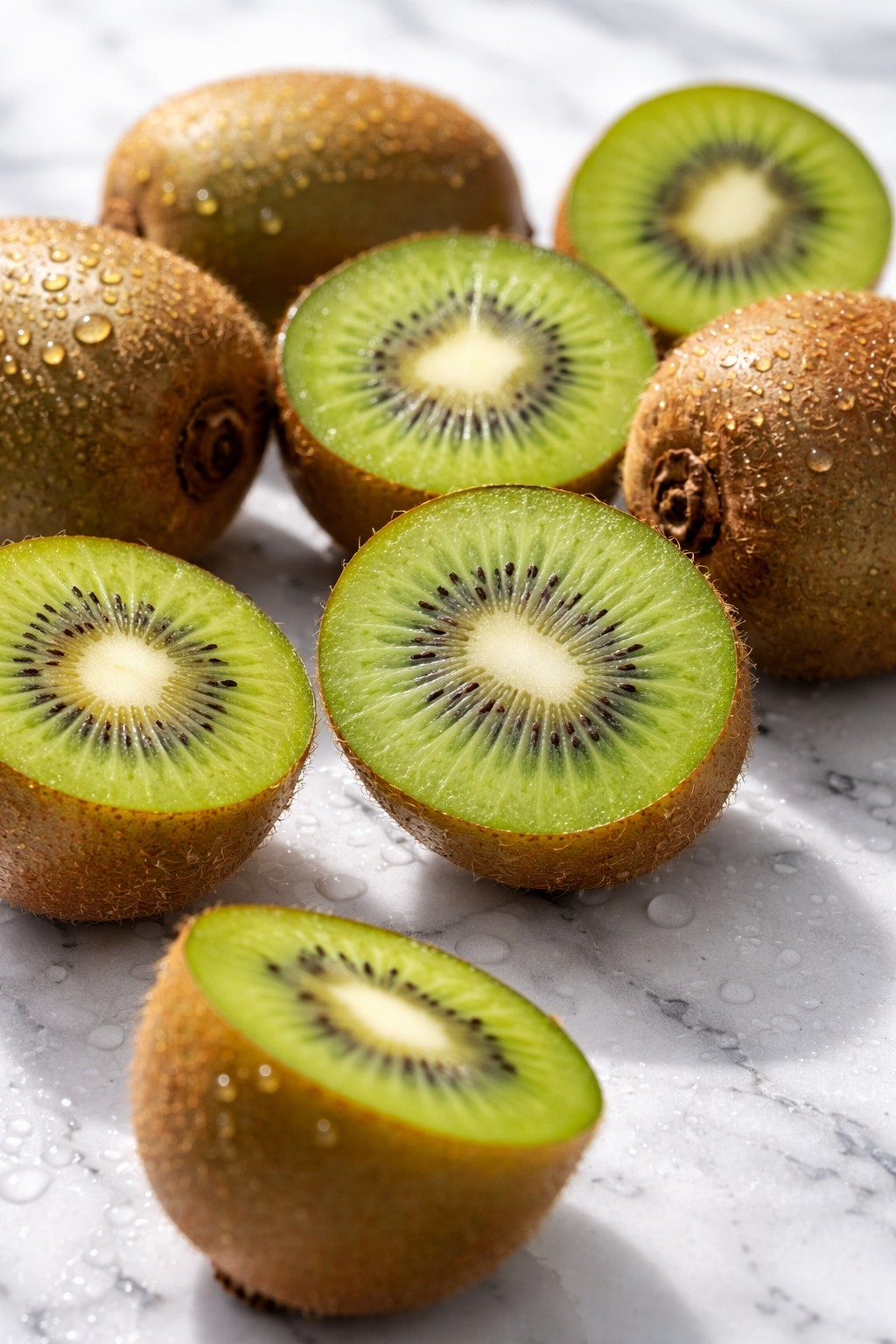
Children need a high amount of vitamins and minerals to achieve balanced growth and development. A well-balanced, vitamin-rich diet is the best guarantee for the body's healthy development; in this respect, kiwi is a very healthy fruit.
Magnesium has a very positive effect on our bone structure and is also quite beneficial for the nervous system. Kiwi contains inositol, which promotes growth, especially during adolescence. While most fruits contain little or no protein, kiwi is rich in amino acids such as sodium and arginine. These amino acids play an important role in activating growth hormones and enhancing the body's ability to heal itself. Kiwi is also known to contain calcium, which is necessary for a strong skeletal system.
One kiwi per day is sufficient for all ages.
What Problems Does Kiwi Help With?
- Its use during pregnancy, with its rich vitamin content, is very beneficial for both maternal and baby health.
- Pectin in kiwi cleanses the body of toxins, lowers bad cholesterol, and increases good cholesterol.
- Its low sodium and high potassium content have positive effects on the heart and blood pressure; it balances blood pressure.
- It stimulates the liver and purifies the blood.
- It exhibits calming properties with its B vitamins and minerals.
- One kiwi meets the daily vitamin C requirement; it contains 4-5 times more vitamin C than citrus fruits.
- In addition to vitamin C, it contains vitamin A, vitamins B1 and B2; minerals such as phosphorus, calcium, iron, and magnesium, and proteins.
- It is beneficial for flu and colds; it supports the immune system.
- Some substances it contains have cancer-preventive properties.
- With its breath-opening effect, it is beneficial for cough and asthma problems.
- It strengthens the capillary structure.
- It is known for its blood-purifying properties.
- It is rich in fiber; it aids proper passage in the intestines and prevents constipation.
Kiwi Mask
Masks prepared from kiwi are beneficial for skin health and beauty. The vitamins in kiwi have a cleansing effect on dead skin; they moisturize and nourish the skin.
Kiwi should be stored in the refrigerator.
Nutritional Values of 100 Grams of Kiwi
- Vitamin C: 75.0 mg
- Vitamin A: 175 IU
- Potassium: 332 mg
- Calcium: 26 mg
- Magnesium: 30 mg
- Phosphorus: 40 mg
- Iron: 0.41 mg
- Sodium: 5 mg
- Thiamin: 0.020 mg
- Riboflavin: 0.050 mg
- Niacin: 0.500 mg
- Protein: 0.99 g
- Total lipid (fat): 0.44 g
- Carbohydrate: 14.88 g
- Fiber: 3.4 g
- Cholesterol: 0 mg
- Water: 83.05 g
- Energy: 61 kcal