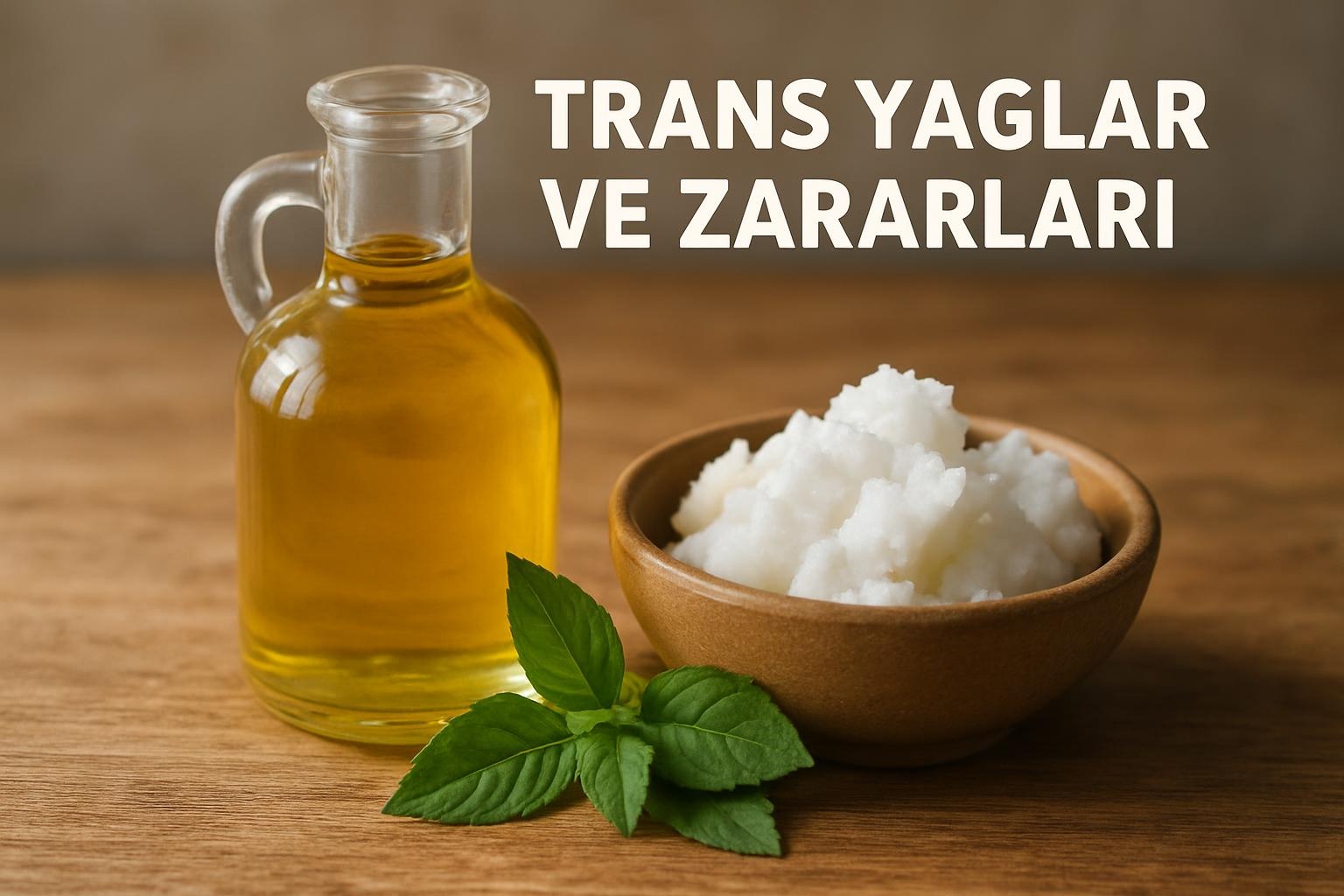
Trans fats are not necessary for human life and generally do not support health in a positive way. Consuming trans fats increases bad LDL cholesterol levels and decreases good HDL cholesterol levels; thus increasing the risk of coronary heart disease and stroke.
What Are Trans Fats?
Trans fats are synthetically made; they do not occur naturally. The process of adding hydrogen to liquid vegetable oils (hydrogenation) is applied to turn them into solid fat. Therefore, they are also known as partially hydrogenated oils. Trans fats can be monounsaturated or polyunsaturated, but they are never saturated.
Experts state that trans fats from partially hydrogenated oils are much more harmful to health than naturally occurring fats.
Trans fats are highly preferred in industry; because food companies find them easy to use and cheap to produce. Their ability to last a long time without spoiling and to give food a good taste are also reasons for preference. They are widely used in fast food restaurants because they can be used multiple times in commercial fryers. Many cities around the world are trying to limit manufacturers and restaurants that use trans fats with regulations.
Where Are Trans Fats Found?
- In fried foods
- In sweet pastries, tarts, cakes, and baked goods
- In biscuits, crackers, and pizza dough
- In some margarines and solid fats
- In many ready-made baked products
If the nutrition label contains the phrase "partially hydrogenated oils," that product contains trans fat. The American Heart Association states that trans fat consumption should not exceed 1% of total calorie intake.
Trans Fats and Endometriosis
Endometriosis is a difficult-to-treat disease where the inner lining of the uterus develops outside the uterus and can lead to infertility. It has been reported that women who consume a lot of foods containing trans fats have a higher risk of endometriosis.
Research published in the journal Human Reproduction, conducted on over 70,000 American nurses, found that those who consumed foods rich in omega-3 fatty acids had a 22% lower likelihood of developing endometriosis. In contrast, this risk was found to be 48% higher in women who consumed a lot of trans-fatty foods.
To protect against endometriosis, it is recommended to consume foods rich in omega-3 fats such as tuna, salmon, and walnuts.