For Nervous Tension, Panic Attacks, Menopause, Insomnia, Winter Depression, and Heart Problems
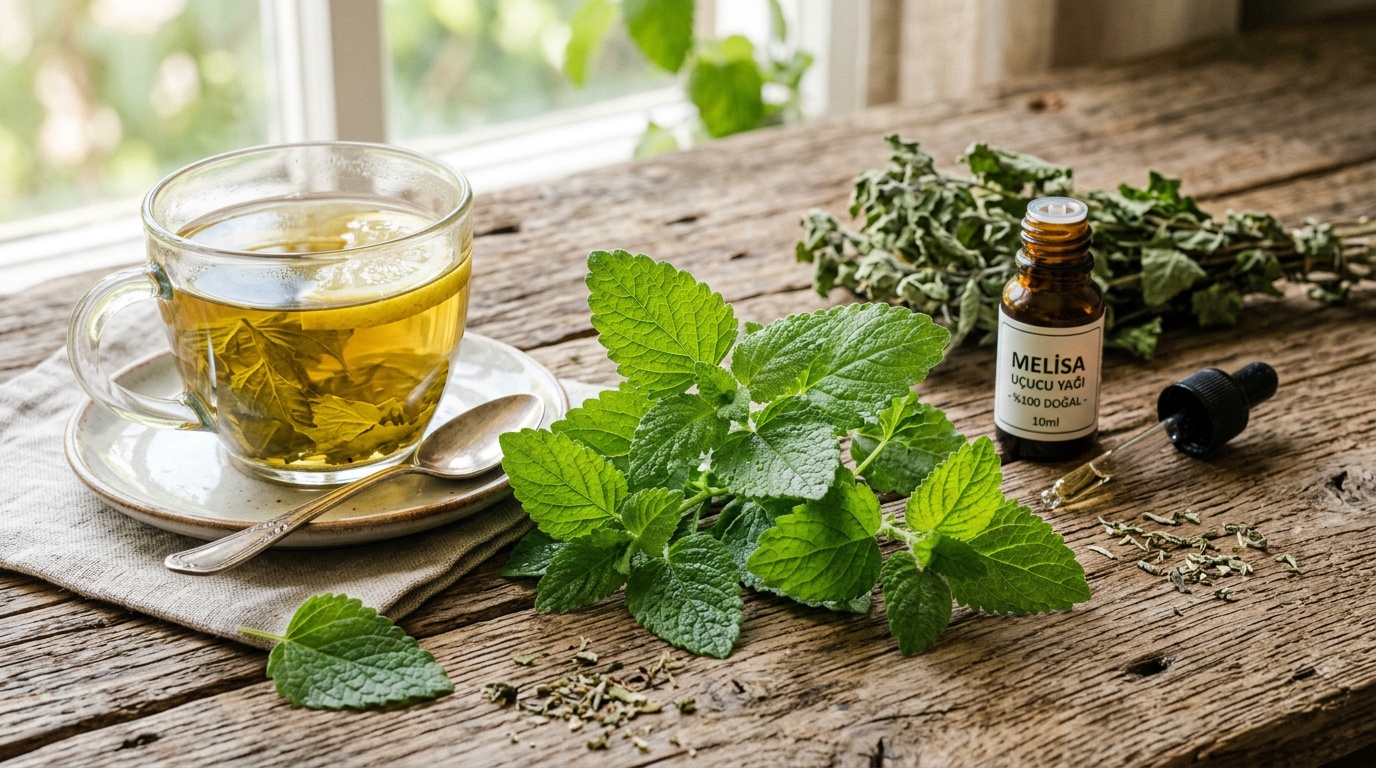
Lemon balm (Melissa officinalis) is also known as bee herb, lemon herb, balm mint, and heart herb. One of its native lands is Turkey. On English and German sites, it is referred to as "the herb of the Bible." For centuries, this plant has been used by churches, especially against the stress of nuns; it has been preferred by women as it contains phytoestrogens. In Germany, it is known as "Kloster Pflanze" (monastery plant).
It should be consumed without boiling; to avoid losing its essential oil. Lemon balm is beneficial for the heart with vitamin B12, and this property also creates a calming effect. It is beneficial for depression and nervous tension, migraine, and panic attack syndrome. The cause of insomnia often originates from the heart. Research from German universities has clinically proven through trials that it is good for shingles, herpes, fatigue, irritability, lethargy, and sensitivity problems.
Scientific Research
When lemon balm is mixed with other herbs, it yields more successful results for insomnia. A mixture of valerian and hops is beneficial for insomnia. For heart problems and blood pressure, it should be prepared in equal proportions with apple peels; for weight loss, it should be prepared with lavender.
A treatment trial was conducted on 95 patients with ailments such as nervousness, weakness, fatigue, fear, restlessness, inability to sleep, headache, and heart palpitations using a pill containing lemon balm, motherwort, valerian root, hops, and passionflower extract; improvement was observed in 58-96% of these patients.
In Dr. M. Adler's 4-week clinical study, the herb was tested on 500 patients who could not sleep due to nervous reasons, and it was seen that 90% of the patients recovered. A treatment trial with herbal tablets was conducted on 830 patients with insomnia and restlessness disorders under the supervision of 297 doctors for 4-6 weeks, and it was observed that 88% of the patients recovered. This herbal tablet was obtained from valerian root, lemon balm, and hops cone extract.
Research on lemon balm continues at universities all over the world; new studies are also ongoing at Boston University. The study results from universities in America, Australia, Canada, and New Zealand have been published in health magazines. Russia and England argue that its use distilled with alcohol has protective effects against cancer; therefore, lemon balm preparations are prepared in alcohol and sold in markets, and cancer cases are rarely encountered among nuns.
A warning from a heart specialist doctor: while using the herb, blood pressure should be measured regularly every day. It has blood pressure-lowering effects; it also lowers eye pressure. Low blood pressure can be as problematic as high blood pressure. It has been tried in panic attacks and positive results have been seen. Recent research shows that when lemon balm and lavender are used together, they are successful in weight loss, opening heart vessels, toxin elimination, and preventing brain stroke. Phytoestrogens increase estrogen hormone; it is said to be not harmful for men, but protective against cancer — but still, excessive use would not be correct. In women's use, breast enlargement has been observed. Lemon balm relaxes even if placed under the pillow of fearful children.
How to Use?
Tea: 2 teaspoons of dried lemon balm leaves are placed in 250 ml of boiled water and left to steep for 5-10 minutes; then it is strained and drunk. If preparing as a mixture — for example, for weight loss — 1 teaspoon of lemon balm is prepared together with 1 teaspoon of lavender. During use, urine color may darken; it will normalize over time.
Men who want to have children can use it with lavender for 15 days and stop after cardiovascular health is restored and they lose weight. Its use with lavender prevents brain blockage and stroke. Using the leaves of the plant is recommended instead of using its oil. It is also used in anorexia patients, success is not one hundred percent but it has been observed to be beneficial.