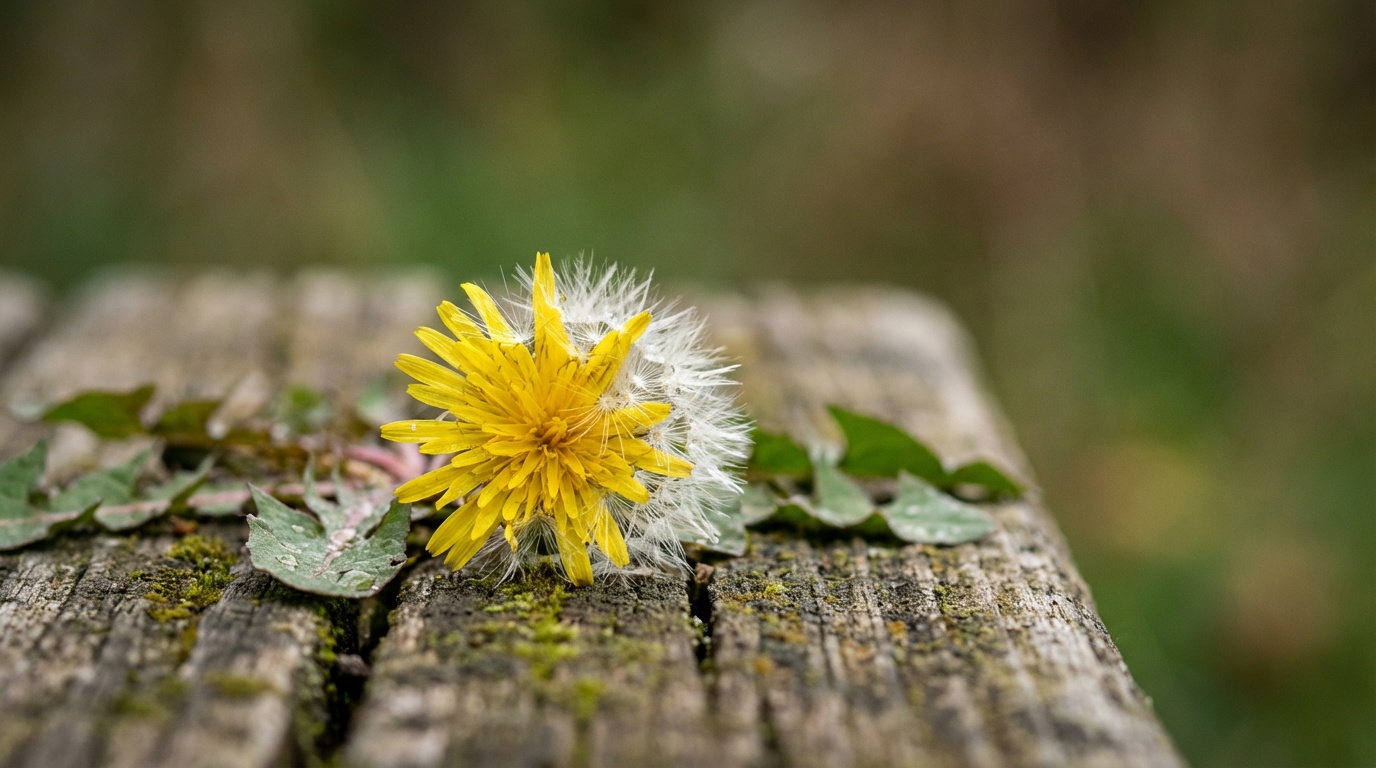
Dandelion (Taraxacum officinale), also known as Lion's Tooth and Radicchio. This plant, seen as a harmful weed in lawns, is a very powerful source of healing for suffering humanity. It blooms in April and May on field edges, meadows, and lawns. They are small, perennial, milky plants with yellow flowers. The leaves are gathered in a rosette at the base, with deep lobes and teeth on the edges. The leaves, roots, and flower stalks vary depending on the plant's harvesting time. Rosette leaves are sold as vegetables in spring in some of our cities. I have made it a habit every spring to collect the entire plant to make a salad or to prepare dinner by mixing it with boiled potatoes and boiled eggs.
Difference from Wild Chicory
Wild Chicory (Cichorium intybus L.) is a perennial herbaceous plant that can grow up to 1 meter tall; its leaves are segmented and hairy; its flowers are light blue, rarely white. It is common in Anatolia, especially growing in empty fields and along roadsides. It contains inulin, volatile oil, bitter substances, and glycosides; a powder used in Europe as a coffee substitute is obtained from its roasted roots. It is also known as Hindiba-i berri.
The species used as a vegetable (Cichorium endivia L.) is a 1-2 year old plant, 50-100 cm tall; it is not found wild in Turkey, it is cultivated in gardens in Istanbul and Bursa. Ibn Sina, who examined chicory, an important drug in treatment since ancient times, in a special booklet called "Hindiba Risalesi" (Treatise on Chicory), advocated that it should be used in extract form prepared without washing and with cold water. According to Islamic belief, chicory leaves should be eaten unwashed: "Dew from paradise drips onto chicory."
Benefits
Dandelion's two most important properties are its success in gallbladder and liver diseases. A renowned liver specialist said that chicory is the plant that can most positively affect the liver. It is known that eating 5-6 flower stalks daily provides rapid recovery in chronic liver inflammations. These stalks are also beneficial for diabetes; diabetics can eat up to 10 per day during the flowering period. People who frequently fall ill and feel unwell should apply a 14-day dandelion flower stalk cure.
Flower stalks can also heal skin itching, eczema, and skin eruptions; they regulate stomach fluids and cleanse accumulated substances in the stomach. Fresh stalks painlessly remove gallbladder stones and regulate the function of the liver and gallbladder. Dandelion, besides the mineral salts it contains, also contains therapeutic substances against metabolic diseases. Thanks to its blood-purifying effect, it helps with rheumatism and gout diseases. A 4-week fresh flower stalk cure can also eliminate glandular swellings. It is successfully used in jaundice and spleen diseases. Adolescent acne can also heal thanks to dandelion's blood-purifying property.
When dandelion root is eaten raw or dried and used as tea, it has blood-purifying, digestion-facilitating, diaphoretic, diuretic, and revitalizing effects; it thins the blood. Old herb books relate that dandelion leaves and roots were boiled and their water was used for cosmetic purposes. This valuable plant is not recognized by many and is known as a harmful weed; however, it does not go into winter dormancy, its leaves develop even under snow.
Use Against Cancer
It is claimed that dandelion root, when used correctly, cures cancer. I researched this topic and learned that the preparation method is extremely important; if prepared incorrectly, it will be of no use. It is written that positive results are obtained provided that chemotherapy has not been received. Do not use without consulting your doctor. I am sharing the correct recipe only because it is a researched plant and can be used as support in some diseases.
You can research it in German as "Löwenzahnwurzel". According to the method: a handful of dried plant roots are collected, not washed, electrical appliances are absolutely not used; they are dried in a moisture-free and light-free environment. Without using metal tools, they are pounded in a wooden mortar into a powder. One teaspoon of powder is mixed into a glass of water and drunk on an empty stomach in the morning.
Forms of Use
- Tea: Half a teaspoon of finely chopped root is crushed and added to a glass of water the night before; the next morning it is heated to boiling point and strained. It is sipped half an hour before and half an hour after breakfast.
- Herb salad: Prepared from the fresh plant's roots and leaves.
- Flower stalks: Washed together with the flowers, separated from the flowers, 5-10 per day are eaten slowly by chewing; they are slightly bitter, crispy, and juicy.