
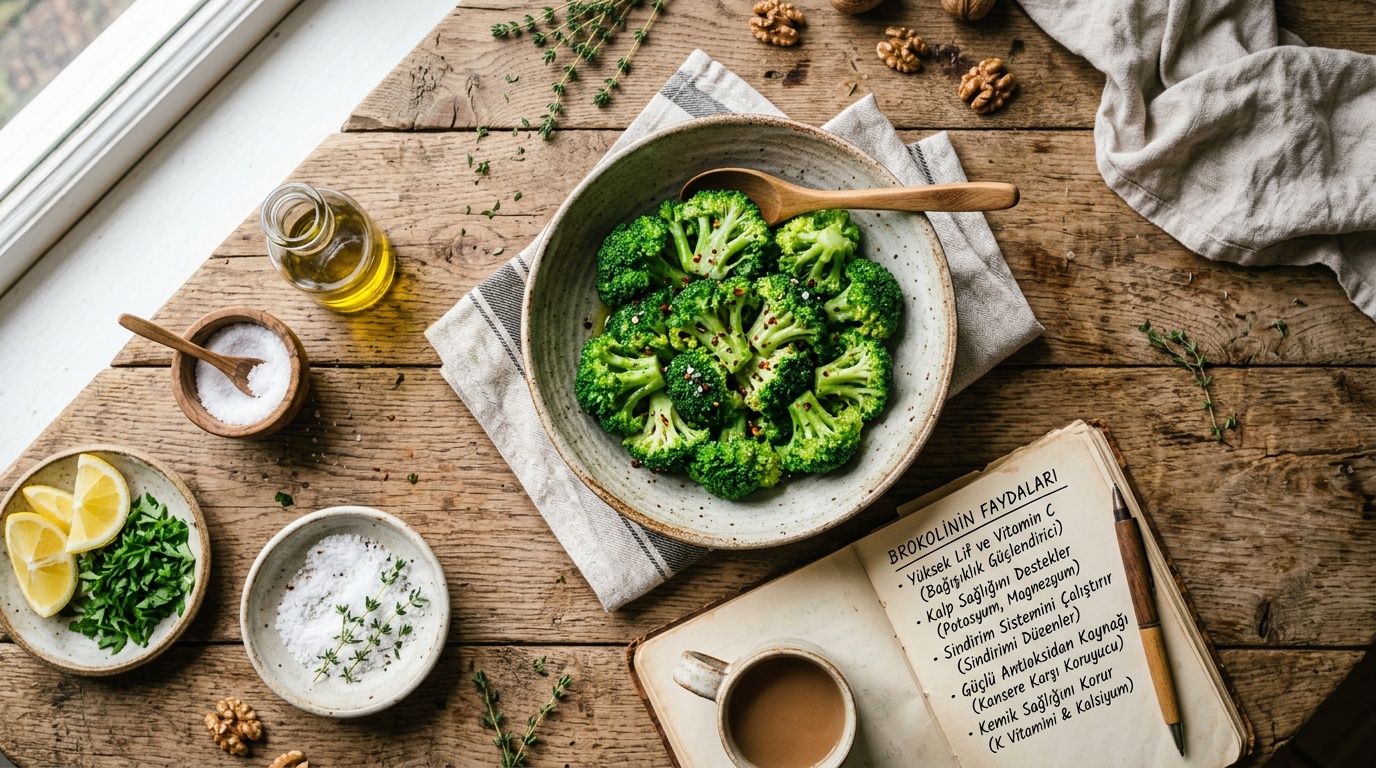
Broccoli, a subspecies of Brassica oleracea known as italica, is a plant whose star has risen in recent years through scientific research. This vegetable, abundantly cultivated in countries with a Mediterranean climate, which in our country was once found only in luxury consumption aisles, can now easily be found even in neighborhood markets. Resembling cauliflower in shape, broccoli is easily distinguished by its green color and can be harvested 3-4 times a year.
Active Compounds in Its Structure
Glucosinolates: Their inhibitory effect against many types of cancer, especially liver cancer, has been proven by clinical studies.
Indoles: Having a plant hormone structure, they have a regulatory effect in the human body; they are effective in suppressing tumor formation. It is known that a type of estrogen specific to women increases breast cancer risk; the suppressive effect of indoles on this estrogen is under research and there is supporting data.
Sulforaphane: This substance, which strengthens the immune system, is sold as a commercial product in the USA and many European countries. It is found 50 times more in sprouted broccoli seeds and gives truly good results in fighting cancer.
Vitamin C: Strengthens the immune system, prevents oxidation, accelerates iron absorption, and strengthens connective tissue.
Beta Carotene: Takes on important functions in keeping the immune system strong, regulating reproductive function, protecting eye health, and accelerating bone formation.
Selenium: A very powerful antioxidant; protects blood cells, strengthens the cell wall, and regulates the immune system.
Dithiolthiones: These substances found in cauliflower-like plants are compounds thought to play a role in preventing cancer formation.
Quercetin: A substance with antioxidant properties; blocks various substances that cause cancer and has been shown to induce programmed cell death (apoptosis) in some tumors.
Lutein: This substance found in green leafy plants and having an antioxidant effect similar to beta carotene, especially protects the eye from the harmful effects of the sun in people with blue, green, and hazel eyes.
Vitamin E: A powerful antioxidant; protects the heart from the harmful effects of cholesterol and has natural blood-thinning properties.
Broccoli's special fibrous structure: Its unique cellulosic structure shows a protective effect by removing toxic substances and heavy metals from the intestines; it is considered a preventive factor for colon cancer.
Conducted Research
In an important study conducted at the University of California, 459 patients with colon polyps were compared with 507 healthy individuals; the rate of colon cancer development was found to be significantly lower in the group consuming broccoli.
Researchers from the US Department of Agriculture determined that the selenium in broccoli's structure behaves differently from selenium in salt form. While selenium in salt form is rapidly absorbed from the intestines and passes into urine, the selenium in broccoli remains within the fibrous structure, advances to the colon, and shows a protective effect there.
P. Talalay and his team from Johns Hopkins University showed that broccoli's cancer-preventive effect originates from the sulforaphane substance. This substance, found in very high amounts in sprouted broccoli sprouts, exhibited a preventive effect on the formation of various cancers, especially breast and colon cancer. Comprehensive studies on broccoli are also ongoing in Denmark, Germany, Belgium, Italy, and the UK.
Which Diseases Is It Good For?
- Protective against prostate cancer.
- Reduces breast cancer risk in women.
- Suppresses the formation of benign tumors.
- Regulates body hormones.
- Reduces the harmful effects of cholesterol.
- A powerful source of antioxidants.
- Suppresses cancer development.
- Regulates the intestines thanks to its fibrous structure.
- Thins the blood and has a relaxing effect on the heart.
- Has positive effects on reproduction and fertility.
- Supports milk production during breastfeeding.
- Reduces iron deficiency anemia in women by strengthening iron absorption.
How Should It Be Consumed?
According to the recommendation of food expert Sinan Özgün: If it is to be used as a cure, the most suitable method is to wash the vegetable with plenty of water, then boil it in cold water and drink the obtained water morning and evening. If it is to be used in a salad, it should be briefly boiled in boiling water and then consumed with olive oil added.