
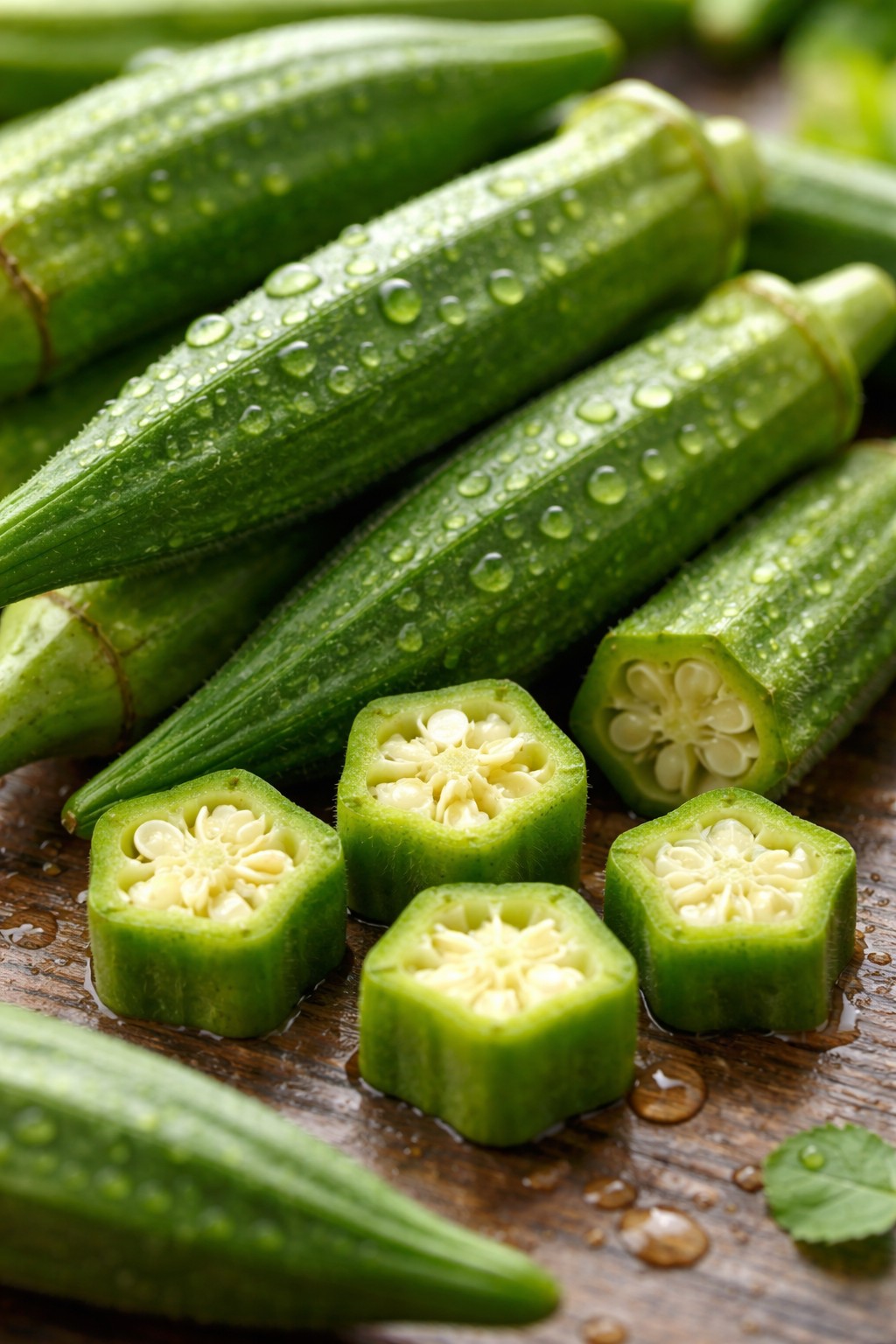
About Okra
Okra is a plant that grows mostly in temperate climates, was first used in Ethiopia, and has been consumed by Egyptians for 3000 years. Its fruit is round, oval, and green; its leaves are vine-shaped. It belongs to the mallow family. It is high in fiber; contains vitamins A, B2, and C. Since taking vitamin A supplements externally is problematic, okra stands out as a good natural source of vitamin A. Okra helps remove edema and inflammation from the body; it is also used externally for boils and ingrown hairs.
Nutritional Value (100 grams cooked)
- Energy: 100 calories
- Water: 90 g
- Protein: 1.5 g
- Calcium: 50 mg
- Iron: 0.4 mg
- Sodium: 120 mg
Benefits
- It aids the digestive system by regulating the stomach and intestines.
- It is a diuretic and relieves constipation.
- It purifies the blood.
- Being rich in minerals, it is good for weakness.
- As a source of vitamin A, it is beneficial for eye health and skin renewal.
- Its fibrous structure aids both in weight control and in protection against cancer.
Usage
Okra should be harvested fresh and consumed before it fully matures and becomes tough; it can be consumed fresh or dried. It can also be eaten raw. The flower of the okra is also beneficial; if the flowers are crushed, boiled, and the water is drunk, it soothes and softens the chest. When added to vegetable soups, it thickens the soup's broth, eliminating the need to use flour.
It pairs well with tomatoes, red pepper, garlic, onion, curry, lemon, and vinegar.