
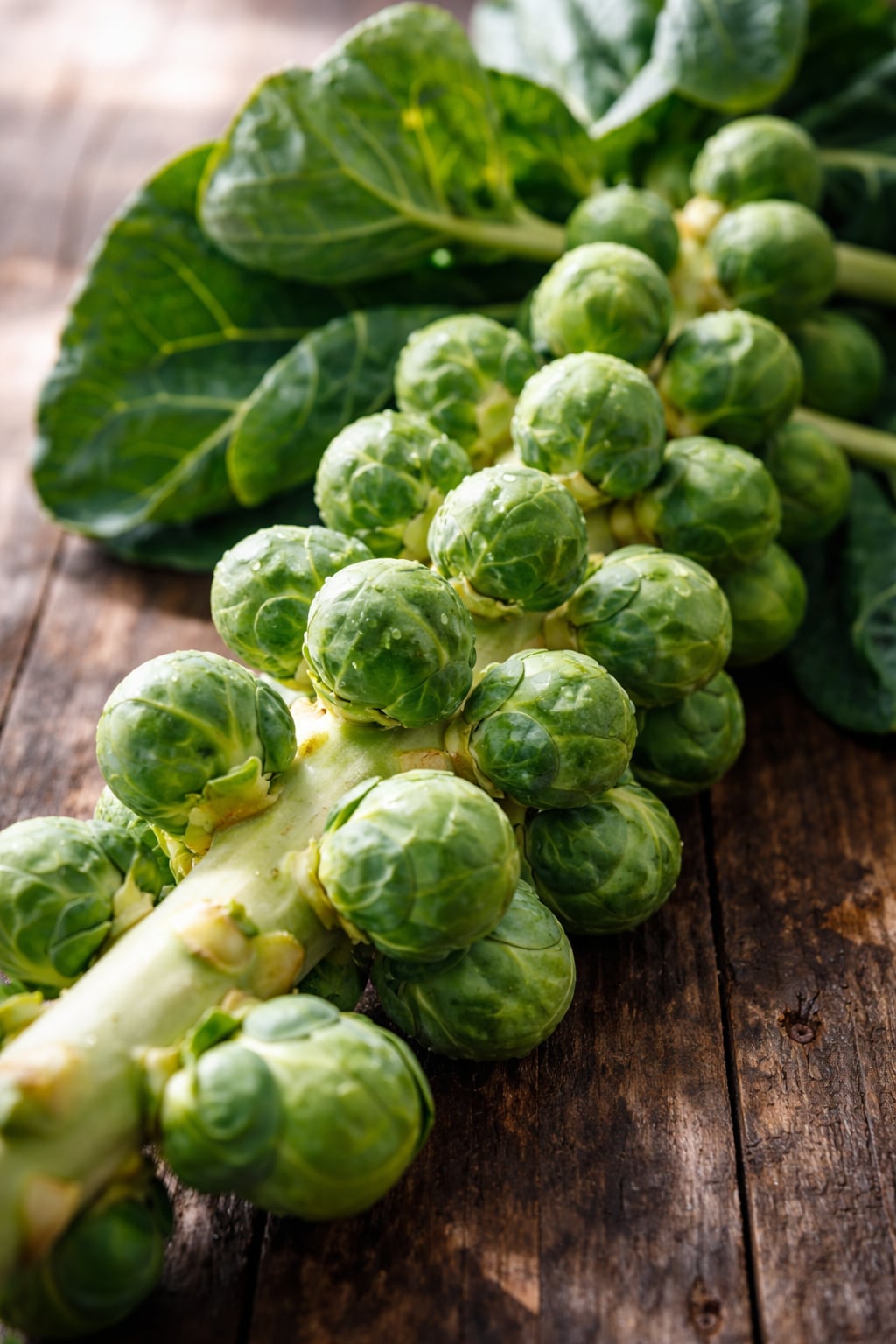
Brussels sprout (Brassica oleracea Gemmifera) is a type of vegetable from the Brassicaceae (mustard) family, with small, tuber-shaped and thick, layered leaves. It is another winter vegetable, like broccoli, thought to reduce the risk of cancer. The plant, whose native origin is unknown, is widely cultivated in the USA and Europe; its cultivation has also begun in Turkey, and the vegetable is gradually becoming known among the public.
Being an annual herbaceous plant, the Brussels sprout closely resembles cabbage in its seedling stage. Later, its stem grows to a height of 60-90 cm; large, dark green leaves with white veins extend from the ends of thick stalks on the stem. Buds emerging from the axils of these leaves turn into small, round heads. Resembling miniature cabbages and having a sharp odor, these tightly wrapped heads grow to the size of a large walnut and are eaten as a vegetable.
It is rich in vitamin C; 100 grams of raw Brussels sprouts contain 63 calories. Consuming 150 grams is sufficient to meet the daily vitamin C requirement.
Its success in protecting against diseases: it is reported to suppress colon cancer cells by 47-52% and lung cancer by 27-67%. It is an important source of antioxidants for skin and hair health; its functions are the same as cabbage and other foods in this group.
Nutritional Values (100g)
- Carbohydrates: 5 g
- Protein: 4 g
- Fat: 0.5 g
- Calcium: 30 mg
- Iron: 1 mg
- Carotene: 1 mg (antioxidant)
- Vitamin B1: 0.12 mg
- Vitamin B2: 0.12 mg
- Vitamin C: 150 mg