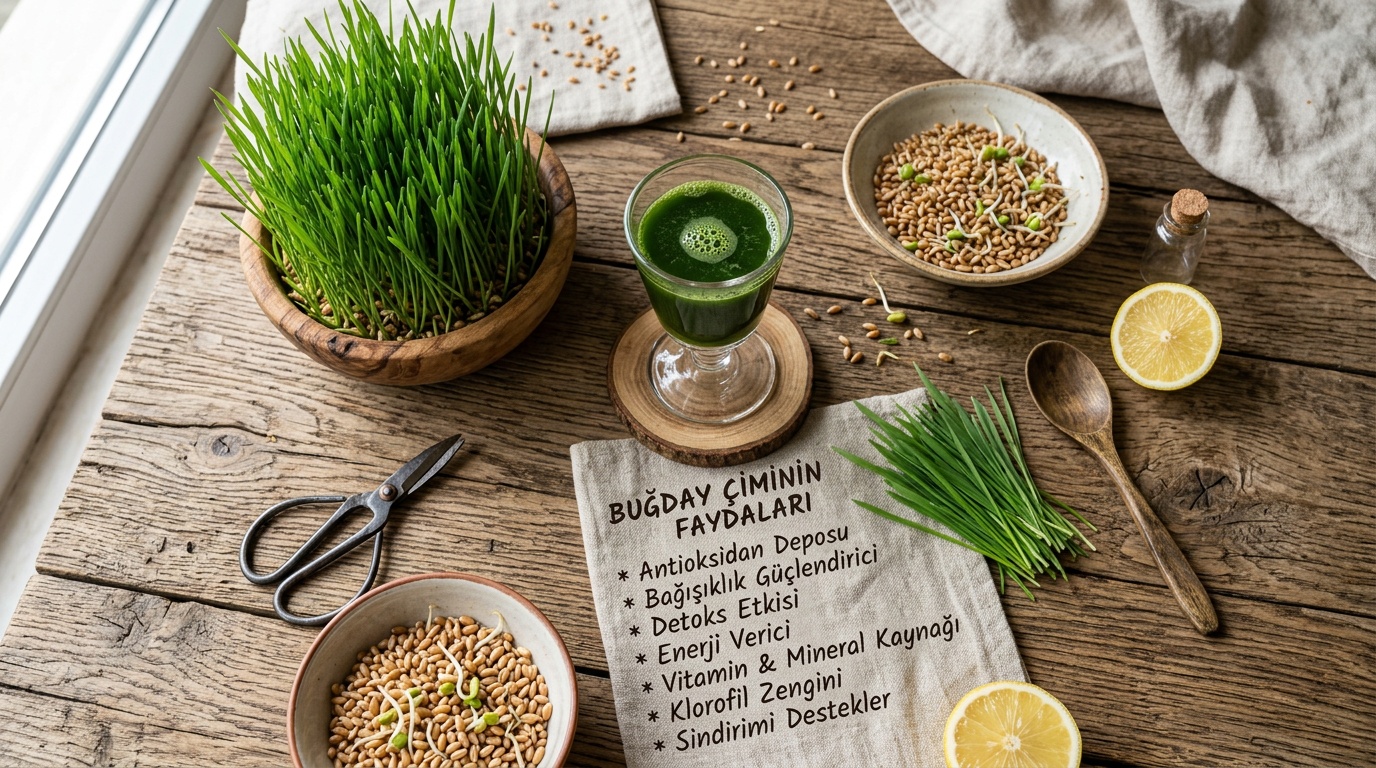
If you are looking for a permanent solution for hair loss, height growth, or graying hair, did you know that wheat, our basic nutrient source, can easily be sprouted at home? Wheatgrass and its juice strengthen the immune system, renew cells, and stand out as a healing drink.
The chemical composition of wheatgrass juice closely resembles blood. It contains 70% chlorophyll, which has antiseptic cleansing properties. Wheatgrass, an excellent source of protein and beta-carotene, also contains laetrile (vitamin B17), one of nature's most powerful anti-cancer substances. Japanese scientist Nagivara discovered enzymes and amino acids in fresh wheatgrass that neutralize the damage caused by carcinogens to the body.
Benefits
- Strengthens the immune system.
- Protects against cancer; neutralizes toxins in the blood.
- Repairs damage in the cardiovascular system.
- Purifies the blood; opens up blood vessels.
- Due to its silica content, it is beneficial for hair loss and skin problems.
- Phosphorus is beneficial for eye health.
- B vitamins have a pain-relieving effect in nervous disorders; increase the ability to cope with stress.
- Its magnesium content is effective for muscle pain and cramps.
- Vitamin A, with its cell-renewing properties, supports skin and nail health; its juice can also be applied as a mask.
- Vitamin B12 is necessary in all illnesses, during growth periods, and in vegetarian diets.
- Supports cell renewal and the weight loss process.
- Beneficial for fatigue, weakness, cardiovascular diseases, and aging.
- Effective for developing children and young people who want to increase their height.
It is recommended by all scientists to do a ten-day wheatgrass cure at least twice a year.
Nutritional Values (per 100g)
Minerals: 250 mg fluorine, 1100 mg phosphorus, 450 mg magnesium, 300 mg sulfur, 400 mg potassium, 6 mg zinc, 8 mg iron, 1 mg copper, 10 mg cobalt, 10 mg manganese, and sufficient amounts of silicon.
Vitamins: Abundant amounts of vitamins B1, B2, B3, B6, B12, and A; small amounts of vitamins C, E, and K.
Preparation
Sow wheat grains soaked in water overnight in a shallow pot or garden and cover them with soil. When the grass grows 10-15 cm, cut it 1 cm above with scissors; they will regrow after cutting. You can add it to your salad daily or use it by blending it in a food processor and extracting its juice. Since ready-made grass from markets may contain growth-accelerating additives, preparing it yourself at home is both easy and healthier.
It is also very beneficial to consume the grains themselves by sprouting the wheat in a moist environment for a few days; this way you benefit from both its valuable husk and the nutrient-rich part called the germ.
For Height Growth
Wash the wheat, put it in a container, and add water so the grains are submerged. Add water as it decreases, enough to cover them. After 48 hours, strain and spread in a shallow container; add water so half of the grains are exposed. They will sprout in a day or two. Crush these yellowish new sprouts and mix well with milk to benefit from the germ's nutritional value; it is ideal for growth and height increase.
Hair Mask
For better penetration, hair should be clean and dry. Mix wheatgrass juice with 1 teaspoon of black seed oil and massage into the scalp; it prevents both hair loss and graying. Apply approximately half a tea glass (adjust the amount according to hair density) of the juice intermittently: start from the front of the head, move to the back, then return to the front again. Adding 5-6 drops of black seed oil to the wheatgrass juice you drink is also beneficial for inner beauty.
Dosage
Consume wheatgrass fresh; if you cook it, it loses all its value. To maintain health, 2-8 tablespoons per day is sufficient. For therapeutic purposes, the daily dose can be increased up to 8-16 tablespoons; these doses should be divided and taken throughout the day.