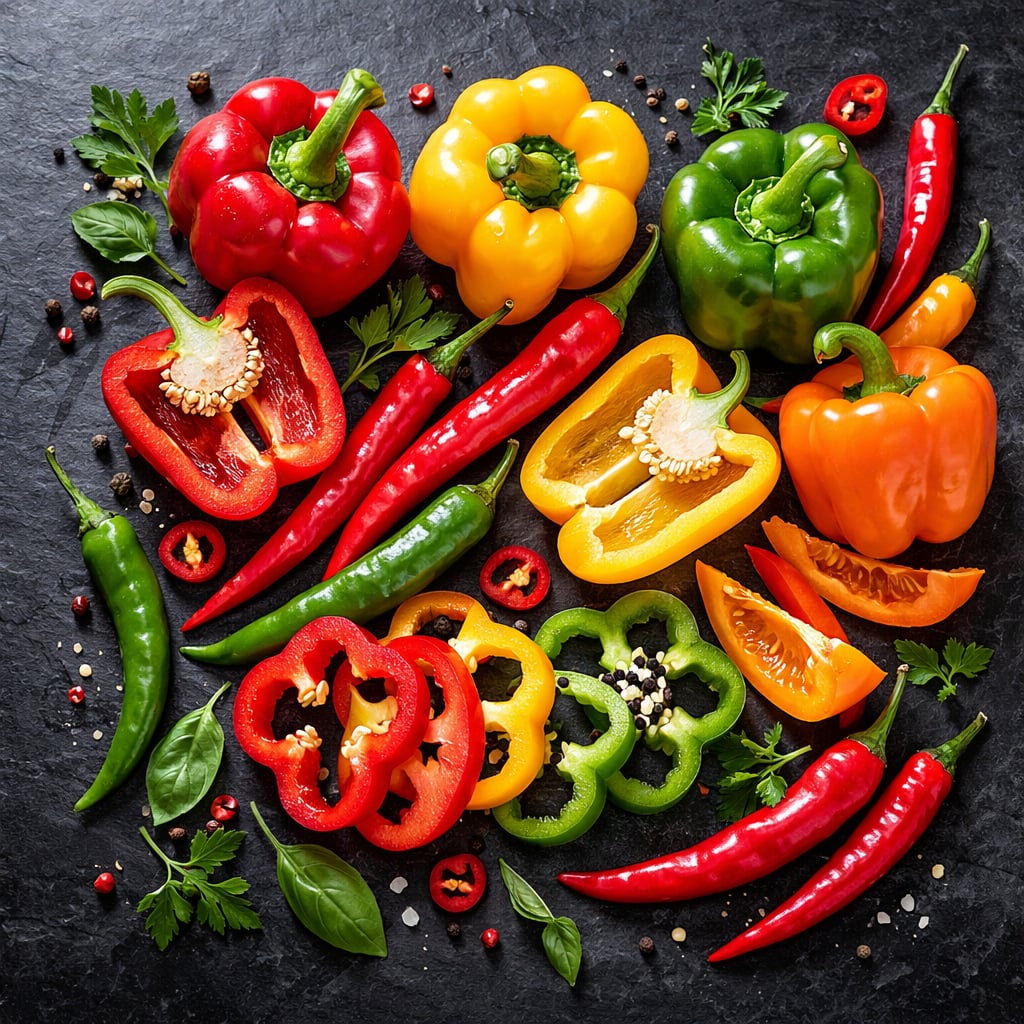
CANCER-WEIGHT LOSS-SUGAR-HEALTH Pepper is a real source of health. It comes in green, red, and yellow varieties. Green sweet pepper is recommended for people on a diet, and for those with diabetes and kidney disease. The protein and carbohydrate content of red pepper is much higher than that of green pepper. The folic acid content of green pepper is lower than red pepper, while its iron content is higher. (Folic acid such as 12-28 IU) Green pepper has a B3 value of 330 IU, while red pepper has 1660 IU. Additional information for those with gout.
There are many scientific studies showing that red hot pepper protects against cancer and helps with weight loss. Pepper pills have been observed in clinical trials to help with slimming. However, it is also being discussed that these trials are insufficient and that these drugs are harmful as well. It has been clinically determined that even after 6 weeks, ulcers began to form in the stomach of people using hot pepper pills. Everything we eat and drink passes through the stomach. Spring is coming, and if you are thinking of getting rid of your excess weight by using hot pepper or hot pepper pills, keep in mind the importance of your stomach health. Before 1970, ulcer disease was not known in Germany, which is why ulcer was called the "Turkish disease" among the public. Germans had never eaten hot pepper or spicy foods before the Turks. After becoming acquainted with hot pepper, ulcers and stomach cancer became common diseases among Germans as well. To protect against cancer, hot pepper should not be consumed in excessive doses. The recommended daily dose is one teaspoon (of paste), if your stomach is strong. Red pepper has a high antioxidant property. It is a source of anti-aging lycopene. It contains many valuable vitamins and minerals. It contains flavonoids, essential oils, beta-carotene, high amounts of vitamins C, E, K, and B, as well as essential amino acids and minerals. All of these effects are also present in green pepper. The nutritional values of red sweet pepper are approximately the same as those of hot pepper. The calcium content of pepper is between 10-22 mg in green pepper and between 12-58 mg in red pepper. In the measurement below, the calcium value was given too high. According to the results of the study; 100 grams of dried red pepper provides the body with 318 calories of energy. In addition, it contains 148 milligrams of calcium, 76 milligrams of vitamin C (340 milligrams in fresh pepper), 8.1 grams of water, 2,014 milligrams of potassium, 41,610 milligrams of vitamin A, 12 grams of protein, 293 milligrams of phosphorus, 15 milligrams of vitamin B3, 17.3 grams of fat, 152 milligrams of magnesium, 2 milligrams of vitamin B2, 56.9 grams of carbohydrates, 30 milligrams of sodium, 1 milligram of vitamin B1, 24.9 milligrams of fiber, 8 milligrams of iron, along with organic compounds such as pungency and color substances.
Benefits of Red Hot Pepper Red pepper, whether dried or fresh, has serious health effects. The substance obtained from hot pepper, capsaicin, has many different effects in the body. Capsaicin, the main pungent compound in pepper, has shown anti-tumor effects in many cell types. Capsicum species with insufficient capsaicin have less therapeutic effect.
Benefits of Red Pepper According to research conducted by Nottingham University, hot red pepper has the property of destroying cancer cells. The capsaicin in hot red pepper triggers the death of cancer cells and does not harm healthy cells. In a study conducted by the University of California, capsaicin was found to have a destructive effect on prostate cancer cells. An article on the effect of capsaicin on liver cancer cells was published in the journal Cellular & Molecular Biology Letters. Red hot pepper has a soothing effect against joint inflammation and pain. In one study, capsaicin was injected into people suffering from severe joint pain, and the patients' pain was greatly relieved. A pharmaceutical company has also started developing a drug called ALGR X4975 using capsaicin, the substance that gives red hot pepper its pungency. It has properties that regulate stomach acid and aid digestion. It has a cholesterol-lowering effect. Experiments have shown that capsaicin has positive effects on blood lipid levels. It has a positive effect on blood circulation. It is antimicrobial. The red carotenoid substance in pepper has a cancer-preventive effect. Red pepper is also rich in vitamin C. Its vitamin C content is higher than that of lemon. Red peppers have twice as much vitamin C as green peppers. It stimulates appetite. It increases sweating. It has an aphrodisiac effect. It makes the body resistant to infectious diseases. Its pain-relieving property is among the benefits of pepper. It promotes saliva production. Gargling with hot pepper water is beneficial for sore throats. It helps with weight loss by increasing the basal metabolic rate. Capsaicin, the substance found abundantly in red pepper and giving pepper its hot taste, strongly stimulates the bitter receptors in the mouth, causing the body to begin secreting the hormone endorphin to relieve the pain. This hormone creates a feeling of happiness in humans. Red chili flakes and pepper paste should be stored in the refrigerator.