Functions of Amino Acids
In foreign publications, it is said that out of 23 amino acids for our body, our body produces 15, and we need to obtain 8 through food. There are more than 23 amino acids. The reason I add this information is that some writings mention a different number of amino acids. Amino acids are the building blocks of proteins. They structure cells, repair tissues, are responsible for the formation of enzymes, and play a fundamental role in our mental health.
The breakdown of proteins into amino acids is the first function of amino acids in the body. After this conversion, amino acids combine with nitrogen wherever they can find it, taking on thousands of different protein formats that our body can use. Because they are involved in protein structuring, they are also called protein builders.
As is known, our body uses some amino acids, specifically 20 amino acids, in protein structuring. These types of amino acids are divided into groups as essential amino acids and non-essential amino acids.
What Are the Essential Amino Acids?
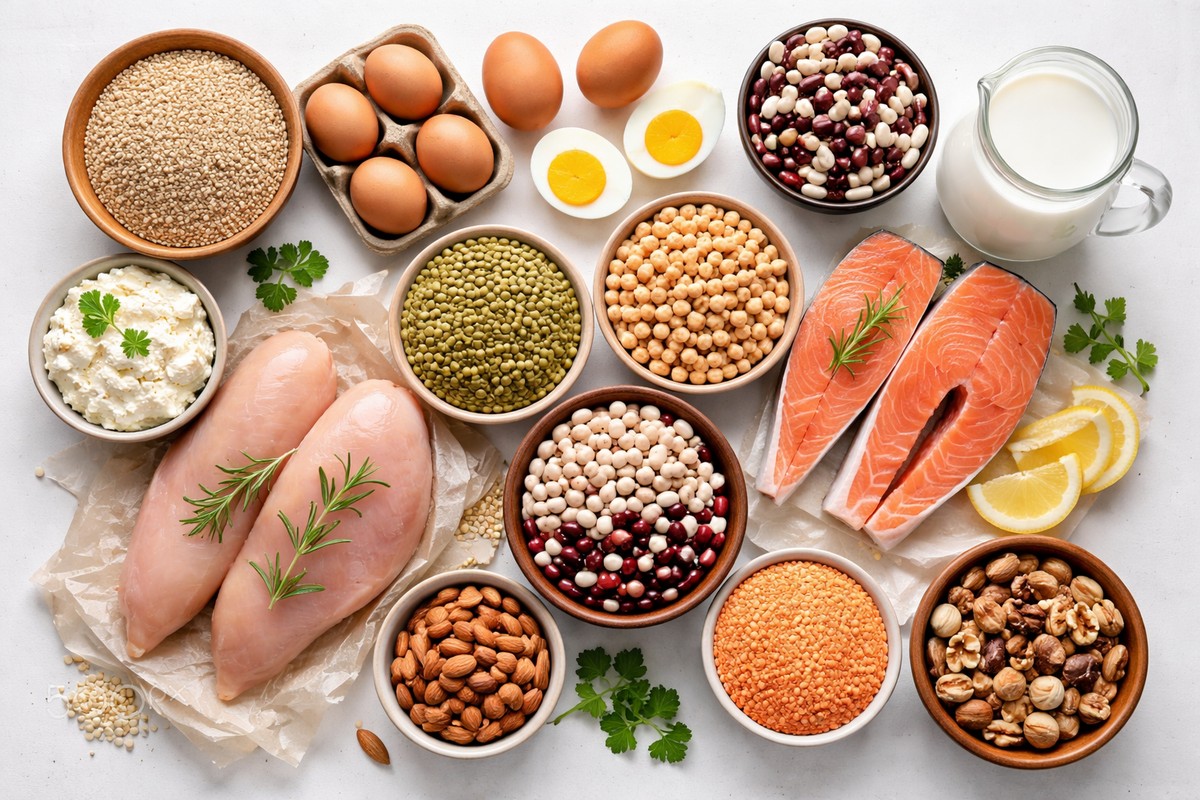
According to information on essential amino acids, there are 8 main amino acids that our body absolutely cannot produce, and these are called essential amino acids. We need to obtain these amino acids through our food. However, the use of the word 'non-essential' for amino acids should not mislead you. Because all amino acids are necessary for true protein synthesis. They are called essential because the body cannot produce these 8 amino acids itself. With aging and illnesses, we also have to obtain the others from outside.
What Do We Need for True Protein Synthesis?
To achieve proper protein synthesis, it is absolutely necessary for all amino acids to be present in our body simultaneously and in the correct amounts. If there is a very small amount of one essential amino acid, it is called a limiting amino acid and will restrict the amount of protein that can be synthesized, regardless of how much of the other amino acids are present.
When essential amino acids are studied, we see that even a deficiency in the amount of just one amino acid will greatly reduce protein synthesis and, if not treated, will stop it completely.
What is Complete and Incomplete Protein?
What is protein? Proteins are organic substances that form the cellular fabric of the organism.
Functions of Proteins
- They enable growth and development.
- They play a role in the formation of cellular structures.
- They are necessary for the production of some hormones and enzymes.
- They produce substances that fight diseases.
- They are an energy source for the body.