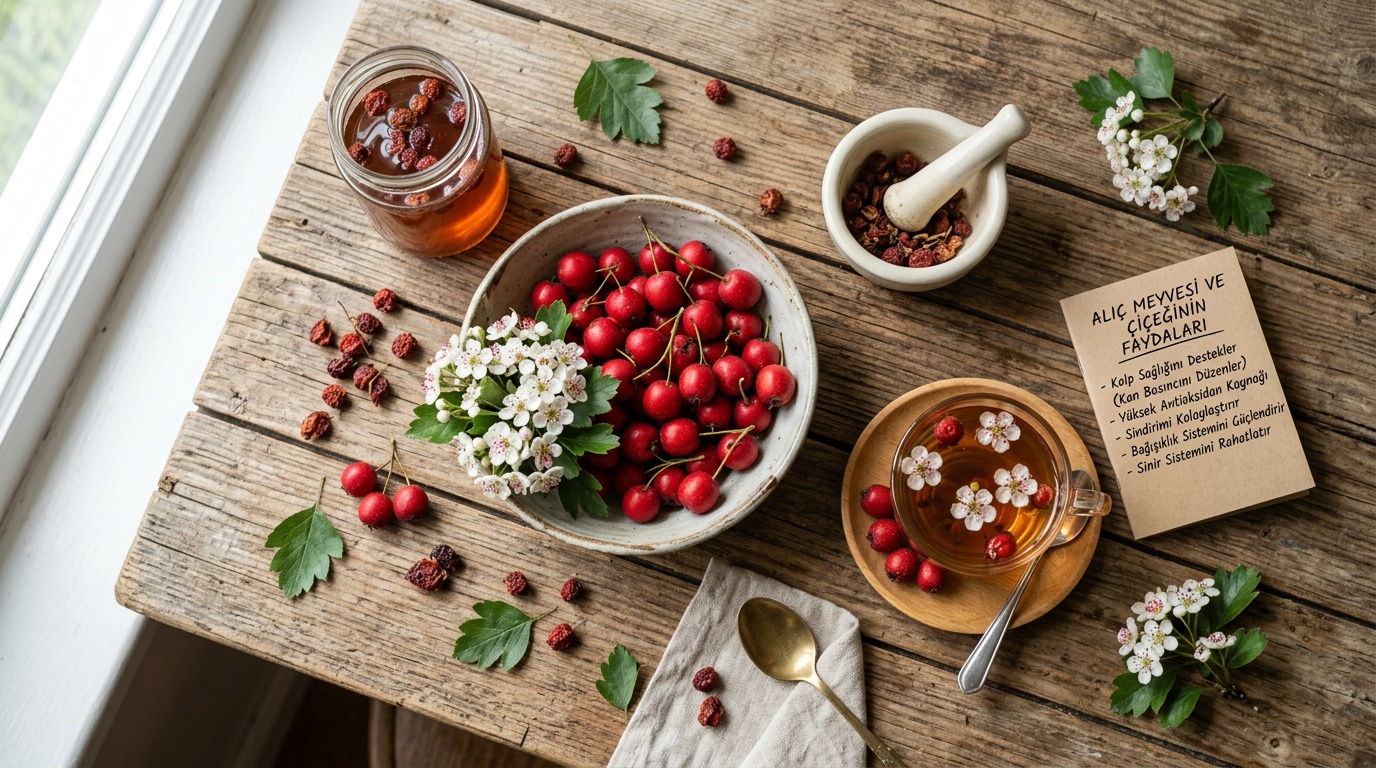
Hawthorn (Crataegus oxyacantha) is a tree that can grow up to 10 meters tall, is thorny, and has white or pink flowers. Its fruits are 6-10 mm in diameter, contain 1-3 seeds, and are brown-red or red in color; they are slightly sour and tasty. It is also known as ekşimuşmula, barutağacı, yemişen, and in German as "Weissdorn".
Hawthorn, with its leaves, flowers, and fruits, has been used since the Middle Ages as a heart tonic and cardiovascular system regulator. It is extremely rich in flavonoids, which provide strong antioxidant properties. It contains three main groups of compounds that have a positive effect on the cardiovascular system: triterpenoid saponins, amines, and flavones.
Benefits
Hawthorn was first used by the Chinese. In 1990, modern German medicine researched and confirmed its benefits for the heart. Studies have found that it increases oxygen and blood flow to the heart. This relaxes the heart by reducing the force it has to expend for blood circulation.
- It is effective in the early stages of heart failure and in protecting the heart.
- It helps with insomnia problems.
- Bioflavonoid substances strengthen blood vessel walls and regulate blood flow to other parts of the body.
- It reduces cholesterol and plaque formation in the arteries.
- It is successfully used for heart rhythm disorders, nervous palpitations, heart muscle weakness, post-heart attack recovery, high blood pressure, and arteriosclerosis.
- It plays an important role in strengthening memory; positively affects the brain.
- It helps eliminate edema (fluid accumulation in the body).
- It has a calming effect on the nervous system and reduces spasms.
- It has diuretic and laxative properties; however, excessive use can cause constipation.
- Hawthorn flowers prevent itching; can also be used for insomnia, difficulty concentrating, dizziness, and tinnitus.
- It is beneficial for the stomach; relieves severe vomiting attacks.
Hawthorn is suitable for long-term use as it does not accumulate in the body, cause toxicity, or lead to habituation. The plant's effects begin to be noticed after 4-8 weeks of use and increase over time. Positive effects on the heart, vascular system, and brain are noticeable after about 3 weeks.
Warning: It should not be used together with medications containing beta-blockers or glycosides. If hawthorn extract is to be used with medications, a specialist doctor should be consulted. Its use during pregnancy has not been researched and is not recommended.
Usage Method
It is stated that only the flowering hawthorn leaf is effective in treatment; the effect of the non-flowering leaf and hawthorn fruit is not sufficient. Therefore, it is recommended to preferably utilize the flowers. It is also sold in health food stores as ground plant and fruit powder.
Herbal tea: Approximately one tablespoon of hawthorn flowers is steeped in one liter of water overnight; in the morning, the amount to be used is heated to the boiling point and drunk warm, divided into 2-4 parts per day.
Hawthorn fruit is also used as a toy, or ground and used in tea form or mixed into foods.