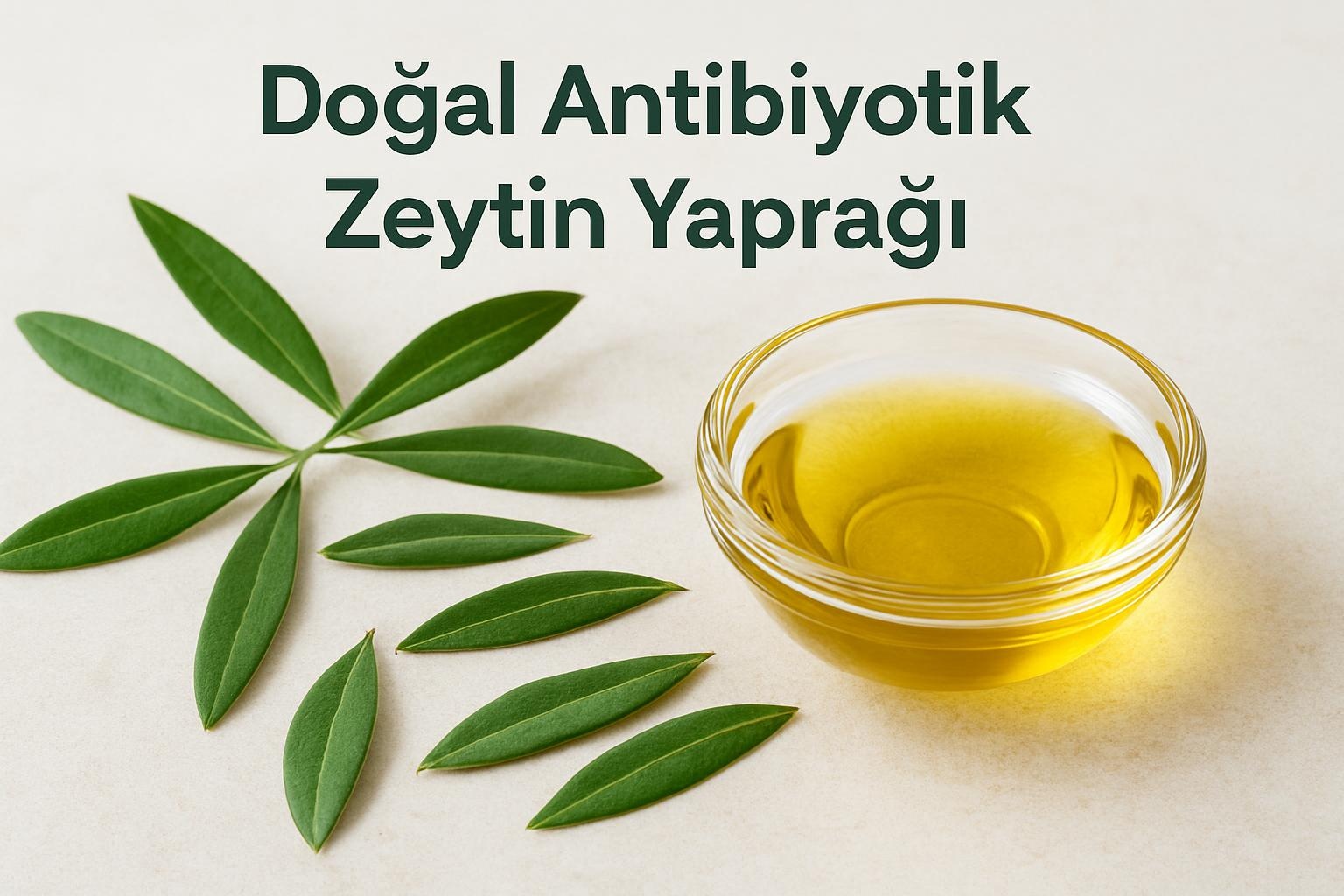
Scientific research has revealed that olive leaf acts as the body's protector against many diseases, primarily cancer. Being a natural herbal antibiotic and antioxidant, it can play an effective role both in preventing diseases and in treatment. Scientific studies have confirmed that its active components "oleuropein" and "elenolic acid" act as antimicrobial agents. These substances, whose effects resemble those of garlic and onion, slow down microbes entering the body until the immune system is activated. Oleuropein, the most important active ingredient that provides the olive tree's resistance against disease and pests, along with "elenolic acid" and its derivative compound "calcium elenolate," keeps a wide variety of microorganisms at bay. While its use is more common in Mediterranean countries, in recent years its use as a herbal medicine has increased worldwide and research on this subject has accelerated. It does not contain toxic substances.
Antimicrobial Effect
When olive leaf is consumed as tea, the oleuropein taken into the body is converted into elenolic acid by two enzymes. Elenolic acid, which has a high antimicrobial effect, disrupts the cell wall of bacteria, naturally strengthening the immune system. It has also been found to be effective against the HIV virus, where antibiotics are insufficient.
Antioxidant Effect
Antioxidants neutralize free radicals that form in the body as a result of chemical reactions or come from external sources such as smoking, alcohol, and polluted air. Olive leaf extract has high antioxidant activity; it is stated to contain 400 times more vitamin C than grape seed and green tea. It exhibits an effect approximately 2.5 times the antioxidant activity of vitamins C and E. In this way, the formation of diseases can be prevented, hormonal balance can be maintained, and the aging process can be delayed.
Effect on Coronary Vessels
Studies have shown that oleuropein has a vasodilatory effect, lowers blood pressure, and exhibits anti-arrhythmic properties. It has also been concluded that it lowers LDL cholesterol levels. Laboratory and clinical research has shown that olive leaf tea is also effective on heart failure and vascular blockages.
Blood Sugar Regulating Effect
In studies on living organisms, oleuropein has been observed to have a hypoglycemic effect and to lower high blood sugar levels.
Conditions for Which It Is Beneficial
- Strengthens the immune system; shows strong antimicrobial and antioxidant effects.
- Regulates blood sugar and LDL cholesterol levels.
- Protects against skin aging with its cell-renewing property; tightens the skin, balances its elasticity and moisture.
- It is germicidal and immune-boosting during bronchitis and pneumonia.
- Beneficial for colds and ear infections.
- Effective for fibromyalgia pain.
- Beneficial for fungal infections, herpes virus, salmonella, candidiasis, dysentery, streptococcal infections, and shingles.
- It is stated to be more effective than antibiotics in Hepatitis A, B, and C; it is also used in the pharmaceutical industry.
- Effective in rheumatic diseases and calcification.
- Beneficial for vaginal discharge and bacterial infections seen in women.
How to Prepare the Tea?
One teaspoon of dry leaves is placed in a cup of hot water and steeped for 5-6 minutes, then strained and drunk. 2-3 cups per day is the recommended dose.
Important notes: Fresh leaves should be used within a maximum of one month after harvesting; dry leaf is not very beneficial. The drying process should be done in a cool place, away from sunlight. Its extract is sold in Australia and Germany; 6-7 drops three times a day is sufficient. Severe pains may be observed for 5-6 days after drinking olive extract; this situation is due to toxin elimination and inflammation drainage.