
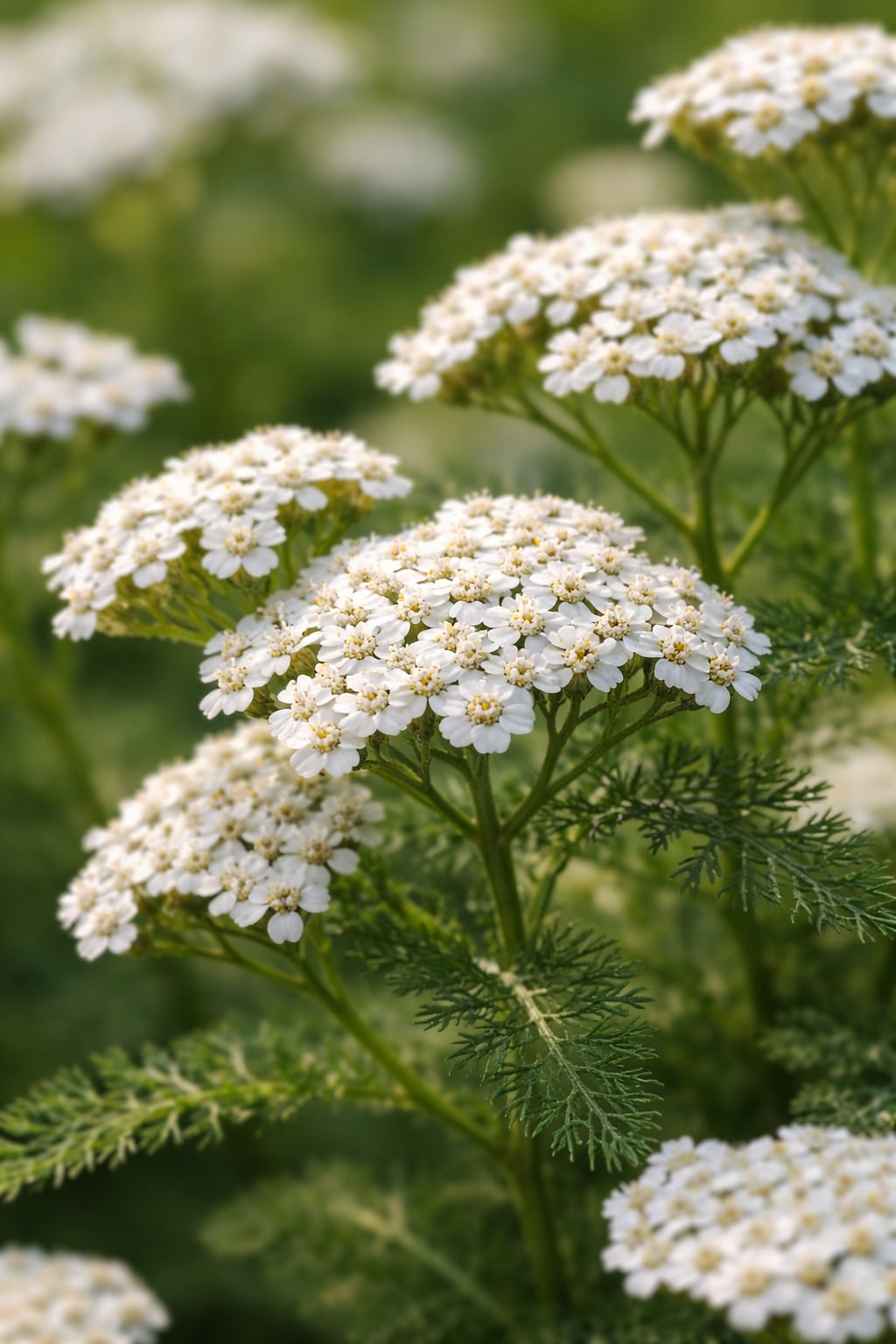
Yarrow (Achillea millefolium), also known as Candle Flower, Akbaşlı, Thousand-leaf herb, white yarrow, yellow yarrow, or Barsama herb, is a plant species belonging to the daisy family (Asteraceae).
It is a fragrant, perennial, herbaceous plant that blooms with white or pink flowers between June-September, grows on roadsides, fields, and dry soils, and reaches a height of 20-100 cm. Its stems are erect, unbranched, and softly hairy. Its leaves are stalkless and dark green.
It is effective for menstrual bleeding, during menopause, ovarian inflammation, vaginal discharge, and back pain. It is blood-building. It is effective for stomach and intestinal gallbladder disorders. It is one of the most popular styptic (blood-stanching) herbs. It is used for stomach aches, eczema, ulcers, gastritis, etc., as well as for stomach and hemorrhoid bleeding, and also for wound and nosebleeds.
The famous herbalist Kneipp says in one of his writings (Reference1: M.Treben): "If women would occasionally drink yarrow tea, they would never encounter many problems!".
Whether it's a young girl with irregular menstrual bleeding or a mature woman during or after menopause, it is very important for all women to drink yarrow tea occasionally. Yarrow affects the uterus (womb) in the best possible way in all conceivable matters.
In ovarian inflammation, when yarrow sitz baths are started, the pains cease and the inflammation gradually begins to subside. These baths can also be successful for bedwetting problems in elderly people and children and for uterine (womb) discharge. In these cases, it is also necessary to drink 2 cups of yarrow tea per day.
Myomas (muscle tissue tumors) can also disappear when yarrow sitz baths are taken daily for a long period until a doctor's check-up yields a positive result. (Reference1: M.Treben). During menopause, women should also frequently remember yarrow tea. In this case, they will not encounter inner restlessness and other discomforts. (Reference1: M.Treben)
Yarrow sitz baths are also very beneficial for health. For nerve inflammations in the arms and legs, arm and leg baths to be made with the addition of yarrow are very relaxing. However, the herb should be collected in the midday sun.
Dr. Lutze's Recommendations (Reference: M. Treben)
- Painful pressure of blood to the head
- Dizziness
- Nausea
- Eye disorders accompanied by watery eyes
- Eye pains
- Nosebleed
- Migraine attacks caused by weather conditions
Migraine can completely heal with regularly consumed herbal tea. Thanks to its body-cleansing effect, we can expel diseases that have been rooted in our body for years.
It should be particularly noted that yarrow affects the bone marrow in the best and most direct way and regulates blood production there. Thanks to this power, the herb can help with bone marrow diseases through tea cures, baths, and tincture use.
Herbal tea can achieve success in a very short time against stomach pressure and heartburn, as well as in stomach bleeding and hemorrhoid (piles) bleeding. For colds, back or rheumatism pains, the herbal tea should be drunk as hot as possible.
Herbal tea ensures the regular functioning of the kidneys, relieves loss of appetite, helps heal gases and stomach cramps, liver irregularities, stomach and intestinal canal inflammations, and regulates intestinal gland activity, facilitating defecation.
Since it is very effective for blood circulation and vascular spasms, herbal tea can also be recommended for coronary insufficiency. Annoying vaginal itching can disappear thanks to washes and sitz baths made with the boiling water of the herb. An effective ointment against hemorrhoids can be prepared from yarrow flowers. (Reference1: M.Treben)
Warnings
It is recommended not to use yarrow during pregnancy. It may cause allergic reactions in some sensitive individuals. It has no other known side effects.
Methods of Use
Preparing tea: Half or one teaspoon of finely chopped herb is scalded (not boiled) with a medium-sized cup full of boiling water, steeped for 15 minutes, and then strained. Unless otherwise specified, drink 3 cups of tea daily on an empty stomach or between meals.
Herbal Tincture: Fresh herb collected during flowering time is finely chopped. It is loosely filled into a wide-mouthed bottle and quality brandy is added until it covers the herbs. The bottle is left in the sun for 14 days, shaken occasionally, and strained at the end of the period.
Preparing ointment: 100 gr of unsalted butter or lard is heated well in a pan. A handful of finely chopped fresh yarrow flowers and 15 finely chopped fresh raspberry leaves are thrown into the pan, stirred when they start to sizzle, and the pan is removed from the heat and placed covered in a cool place. The next day, it is warmed slightly, strained through cheesecloth, and filled into clean containers. It must be stored in the refrigerator!
Sitz Bath: Two large handfuls of finely chopped fresh herb or 100 gr of dried herb are soaked in cold water overnight. The next day, it is heated to boiling point, strained, and added to the bath water.