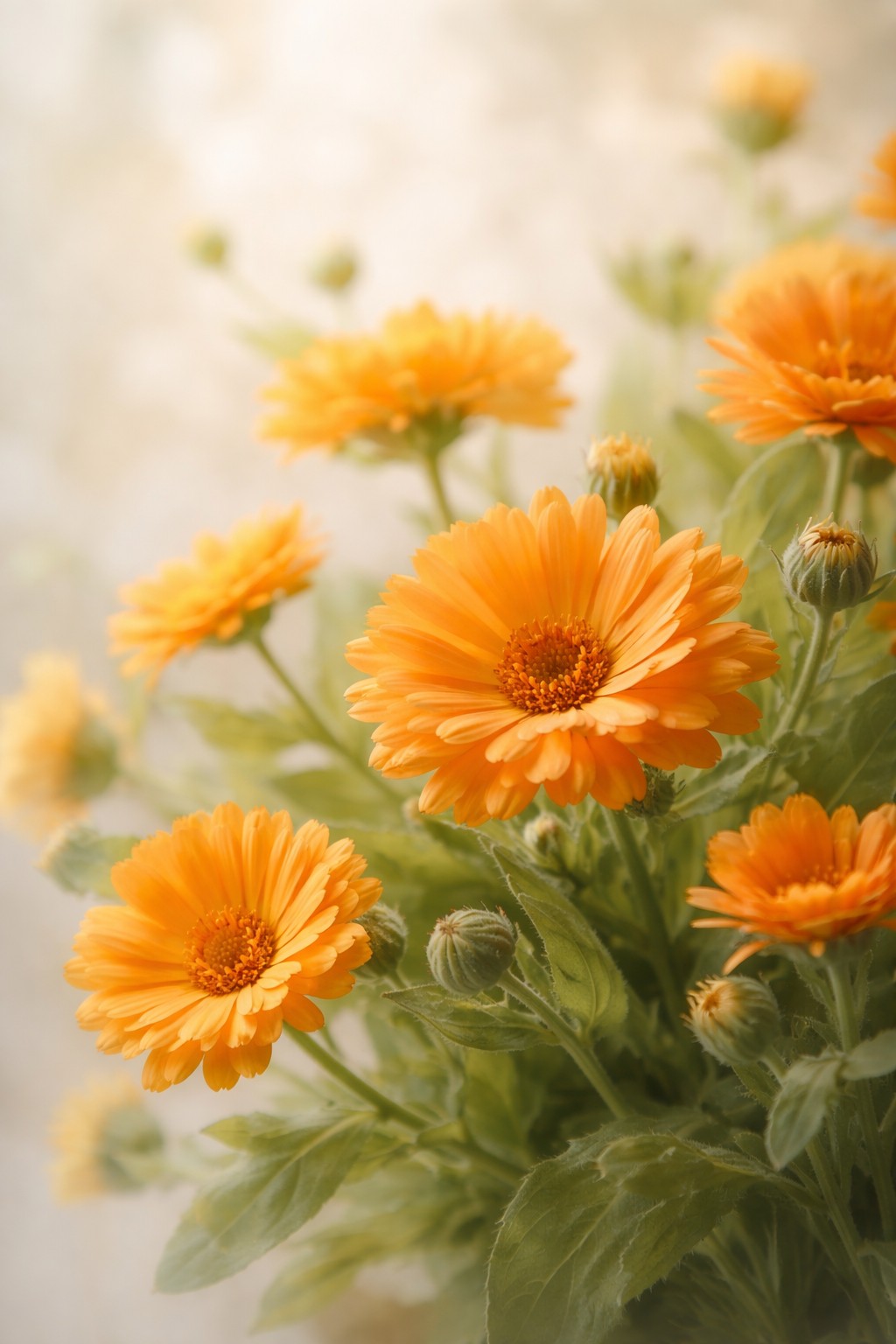
Marigold; has been used for diseases such as cancer, wounds, stomach ulcers, eczema and psoriasis, headache, strengthening the heart, nervous tension, menstrual period complaints, hemorrhoids, internal bleeding, fainting, and jaundice. This plant has also been used in diseases as a mixture with various herbs.
Marigold (Calendula officinalis) holds a very important place among the plants grown in our country. This medicinal plant is also referred to as pot marigold, dead flower, medicinal ox-eye, daffodil, orange daffodil, and medicinal daffodil. It is among the plants used against cancer and cancer-type boils.
It is a garden flower, grows up to 50 cm; flower colors range from yellow to orange. Its stem and leaves are fleshy and feel sticky when held.
There are also some different varieties, but all have equal medicinal properties. The plant is collected and used with its flowers, leaves, and stems. However, it must be collected when the sun is at its hottest; because the plant's healing power only reaches its peak at that time.
Marigold tea, as a blood-purifying herbal tea, is one of the important aids for infectious jaundice. It is said to be beneficial when 1-2 cups of tea are consumed daily. Sipping it is recommended. Marigold; has blood-purifying, circulation-stimulating effects and accelerates wound healing.
Its ointment also helps very quickly with vascular inflammations, non-healing varicose boils, fistulas, frostbite blisters, and burn wounds. For breast boils, the ointment and its residue should be used even if the disease is malignant. It ensures the rapid healing of wounds and surgical scars.
It is reported that German and French doctors have also recorded its positive effects on menstrual pain, irregularities, and some skin problems. It is said that the freshly pressed juice of the plant is even successfully used for skin cancer. It is stated that when the plant juice is applied 5-6 times a day for a long period, hemangiomas, pigment spots, and age spots also disappear.
Usage Methods
Preparing tea: Half a teaspoonful of finely chopped herb is scalded with a medium-sized cup of boiling water, infused covered for 8-10 minutes, then strained. 3 cups of tea per day are sufficient. For tea prepared for external use, twice the amount of herb should be used.
Marigold Tincture: Two handfuls of finely chopped herb (stem, leaf, flower) are left in 1 liter of brandy or apple cider vinegar for 14 days in the sun or a warm environment, shaken occasionally. At the end of the period, it is strained through cheesecloth and stored in a dark-colored bottle.
Sitz Bath: Two handfuls of fresh or 100 gr of dried herb are soaked in 2 liters of water overnight. The next day, it is heated to boiling point, infused for 8-10 minutes, then strained and added to the bath water.
Marigold Ointment: Two handfuls of finely chopped fresh herb are prepared. 500 gr of lard or margarine is heated and the herbs are poured in. Wait for it to sizzle, stir, and remove from heat. Cover and let it sit in a cool place overnight. The next day, gently heat, strain, and transfer to ointment containers.
Extracting juice: Leaves, stems, and flowers are washed thoroughly, finely chopped, and juiced in a food processor while still moist.
Compress: An oily cream is applied to the area to be compressed beforehand, a suitably sized piece of cotton or cloth is moistened with diluted tincture and placed on the affected area.
Decoction: One tablespoonful of herb is used per quarter liter of water.
Mixtures
Mixed in equal proportions with lavender, it has been used for psoriasis, eczema, and pains. For stomach ulcers, it is said that eating the plant flowers mixed with goat butter makes stomach ulcers heal faster. Eating half a tea glass of plant juice and 3 dried dates is also recommended.
Warnings: It is said that Marigold has no known side effects.