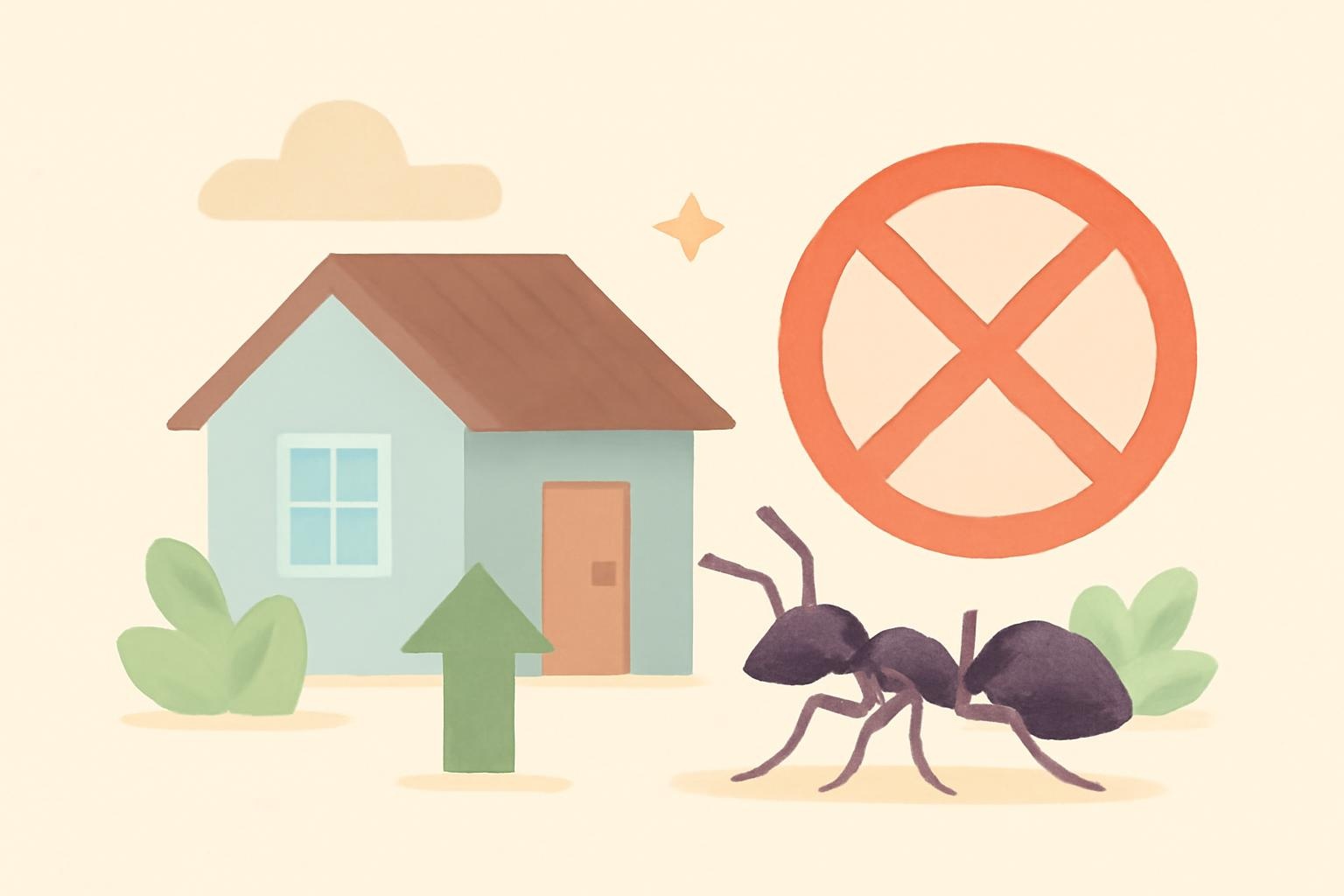
The ancient Greek and Roman gods made laurel leaves into crowns to protect themselves from germs and pests. Do not kill ants; remove them from the house by natural means.
Ways to Remove Them from the House
In the fight against ants at home, first organize the environment: do not leave bread crumbs, food scraps, or sugar powder on the floor. Ants choose your house to escape the cold in winter and the heat in summer.
- Laurel leaf: Place moist laurel leaves where the ants come from and in their nests. Moisten the leaves as they dry; it repels ants.
- Talcum powder: Sprinkling talcum powder where the ants come from will, after a while, drive them away from the house.
Spraying insecticide and pest control causes ants to perish; but the goal should not be to kill them, but to remove them without harming nature.
About Ants
Humans are the primary enemy of ants; we destroy their nests and habitats, and kill them with insecticides. However, ants have been living on Earth for over 100 million years and are spread all over the planet. The world's oldest known ant was found preserved in amber; this ant, named Sphecomyrma freyi, is exhibited at the Harvard University Museum of Zoology.
An interesting note: The Roman general and scholar Pliny the Elder (AD 23-79), who died in Pompeii, wrote in his encyclopedia "Natural History" that ants diagnose diabetes. People would leave their urine at an ant nest and observe whether the ants carried the urine into the nest; if they carried it, it was understood that the blood sugar level was high. Studies in South America report that tribes living in rainforests still test for diabetes using this method.
Biological Control
The Ministry of Environment and Forestry initiated biological control against insects that damage forests. Every year, control is carried out over an area of 600 thousand hectares against approximately 50 harmful insect species without using chemicals. The Ministry released over 600 thousand beneficial insects produced in 59 laboratories into the forests; 50 thousand bird nests were also hung in the forests. These nests are occupied by insect-eating birds, primarily woodpeckers, sparrows, redstarts, little owls, and cuckoos. As part of the biological control, 200 beneficial ant nests were also relocated. Each nest contains approximately 300 thousand ants; they consume about 20 kilos of harmful insects per year. This example once again demonstrates how valuable ants are for the ecosystem.