
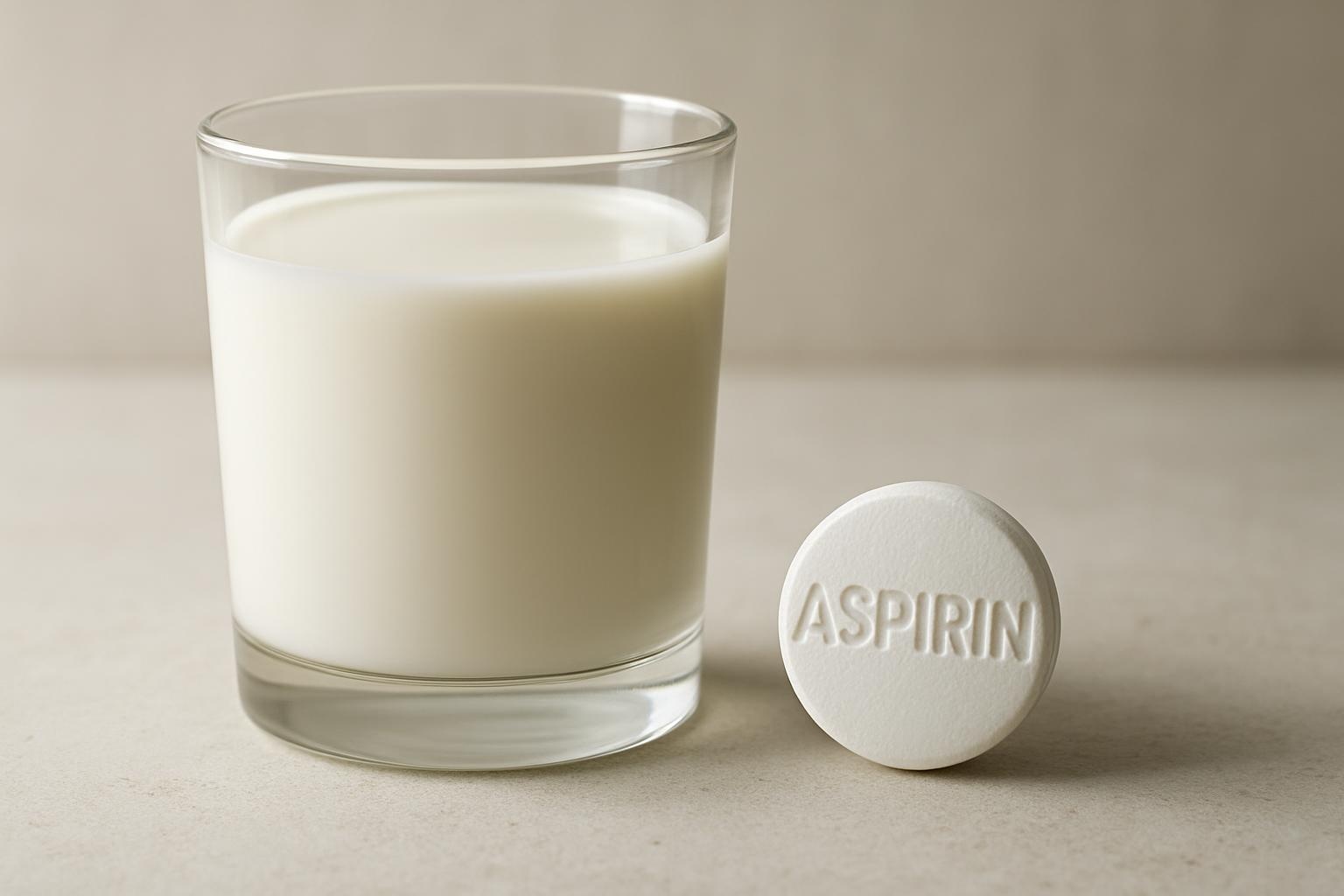
According to a study conducted at Oxford University, one of the leading schools in England, and published in the prestigious medical journal Lancet, taking a quarter of an aspirin with milk before bed every day reduces the risk of cancer in middle age by 20 percent.
The research conducted by Oxford University on 25,000 people revealed that taking about 75 mg of aspirin with milk could reduce cancer-related deaths. According to the research published in Lancet, which emphasizes that the benefits of the low dose outweigh the side effects, aspirin reduces the risk for all cancer types by one-fifth.
It was found that during the experiment, the risk of death from cancer decreased by 25 percent and deaths from other causes decreased by 10 percent in patients given aspirin compared to those who were not. While patients were given regular aspirin for 4-8 years for the experiment, it was determined that the protective effect that emerged continued for 20 years. Professor Peter Rothwell, who led the research, believes these results show that long-term aspirin treatment can reduce deaths. However, Rothwell said he is not urgently calling for healthy middle-aged adults to start taking aspirin, only that the emerging results are promising. Rothwell stated that regular aspirin use should start at ages 45-50 and continue for about 25 years.
CALCIUM INCREASES ITS EFFECT
It is stated that aspirin is especially more effective against lung and throat cancer and reduces the risk of death from these types of cancer by 60 percent. It is thought that the calcium in milk also increases the effect of aspirin. However, health professionals state that before starting regular aspirin use, one should consult with doctors, and the medication should be supplemented with a diet and exercise program. It is noted that in the last twenty years, a 20 percent reduction in cancer-related deaths has been achieved, but aspirin also has side effects such as increasing stomach and gout bleeding. One aspirin pill contains a 300 mg dose.
Regarding the research results, the Independent newspaper joked, Scientists have not yet suggested mixing aspirin into the tap water. But experts declared aspirin the most miraculous drug.
The above text is a newspaper article about a research result.
The harms of aspirin use:
Research Conducted in the UK; In the research called Aspirin for Asymptomatic Atherosclerosis (AAA), while not denying the good effects of aspirin, which prevents blood clotting in heart and vascular patients, it was stated that it is dangerous for healthy people to take aspirin every day.
Gerry Fowkes, a professor from the University of Edinburgh, presented the research at the European Cardiology Congress held in Barcelona, Spain.
Peter Weissberg, Director of the British Heart Foundation, one of the professors supporting the research, stated that a low dose of aspirin used daily prevents the risk of chest angina, heart attack, or brain hemorrhage, but healthy individuals without heart and vascular disease should not use aspirin to prevent heart and vascular disease, because aspirin increases the risk of bleeding in healthy people.
Within the scope of the research, it was stated that 100 milligrams of aspirin were given daily to 3500 men and women aged between 50 and 70 who had no previous heart or vascular problems, and these people were followed for 8 years.
The research noted that bleeding was detected in 2 percent of these people after 8 years.
Aspirin can cause stomach problems.
Aspirin can mislead prostate cancer test results.