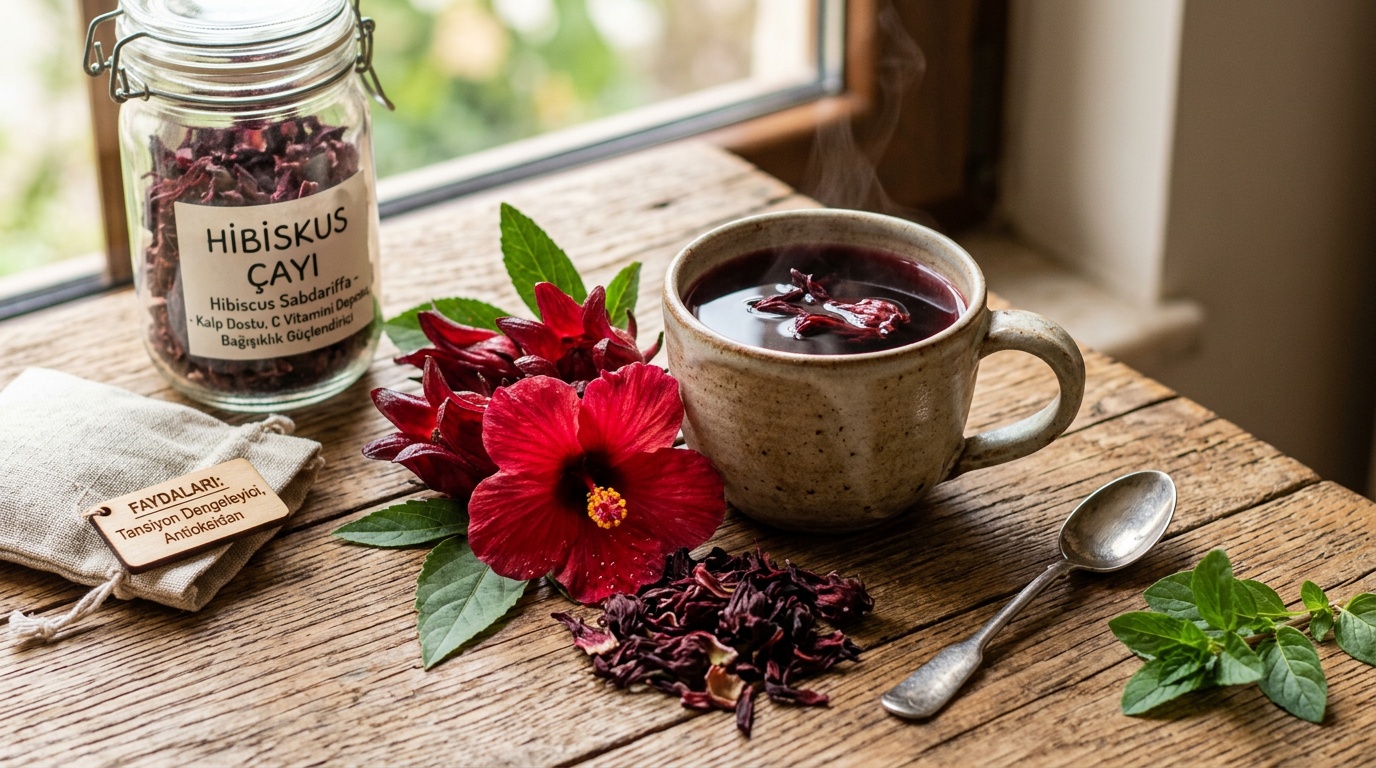
Hibiscus (Hibiscus Sabdariffa) is known by different names from region to region in our country; among these, amber flower or rose mallow are the most commonly used. The hibiscus plant helps balance blood sugar and high blood pressure. Not only that, it can also help raise good cholesterol. Hibiscus is a good aid, it should definitely not be considered a medicine. Diabetic patients must absolutely take the medications prescribed by their doctors.
A Powerful Antioxidant
I cannot fail to mention that hibiscus is also a powerful antioxidant. Dear reader, in all vegetables, fruits, and plants, there are certainly a few active substances with antioxidant properties. There is no plant that does not contain active substances with antioxidant properties. However, in some, this effect is much stronger; hibiscus is one of them.
It is possible to find hibiscus in almost all colors: blue, white, red, orange, and various combinations. The most prized is the dark red one. Before purchasing dark red hibiscus for a cure, first taste a piece. If it does not leave a sour taste on your tongue, do not buy it; it has either passed its shelf life or was not grown in suitable soil.
Make sure that the dark red flowers definitely have the lowest petals. These petals are the most important parts to be used, especially for lung cancer and diabetes patients. I recommend that those at risk of lung cancer not neglect the hibiscus cure and apply it at least three to four times a year.
A Storehouse of Iron and Magnesium
Hibiscus is a storehouse of iron. It virtually absorbs and stores the iron and magnesium present in the soil. After a few years, no iron or magnesium remains in the soil where it grew. The medicinal benefit of using a hibiscus plant grown in soil with reduced or nearly depleted iron is negligible.
Due to its rich magnesium and malic acid content, it is a powerful laxative. It is effective in removing gas formed in the intestines; it is an aid for those suffering from bloating. If you are using hibiscus for a cure that was grown in soil with reduced magnesium and iron, it means you are not sufficiently benefiting from the properties I mentioned above. Hibiscus grown in soil with low iron content should not be harvested or used for cures.
There are also great benefits for lung cancer patients in drinking at least two cups of hibiscus tea per day. However, it should not exceed three cups a day.
Hibiscus Cure for Wilson's Disease Patients
Wilson's disease occurs as a result of intense copper accumulation in the cornea, kidneys, skeletal system, and other organs. The active substances that facilitate the excretion of copper from the body are found in the lowest petals of the hibiscus flower. When hibiscus is harvested, these petals are often deemed unnecessary and discarded; yet the wisdom is hidden precisely in this part.
Preparing the cure: Add one tablespoon of hibiscus to approximately 150 ml of boiling water. After steeping for three minutes, let it cool until warm and strain. Drink slowly and sip by sip.
Application: Drink three times a day for 15 days; in the morning, in the afternoon, and at bedtime. It is mandatory to prepare it fresh each time. Repeat the 15-day cure every two months.
Finally, I must state this: One of the most powerful properties of the hibiscus plant is its potential to store metals from the soil. Therefore, hibiscus grown in soil containing heavy metals should absolutely not be used or harvested.